
All Maruti Suzuki Cars Crash Tested By Different NCAPs In 2025
The list majorly includes Bharat NCAP results of multiple Maruti Suzuki cars, but there are a few models that were tested by some top global car-safety-governing authorities as well


- Write a comment
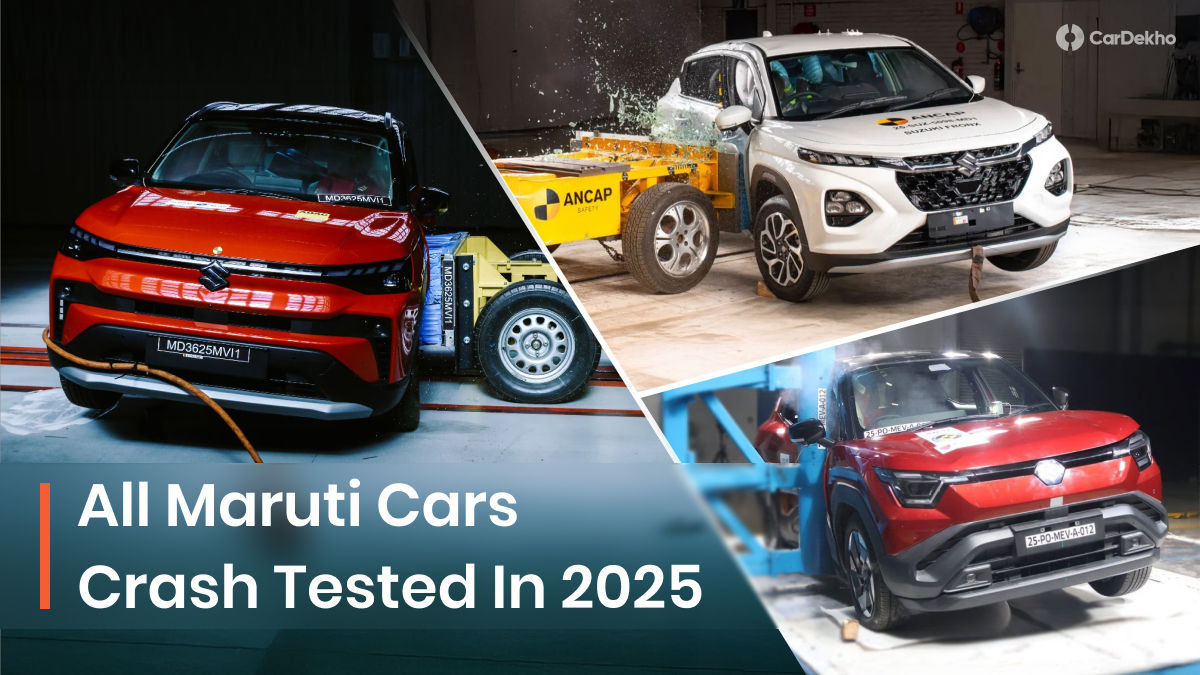
There was a time, not too long ago, when Maruti Suzuki cars (at least those that were crash tested by Global NCAP and Bharat NCAP) performed rather poorly and bagged dismal ratings. Things, however, began to change in recent times with the fourth-generation Dzire securing a full 5-star rating when tested by Global NCAP in 2024. In this story, we have compiled a list of all Maruti Suzuki cars that have been put through these safety assessments by some of the top global crash-testing bodies, including Global NCAP and Bharat NCAP. Here’s a look:
Maruti Suzuki Fronx
Japan NCAP
| Safety Parameter |
Score |
Percentage |
| Overall Safety Performance |
163.75/193.8 points |
84 percent |
| Preventive Safety Performance |
79.42/85.8 points |
92 percent |
| Collision Safety Performance |
76.33/100 points |
76 percent |
| Automatic Emergency Call System |
8/8 points |
100 percent |
The Suzuki Fronx secured Level 5 ratings in the full-width frontal and side impact crash tests. The offset frontal test delivered 21.08 out of 24 points, for occupant protection (4/5 rating), though it incurred a -2.12 out of 5 points penalty for crash compatibility. Rear whiplash protection was rated Level 4 out of 5, while pedestrian safety stood at Level 3 out of 5 for the head and Level 5 for the legs. In active safety, it scored Level 5 for autonomous emergency braking (AEB) pedestrian and lane departure prevention, but got a Level 3 rating for AEB intersection.

In its Japan-spec guide, the Fronx is equipped with Level-2 advanced driver assistance systems (ADAS) in addition to all the safety features offered with the India-spec model, which includes six airbags, electronic stability program (ESP), hill-hold assist, 360-degree camera and ISOFIX child seat anchorages.
Australasian NCAP
| Safety Parameter |
Score |
Percentage |
| Adult Occupant Protection |
19.30 / 40 points |
48 percent |
| Child Occupant Protection |
20.06 / 49 points |
40 percent |
| Vulnerable Road User Protection |
41.39 / 63 points |
65 percent |
| Safety Assist |
10.03 / 18 points |
55 percent |
In the Australasian NCAP crash tests, the Suzuki Fronx offered good protection to the head and neck in the frontal crashes, but provided weak chest, marginal foot protection, and poor rear-seat safety due to the absence of the centre airbag. The side impact protection was mostly good, although protection to the chest was marginal in side pole tests. The child occupant protection was stated to be poor despite ISOFIX child seat anchorages (limited centre fitment) and no child presence detection system.
The Australia- and New Zealand-spec Fronx gets ADAS features such as AEB, lane keep assist, and blind spot monitoring over the safety tech available on the India-spec model.
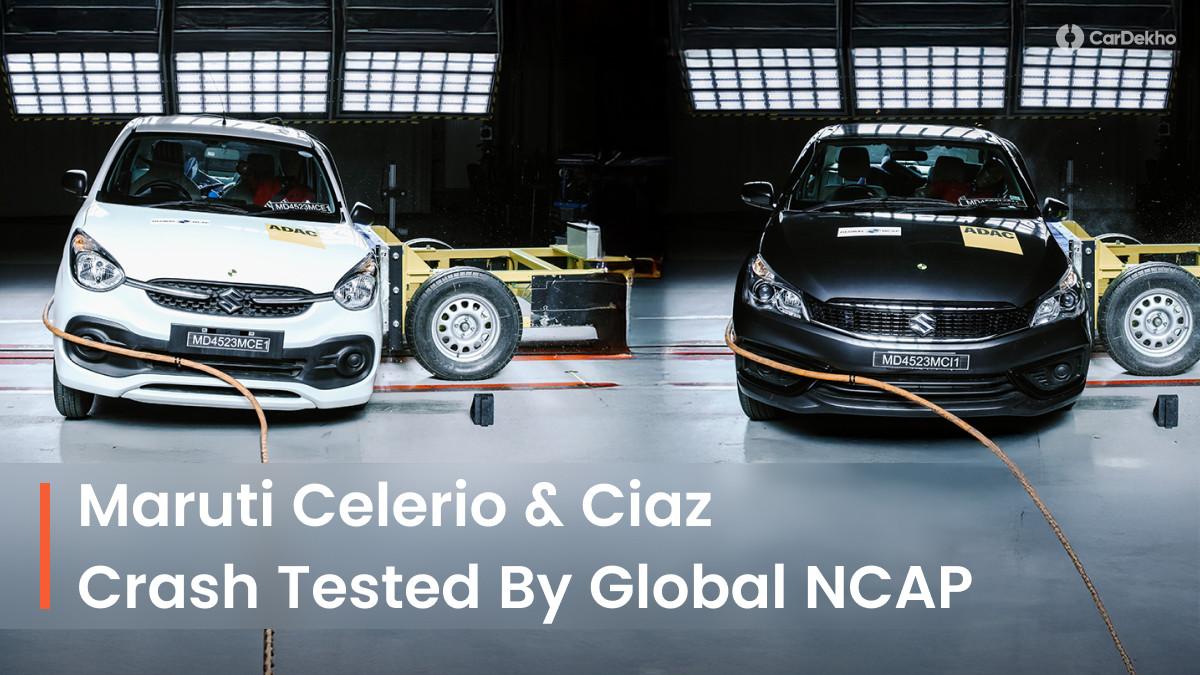
Maruti Celerio
Global NCAP
| Variant |
Adult Occupant Protection |
Rating |
Child Occupant Protection |
Rating |
| 2 airbags |
18.04 / 34 points |
2 stars |
9.52 / 49 points |
1 star |
| 6 airbags |
18.04 / 34 points |
3 stars |
18.57 / 49 points |
2 stars |
The Maruti Celerio offered good protection to the driver’s and passenger’s head and neck in frontal crashes, while chest and knee protection was weaker. The bodyshell integrity and the footwell area were rated unstable. The child safety performance was poor in frontal impacts, though the rear-facing child seat performed well in side impacts, while the front-facing seat failed to fully protect the head.
Apart from six airbags as standard, the Maruti Celerio also gets hill-hold assist, rear parking camera, 3-point seatbelts for five occupants, and ABS with EBD.
Maruti Ciaz
Global NCAP
| Adult Occupant Protection |
Rating |
Child Occupant Protection |
Rating |
| 20.86 / 34 points |
1 star |
28.57 / 49 points |
3 stars |
In the frontal crashes, the Ciaz was rated to offer good protection to the head and neck of the adult occupants, while that for the chest and knee protection was weaker. Its bodyshell integrity and footwell area were rated as unstable. Side pole impact test was not done as Maruti does not provide the Ciaz with side and curtain airbags. The sedan’s child safety protection was stronger with ISOFIX-mounted child seats offering full protection in frontal and side tests, although the score was limited due to the lack of three-point seatbelts for all seats, no passenger airbag cut-off, and failed child seat installation in the rear centre seat.
Maruti had equipped the now-discontinued Ciaz with safety features such as dual front airbags, a reverse parking camera, ISOFIX child seat anchorages, and rear parking sensors.
Maruti Suzuki Baleno
Latin NCAP
| Variant |
2 Airbags (1 star) |
6 Airbags (2 stars) |
||
| Safety Parameter |
Score |
Percentage |
Score |
Percentage |
| Adult Occupant Protection |
16.91 points |
42 percent |
31.75 points |
79 percent |
| Child Occupant Protection |
32.08 points |
65 percent |
32.08 points |
65 percent |
| Vulnerable Road User Protection |
23.17 points |
48 percent |
23.17 points |
48 percent |
| Safety Assist |
25 points |
58 percent |
25 points |
58 percent |
In adult occupant protection, the made-in-India Baleno managed to score 79 percent (42 percent in the dual airbag version) in the Latin NCAP crash tests. Protection to the head and neck was rated to be good, while that for the chest was stated as adequate. Although it offered marginal protection to the knee, the premium hatchback’s bodyshell and footwell were deemed to be stable. The side impact protection was better in the 6-airbag variant, while whiplash protection in both the versions was rated to be good.
In child occupant safety, both child dummies received good protection when installed in rearward-facing child seats using ISOFIX mounts. In pedestrian protection tests, the hatchback scored 48 percent and met basic safety regulatory requirements. While it got a rating of 58 percent in safety assist systems and comes with ESC as standard, the Baleno does not come with ADAS tech.
Bharat NCAP
| Variant |
Adult Occupant Protection |
Rating |
Child Occupant Protection |
Rating |
| 2 airbags |
24.04 / 32 points |
4 stars |
34.81 / 49 points |
3 stars |
| 6 airbags |
26.52 / 32 points |
4 stars |
34.81 / 49 points |
3 stars |
In the 2-airbag variant, frontal protection was good only for head and neck, with marginal chest, pelvis, and thighs, while side impact results ranged from adequate to good. Even the side pole impact protection was stated as good. Moving to the 6-airbag variant, it showed similar frontal results but better side impact protection, with good head, abdomen and pelvis safety. When it comes to the child occupant protection, it was deemed to be strong in side impacts but weaker in frontal crashes, where it recorded a 7.17 out of 8 points for the 18-month-old dummy and 1.63 out of 8 with the 3-year-old dummy.
Maruti offers the Baleno with up to six airbags, ESP, 3-point seatbelts for all passengers, ISOFIX child seat anchors, rear parking sensors, and a 360-degree camera.
Maruti Suzuki e Vitara
Euro NCAP
| Safety Parameter |
Score |
Percentage |
| Adult Occupant Protection |
31 / 40 points |
77 percent |
| Child Occupant Protection |
42 / 49 points |
85 percent |
| Vulnerable Road User Protection |
50.3 / 63 points |
79 percent |
| Safety Assist |
13 / 18 points |
72 percent |
In the adult occupation protection, the Suzuki e Vitara offered good safety to knee and femur of both the front seat passengers. That said, protection to the chest was deemed to be marginal to weak in front and full-width crash tests, while the protection for the rear passenger’s head was cited as marginal. The passenger compartment was rated as stable. In the frontal offset and side barrier tests, all body critical body parts (for child dummies between 6 and 10 years old) received ‘good’ protection. However, no child presence detection system is available on the Suzuki EV. Protection to pedestrians and cyclists was overall good for head and legs, but poor near windscreen pillars, while AEB was adequate for pedestrians and good for motorcyclists, with no rear detection.
In terms of safety assist systems, the Suzuki e Vitara is equipped with Level-2 ADAS and even driver fatigue monitoring.
Bharat NCAP
| Adult Occupant Protection |
Rating |
Child Occupant Protection |
Rating |
| 31.49 / 32 points |
5 stars |
43 / 49 points |
5 stars |
In the 64 kmph frontal crash, head and neck protection for both front occupants was good, with adequate driver chest protection and good passenger chest, pelvis, thighs and feet protection. The driver’s tibias were rated to have adequate safety coverage. In the 50 kmph side impact and side pole impact tests, the e Vitara delivered good protection across all body regions. The Bharat NCAP fact sheet provides limited detail about the protection offered to child occupants compared to the Global NCAP result sheet, particularly regarding the head, chest, and neck performance in various crash tests. We have also compared the e Vitara’s Bharat NCAP performance to that of its closest rivals, the Mahindra BE 6, to see which one is the safer EV of the two.
The India-spec e Vitara is provided with safety features such as a 360-degree camera, seven airbags, ISOFIX child seat anchorages, and ESC.
Maruti Suzuki Victoris
Global NCAP
| Adult Occupant Protection |
Rating |
Child Occupant Protection |
Rating |
| 33.72 / 34 points |
5 stars |
41 / 49 points |
5 stars |
The Maruti Suzuki Victoris showed good protection for most areas of the driver in the frontal offset test, with adequate protection for the chest and right tibia, while the safety coverage for all parts of the co-driver was declared to be good. Protection to the head, abdomen, and pelvis was labelled good in the side impact test, while it was termed as adequate for the chest. In the side pole impact test, however, all areas were stated to get good protection. The child safety was strong, with ISOFIX-mounted rearward-facing seats scoring full points for both 18-month and 3-year dummies in frontal and side crashes.
Bharat NCAP
| Adult Occupant Protection |
Rating |
Child Occupant Protection |
Rating |
| 31.66 / 32 points |
5 stars |
43/ 49 points |
5 stars |
In the Bharat NCAP, the compact SUV provided good protection to the head, neck, pelvis, thighs, and feet, with adequate chest and tibia protection, while all co-driver body regions were rated good in the frontal offset test. In both the side movable deformable barrier and side pole impact tests, good protection was offered to all critical body parts (head, chest, abdomen and pelvis). In the child safety tests, the Victoris scored a perfect 8/8 in frontal and 4/4 in the side crashes for both 18-month-old and 3-year-old child dummies.
The India-spec Maruti Suzuki Victoris is available with six airbags (as standard), a 360-degree camera, ISOFIX child seat mounts, front and rear parking sensors, and Level-2 ADAS. It was recently awarded the Indian Car Of The Year (ICOTY) 2026 title, and is also headed to the South African market soon, although with a different name.
Maruti Dzire
Bharat NCAP
| Adult Occupant Protection |
Rating |
Child Occupant Protection |
Rating |
| 29.46 / 32 points |
5 stars |
41.57 / 49 points |
5 stars |
In the frontal offset deformable barrier test, the head, neck, pelvis and thighs of both front occupants got good protection, while the same safety coverage was provided to the driver foot and co-driver left tibia as well. Protection to the driver’s chest was marginal and that for the co-driver’s chest and tibias was labelled as adequate. The Dzire offered good protection to the head, abdomen, and pelvis in both the side deformable barrier and side pole impact tests. That said, it delivered adequate protection to the chest in the side deformable barrier test.
Maruti has equipped the Dzire with six airbags (as standard), ESC, a 360-degree camera, and ISOFIX child seat mounts.
Maruti Invicto
Bharat NCAP
| Adult Occupant Protection |
Rating |
Child Occupant Protection |
Rating |
| 30.43 / 32 points |
5 stars |
45 / 49 points |
5 stars |
In the frontal offset deformable barrier test, protection to the head was rated to be good for both front occupants, with adequate protection to the chest, good protection to the co-driver tibia, adequate safety coverage for the driver’s left tibia, and good protection to the pelvis and driver’s foot. For child occupant protection, rearward-facing child seats installed via ISOFIX scored a perfect 8/8 in frontal and 4/4 in side crash tests for both 18-month-old and 3-year-old dummies.
The Invicto is provided with six airbags (as standard), ESC, electronic parking brake, and a tyre pressure monitoring system (TPMS).
Maruti Suzuki Swift
Australasian NCAP
| Safety Parameter |
Score |
Percentage |
| Adult Occupant Protection |
26.87 / 40 points |
67 percent |
| Child Occupant Protection |
32.28 / 49 points |
65 percent |
| Vulnerable Road User Protection |
48 / 63 points |
76 percent |
| Safety Assist |
10.03 / 18 points |
55 percent |
In Australasian crash tests, the Suzuki Swift produced mixed results. Driver chest protection was limited, with marginal safety for the upper and lower legs, while the full-width frontal crash also showed marginal chest protection for both the driver and rear passenger despite good protection elsewhere. Side impact performance was largely positive, and the oblique pole test scored full points. Child safety results varied, with the 10-year old dummy showing adequate to poor protection and the 6-year-old performing better. Pedestrian protection was mostly good across the bonnet, weaker near the windscreen pillars, and AEB performance was generally strong.
The Australia-spec and New Zealand-spec Suzuki Swift gets safety tech such as multiple airbags, AEB, lane-keep assist, and various other assistance systems as well, all of which are missing on the India-spec hatchback.
These were all the Maruti Suzuki cars that were put through the Indian as well as the more stringent global safety assessments in 2025. Which of these car’s performance(s) surprised you the most? Let us know in the comments below.
12 out of 13 found this helpful