
2026 Nissan Tekton Base Vs One-Above Base Compared: Visia Vs Visia Plus, Find Out Whether You Should Upgrade From The Base Variant
Does the base variant offer a well-rounded package, or is the stretch to the Visia Plus variant a better decision? Find out all the details here.


- Write a comment
The Nissan Tekton has finally made its debut in India, with prices starting from Rs 10.49 lakh (ex-showroom). The Tekton can be had in a total of six variants: Visia, Visia Plus, Acenta, N-Connecta, Tekna, and Tekna Plus.
The Visia variant is the base-spec model in the Tekton lineup, and the range starts from Rs 10.49 lakh (ex-showroom). Nissan has loaded the base variant with all the essentials along with a thoughtful list of features that you would expect at this price.
The Visia Plus variant sits just above the base Visia. At the additional price, it brings a few extra features. So, should you stick with the base-spec Visia offering all necessary equipment, or stretch your budget for the Visia Plus? Let’s take a closer look:
Price
| Variant |
Price |
| Nissan Tekton Visia |
Rs 10.49 lakh |
| Nissan Tekton Visia Plus |
Rs 11.14 lakh |
All prices ex-showroom, pan India.
Prices for the new Tekton start at Rs 10.49 lakh for the base Visia trim, while the Visia Plus variant is priced at Rs 11.14 lakh. Both variants remain powered solely by the 1-litre turbo petrol engine, while the larger 1.3-litre unit is reserved for higher trims.
The price gap between the variants is Rs 65,000, and one must surely wonder whether it is worth it to upgrade to the upper variant, considering the fact that the base variant has very basic equipment on offer. Let’s see what the Visia Plus variant brings to the table for the extra money:
Take a look at this story for the detailed pricing of all Tekton variants.
Exterior
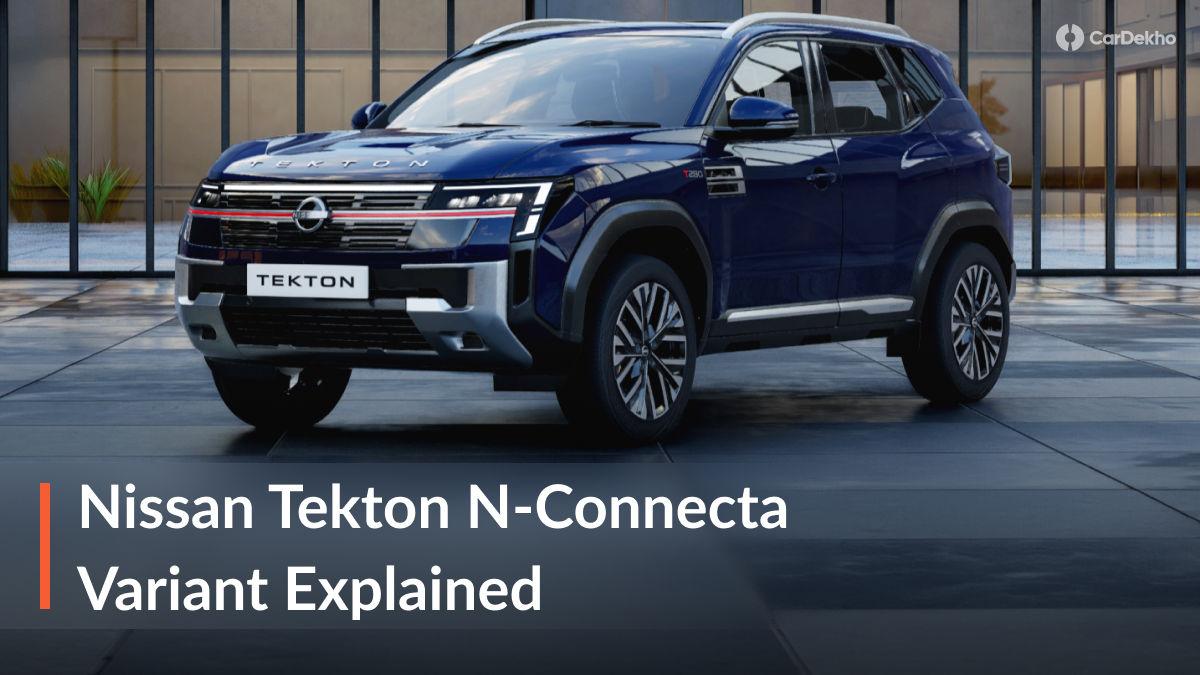
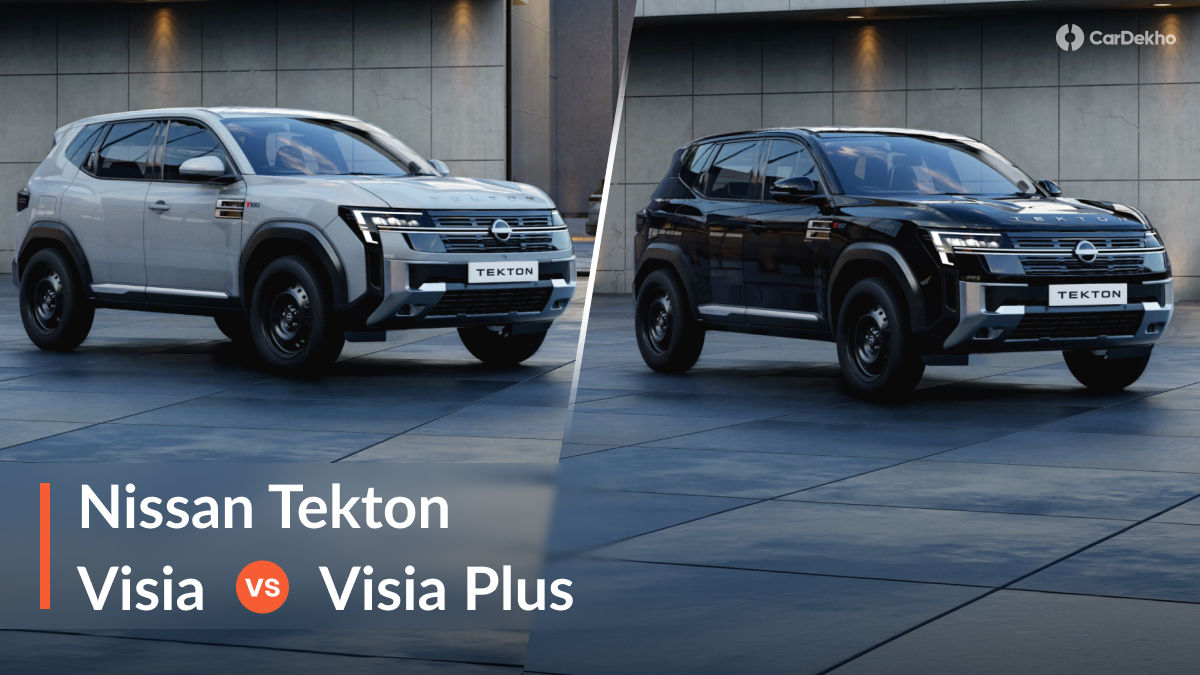
Both the Visia and Visia Plus variants of the Nissan Tekton, in comparison here, look completely identical, with most of their design elements. There are no tweaks done to the exterior to differentiate between the base and one-above-base variant.
Front
In the fascia, both variants of the Nissan Tekton in comparison here get a bold and upright stance with a distinctive "Tekton" decal embossed on the bonnet, a connected grille with vertical slats, and LED headlights with LED DRLs. The chunky bumper carries sharp design elements along with a silver-finished front skid plate. The overall design looks very rugged, but some design elements like a connected LED lighting strip and front LED fog lamps are missing here and can be had in the higher variants.

Side
From the side, both variants feature an identical silhouette and ride on 17-inch steel wheels with wheel covers. The overall design is further enhanced with body-coloured ORVMs featuring integrated LED turn indicators. The overall profile remains very muscular, but styling elements like 18-inch alloy wheels, roof rails, a shark-fin antenna, and puddle lamps can be seen missing on the lower variants.
Rear
The rugged and sporty design theme of the Nissan Tekton can be seen at the rear of both variants as well, with standard equipment like LED taillights, an integrated roof spoiler, and a silver-finished rear skid plate on the chunky rear bumper that add to the rugged appeal. However, missing elements like a connected LED light bar make the rear look a little less premium compared to the top-spec variants.
Colours
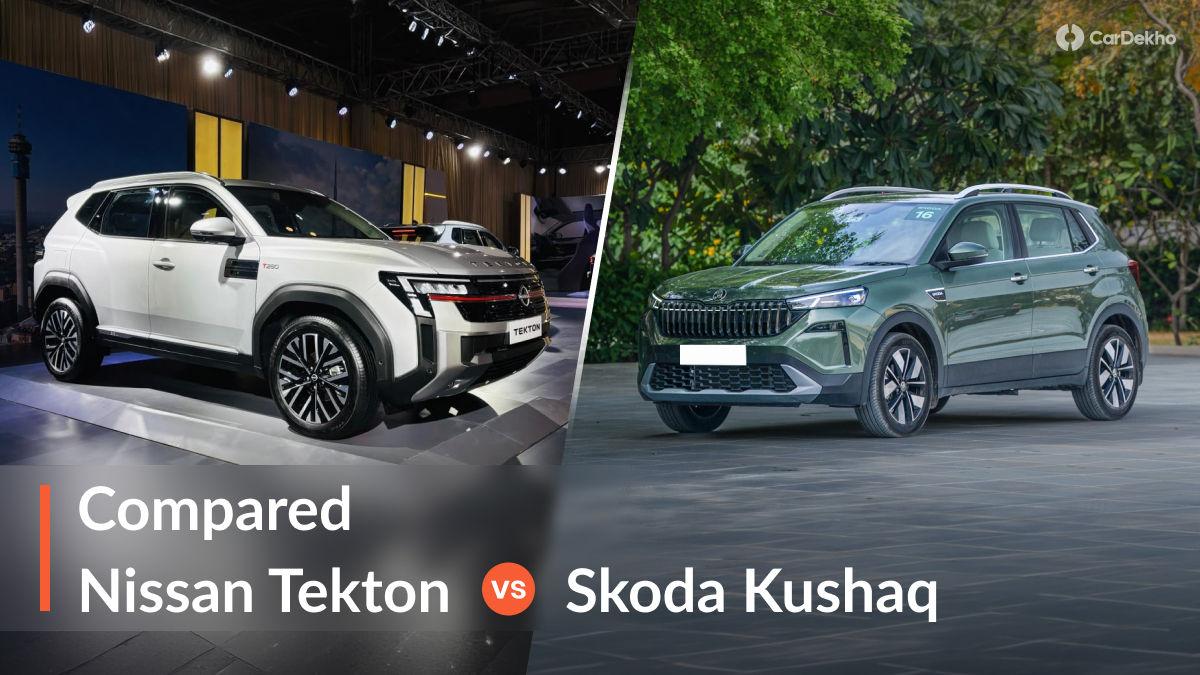
The Visia and Visia Plus variants of the 2026 Nissan Tekton are only offered with three colour options: Pearl White, Blade Silver, and Onyx Black. But there are a total of 11 colour options available with the Nissan Tekton, including 6 monotone and 5 dual-tone options. You should check out our variant-wise colour options story for more details.
Interior
On the inside, both the Visia and Visia Plus variants share the same dashboard layout and fabric upholstery. The Visia Plus variant just has a few more features than the base variant, which have been discussed in the next section.
Both the Visia and Visia Plus variants come with an all-black interior theme with fabric upholstery, silver dashboard inserts, and soft-touch fabric trims on the dashboard and door pads. The seats are also finished in a contrasting black fabric along with some white inserts. The steering wheel in both variants is a 3-spoke unit featuring a double D-cut design. The only difference is the absence of an infotainment screen in the base-spec Visia variant, which leaves a blank space in the centre of the dashboard, which gives a rather incomplete look. The Visia Plus variant makes good use of this space by providing a touchscreen unit.
If ergonomics and usability are taken into consideration, both the Visia and Visia Plus variants offer the same list of equipment starting from a front sliding armrest, adjustable headrests, a 6-way manually adjustable driver seat, a 4-way manually adjustable co-driver seat, an illuminated glove box, and rear AC vents. The rear seats lack a central armrest, seat back pockets, a parcel tray, and 60:40 split seats, which is a bummer. The overall space and comfort are adequate and more than enough, with an ample amount of knee room and shoulder room to accommodate three adults at the rear.
| Detailed in images: If you would like to take a closer look at the Nissan Tekton’s design and features, be sure to check out our detailed image gallery. |
Features
The base-spec Visia variant of the Tekton offers a basic set of essential features that covers all the necessary bits, but the Visia Plus variant adds a few more gizmos to the list that make the package more complete. But the overall package remains mostly similar.
Standard equipment on offer includes a 4-speaker Arkamys Signature audio system, a 7-inch digital instrument cluster, automatic headlights, electrically adjustable ORVMs, tilt and telescopic adjustment for the steering wheel, manual AC, rear AC vents, all one touch-up/down power windows, one-touch LED cabin lights, frameless wipers, and a 12V power socket in the front. However, an infotainment system is completely left out in this variant.
The Visia Plus variant builds on this list by additionally offering a 9-inch touchscreen infotainment system with wireless Android Auto and Apple CarPlay and steering-mounted audio controls, all of which make the cabin feel slightly upmarket compared to the base Visia.
Safety
In terms of safety, both the Visia and Visia Plus variants are very similarly equipped with just one differentiating feature. Nissan has given the Tekton a pretty strong set of standard equipment offered right from the base Visia variant which includes 6 airbags, ABS with EBD, electronic stability control (ESC), traction control system (TCS), brake assist, cornering stability control, hill hold control, roll over sensors, tyre pressure monitoring system (TPMS), rear parking sensors, central locking, speed sensing auto door lock, impact sensing door unlock, 3-point seatbelt for all seats, and ISOFIX child seat mounts.
The Visia Plus variant additionally just adds a reverse parking camera to its package. The Tekton has also received a 5-star Bharat-NCAP safety rating since it is a corporate twin of the Renault Duster.
Engine Options
The Visia and Visia Plus variants of the Tekton can only be had with a single engine and transmission option, which is a 1-litre turbo petrol engine mated to a 6-speed manual gearbox. The 1.3-litre engine remains reserved for the higher variants, and can be had from the Acenta variant onwards.
Let’s take a detailed look at the engine specifications:
| Engine |
1-litre turbo petrol |
| No. of cylinders |
3 |
| Power |
100 PS |
| Torque |
166 Nm |
| Transmission |
6-speed MT |
MT - Manual Transmission
While the base two variants are just offered with one powertrain option, do check out our variant-wise powertrain story to know more about the other powertrains offered on the higher variants of the new Nissan Tekton.
Nissan Tekton Rivals
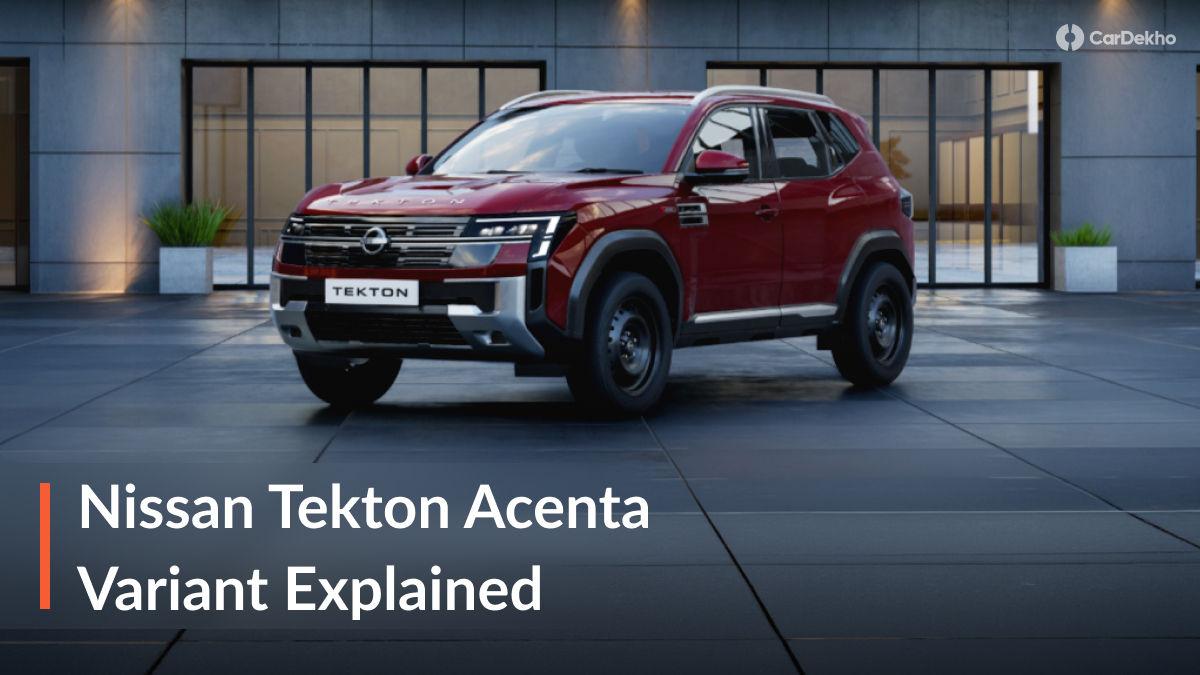
Key rivals of the new Nissan Tekton include compact SUVs like the Renault Duster, Kia Seltos, Skoda Kushaq, Volkswagen Taigun, Hyundai Creta, Maruti Suzuki Grand Vitara and Victoris, Tata Sierra and Curvv, Toyota Urban Cruiser Hyryder, Honda Elevate, and the MG Astor.
CarDekho Says…
The Nissan Tekton Visia and Visia Plus variants are mechanically identical, sharing the same 1-litre turbo-petrol engine, 6-speed manual gearbox, and even the same exterior and interior design. The only real difference is the addition of a 9-inch touchscreen infotainment system with wireless Android Auto and Apple CarPlay, along with a reverse parking camera and steering-mounted controls on the Visia Plus.
For a premium of just Rs 65,000, the Visia Plus variant feels like the more sensible buy. The touchscreen and reverse camera significantly improve the everyday ownership experience while making the cabin feel much more complete. Unless you're on a very tight budget, we'd recommend stretching for the Visia Plus, as it offers noticeably better value for a relatively small increase in price.