
Tata Punch EV Facelift Vs Tata Punch ICE: Which One Makes More Sense In 2026?
Same name, very different personalities. Here’s how the electric Punch differs from the petrol version


- Write a comment
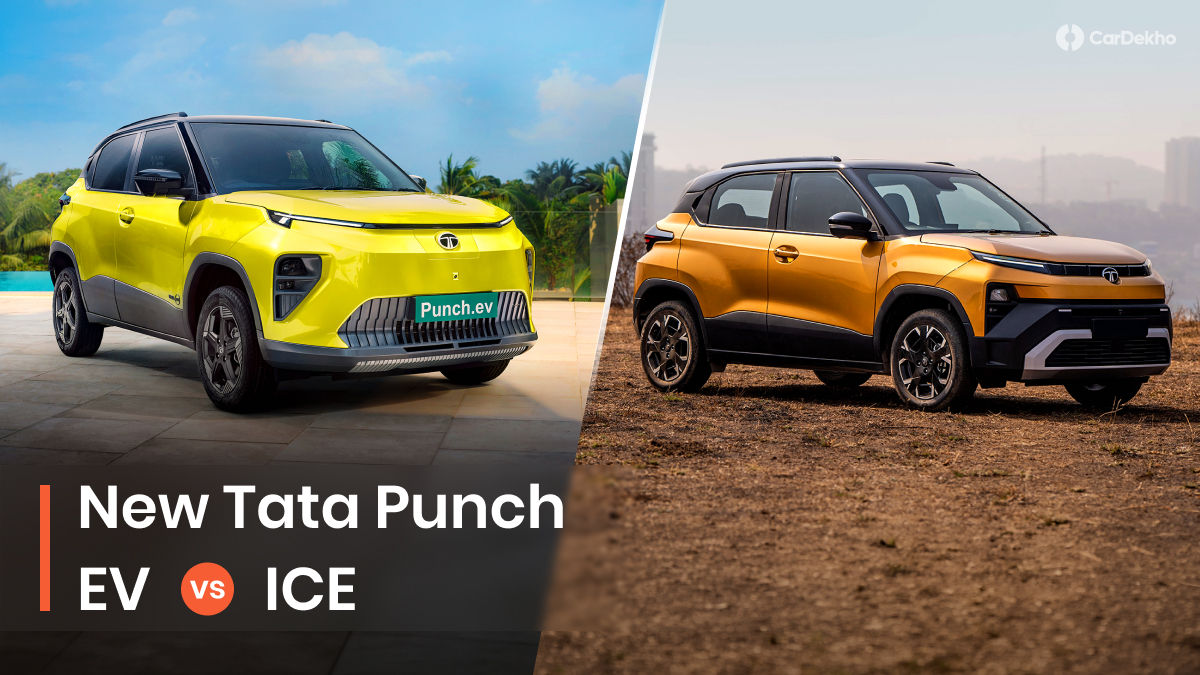
Tata Motors offers the Punch in two very different avatars, the regular petrol-powered Punch (ICE) and the recently updated Punch EV facelift. While both share the same micro SUV footprint, the experience they offer is quite distinct. Apart from the obvious powertrain differences, they are also slightly different in terms of styling and interior colour schemes.
If you’re planning to buy one and wondering whether to go electric or stick with petrol, here’s a detailed comparison between the Punch ICE and the Punch EV facelift based on design, interior, features, powertrain and pricing:
Exterior
At first glance, both look like siblings, but a closer look reveals clear differences in styling.
-
The Punch ICE retains a more rugged fascia and a chunky bumper section finished with black cladding. It looks upright and tough. Even the silver skid plate is more prominent.
-
The Punch EV facelift, on the other hand, gets a cleaner and more futuristic fascia. The grille area is closed off and body coloured, and it features sleek LED DRLs. The bumper design is more sculpted and aerodynamic.

-
The headlamp positioning is similar on both these SUVs.
-
From the side, the overall silhouette remains nearly identical.
-
Both get grey body cladding, roof rails to accentuate the SUV stance, and blacked-out ORVMs.
-
The alloy wheel design is different on both, with the EV getting the aerodynamic wheels.
-
You get subtle EV-specific touches such as ‘Tata.ev’ badging on the Punch EV.
-
Both versions come with similar-looking connected LED tail-lamps, a shark-fin antenna and a roof-mounted spoiler.
-
Unlike the fascia, the bumper design here is more similar than different.
-
You get Punch and Punch EV letterings on the respective models.
| Our Opinion: The Punch EV facelift looks more premium, thanks to the cleaner and more minimalist fascia. The Punch ICE is more on the rugged side. Overall, design should not be a big factor in affecting your buying decision. |
Interior
Step inside and you realise that both versions offer an almost similar experience:
-
The dashboard layout is similar in both versions, but the colour schemes used are different.
-
In the Punch EV, you get grey and white colour upholstery. The ICE version sports a black and white theme.
-
You get a 10.25-inch floating touchscreen on both versions. The Punch EV further comes with EV-specific graphics.
-
Both Punch EV and ICE come with the same two-spoke illuminated steering wheel, which we have seen on newer Tata cars.
-
The lower centre console of the Punch EV looks less cluttered and slightly more minimalist, mainly due to the absence of a gear knob.
-
In terms of cabin space, both are nearly identical since they share the same basic body shell. Rear seat space and boot space are practical for a small family.
Overall, the interiors of both these models feel very premium, especially when compared to other cars in the same price category.
Features
There are no major differences in the list of features offered with both versions. Both Punch ICE and EV get a 10.25-inch touchscreen with wireless Apple CarPlay and Android Auto, a 10-inch digital driver’s display, an auto climate control, ventilated front seats, cruise control, paddle shifters, a wireless phone charger, connected car tech, and a sunroof. The EV version also gets a high beam alert feature over the petrol-powered Punch.
In terms of safety, both versions come with ABS with EBD, ESC, 6 airbags as standard, an electronic parking brake with auto-hold, a 360-degree camera, blind view monitor, TPMS, and hill hold assist and hill descent control.
If you are planning to purchase the Punch EV, then you should also check out its variant-wise features.
Powertrain
The main differentiating factor is the powertrain department, where the Punch EV has become much better with the facelift, as it now gets larger battery packs and more claimed range. Tata also updated the Punch ICE with some new powertrain options to cater to a wider range of audience. Without further ado, let’s take a quick look at the specifications:
| Punch EV facelift |
||
| Battery Pack |
30 kWh |
40 kWh |
| Claimed range (MIDC Part 1 + 2) |
365 km-375 km* |
468 km |
| Power |
88 PS |
129 PS |
| Torque |
154 Nm |
154 Nm |
| Acceleration (0-100 kmph) |
13.5 seconds |
9 seconds |
| Model |
Tata Punch facelift |
||
| Engine |
1.2-litre naturally aspirated four-cylinder petrol engine |
1.2-litre petrol with CNG |
1.2-litre turbo petrol (New) |
| Power |
88 PS |
73.5 PS |
120 PS |
| Torque |
115 Nm |
103 Nm |
170 Nm |
| Transmission |
5-speed MT/ 5-speed AMT* |
5-speed MT/ 5-speed AMT (New) |
6-speed manual |
Pricing
The Tata Punch ICE is priced from Rs 5.60 lakh to Rs 10.55 lakh (ex-showroom). The Punch EV ranges from Rs 9.69 lakh to Rs 12.59 lakh. The Punch EV is considered a smaller alternative to EVs like the MG Windsor EV, Tata Nexon EV, or the Mahindra XUV 3XO EV. The Punch ICE competes with the likes of the Hyundai Exter, Renault Kiger, Nissan Magnite, and Maruti Fronx/ Toyota Taisor.
You can check out the variant-wise pricing of the Punch EV in this report.
CarDekho Says
If your daily running is mostly within the city and you have access to home or workplace charging, the Tata Punch EV makes a strong case in 2026. It feels more modern, offers stronger performance in the long-range version, comes with slightly more premium touches, and promises significantly lower running costs over time. And if you are interested in bringing the Tata Punch EV home, do ensure to check out our in-depth Ultimate Buying Guide.
However, the Tata Punch (ICE) continues to be the more affordable and flexible option. With multiple engine choices, including CNG and the new turbo-petrol, lower upfront pricing, and zero charging dependency, it remains the practical pick for buyers who want a small city-car, while also frequently traveling long distances.
In short, go electric if your usage pattern supports it, and stick with petrol if budget, convenience, and anxiety-free, long road-trips matter more to you. If you like the Punch EV, but want to know how it fares with some of its other closest rivals, do consider these options:
- Tata Nexon EV: It's a size larger than the Punch EV and gets some more features (check out our detailed comparison report).
- Tata Tiago EV: From the same Tata EV family, but a size smaller. We have pitched both models in a battle here to help you make an informed decision.
- MG Windsor EV: Consider this if you're primarily going to be spending time in the back seat. How the Punch EV fares against the MG Windsor can be found here.
- Citroen eC3: Not as feature-loaded, but provides a better rear seat experience and comfortable ride (detailed Punch EV vs Citroen eC3 comparison here).
1 out of 1 found this helpful