Hyundai Creta EX Variant: Does The One-Above-Base Variant Make Sense In 2026?
With an 8-inch touchscreen, a six-speaker audio setup and keyless entry, the EX adds everyday convenience to the Creta. But does it justify the price premium?


- Write a comment
| We are helping 50 of our lucky readers with a personalised car buying journey. You will be able to directly speak to an automotive expert and get all your doubts answered. Fill this form and if you are one of those lucky customers, we’ll get in touch with you soon. |
The Hyundai Creta has been one of the most familiar names in the compact SUV segment, and its second-generation version continues to offer a wide spread of variants. While the base-spec E focuses on the essentials, the EX trim takes a step towards everyday convenience with additions such as an 8-inch touchscreen, wireless smartphone connectivity, a six-speaker audio setup and a smart key with push-button start.
But these upgrades also push the price beyond the Rs 12 lakh mark, while the engine and gearbox options remain unchanged. So, does the EX strike the right balance between features and price, and is it a sensible choice in 2026? Let's take a closer look at what it offers.
Price
The EX variants of the 2026 Hyundai Creta are priced from Rs 12.07 lakh for the petrol-manual version to Rs 13.73 lakh for the diesel-manual version. Here's a closer look at the prices:
| Variant |
Ex-showroom price |
| Creta EX Petrol MT |
Rs 12.07 lakh |
| Creta EX Diesel MT |
Rs 13.73 lakh |
The EX commands a premium of Rs 1.16 lakh over the base-spec E petrol and Rs 1.12 lakh over the E diesel.
Exterior
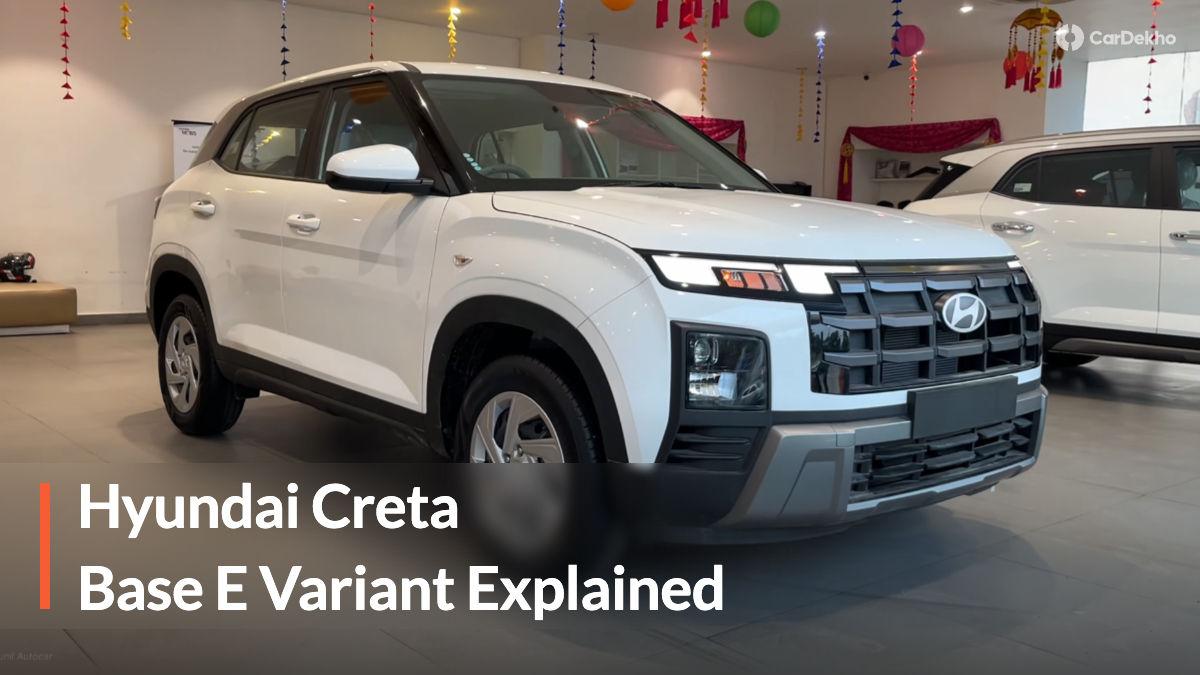
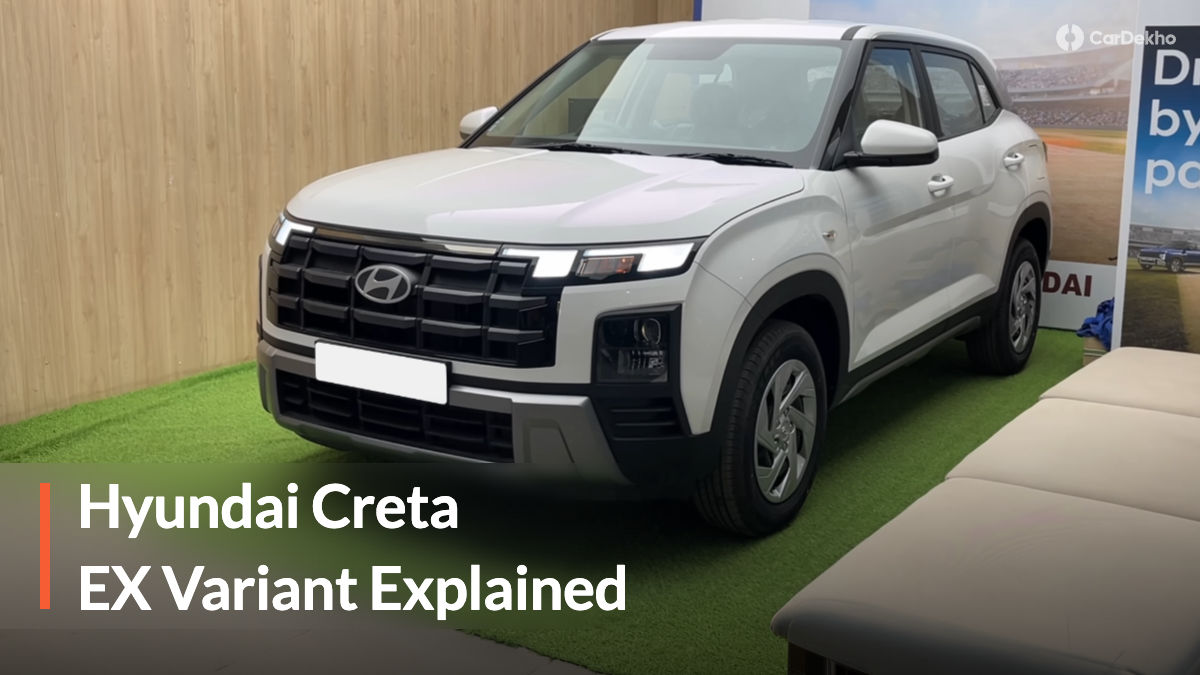
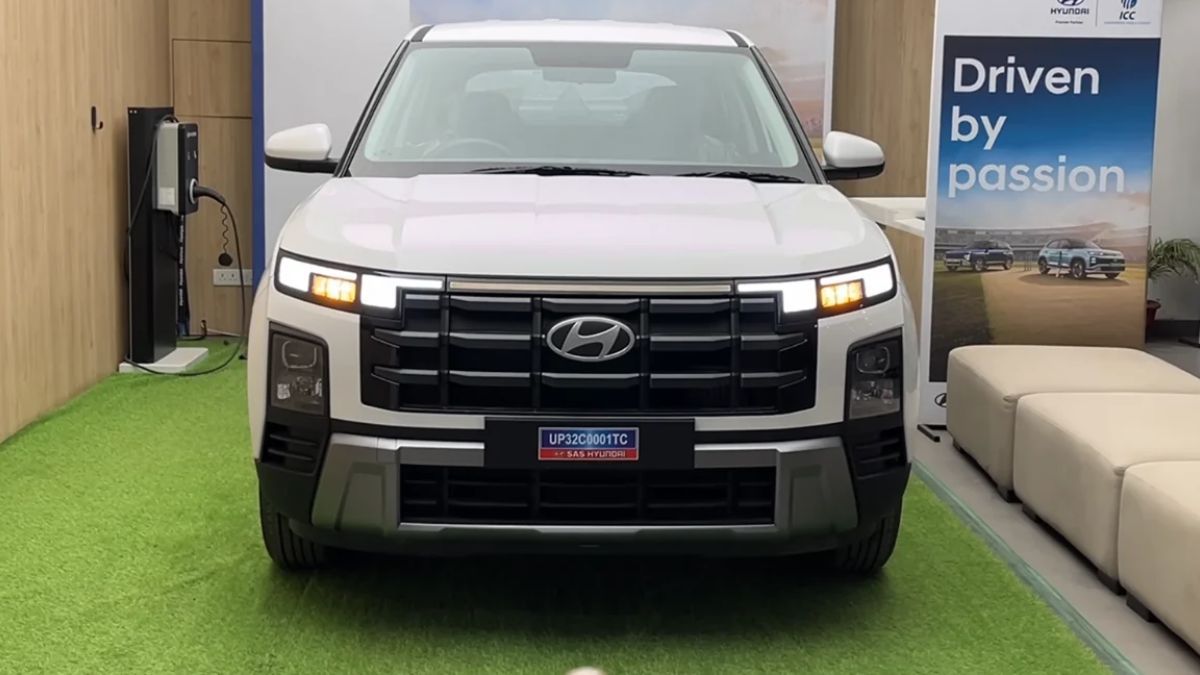
The fascia of the Creta’s one-above-base EX variant looks identical to that of the entry-level E trim. It has the same halogen projector headlight setup (with follow-me-home function) but without the LED DRLs. Even the silver-finished skid plate has been carried forward from the E variant, while its grille still has the same design without the dark chrome finish seen on some of the higher-spec variants.
From the sides, the only noticeable difference is the provision of a sharkfin antenna and a request sensor on the driver-side door (as part of the keyless entry system). All other details remain unchanged, including the 16-inch steel wheels with covers, front fender-mounted turn indicators, and body-coloured door handles and ORVMs. It still misses out on roof rails and larger 17-inch wheels that are present as you move up the variant ladder.
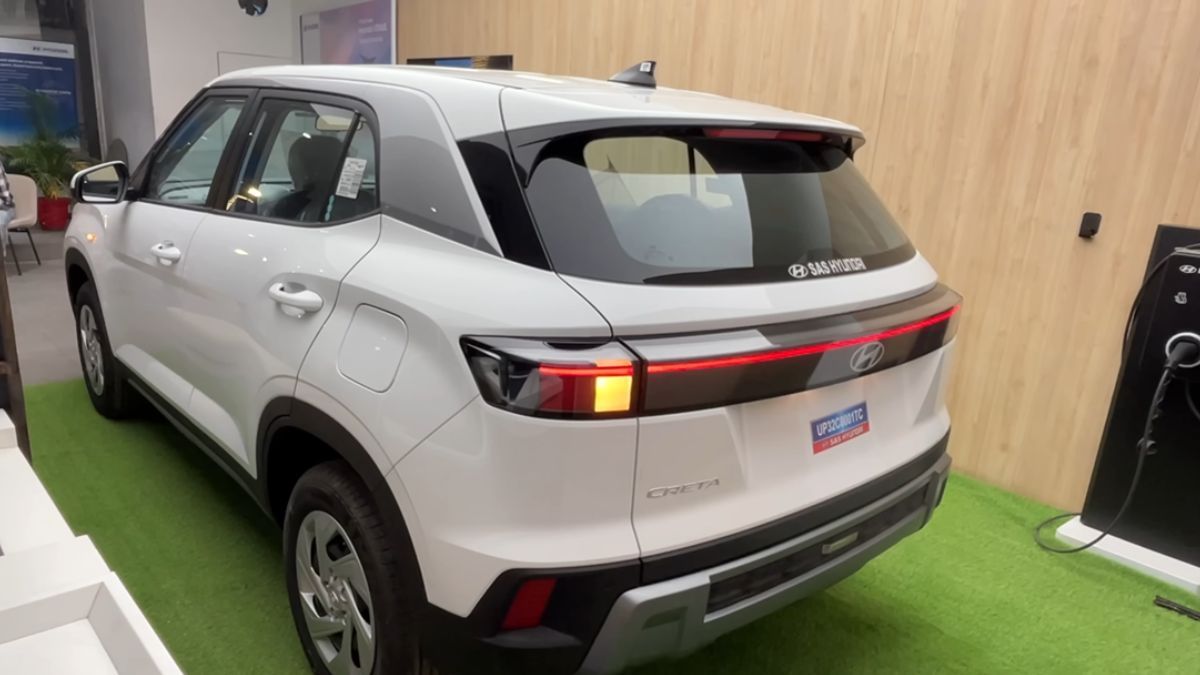
Hyundai has not made any changes to the rear profile of the SUV’s EX variant over that of the base-spec E. Key elements include an LED positioning lamp, halogen tail lights, a silver-finished skid plate, and a ‘Creta’ badge on the bottom left-side of the tailgate. That said, it still does not come with a rear wiper with washer or a defogger.
Colour Options
Like the base-spec E variant, even the one-above-base EX trim is offered in only two exterior colourways: Titanium Black and Atlas White. Hyundai provides a choice of five monotone shades, two matte finish options, and one dual-tone combination for the Creta.
Interior
Its cabin looks almost identical to that of the base-spec E variant’s cabin as well, save for a couple of differences. The main difference is the addition of a touchscreen infotainment system, followed by the provision of a sunglass holder.
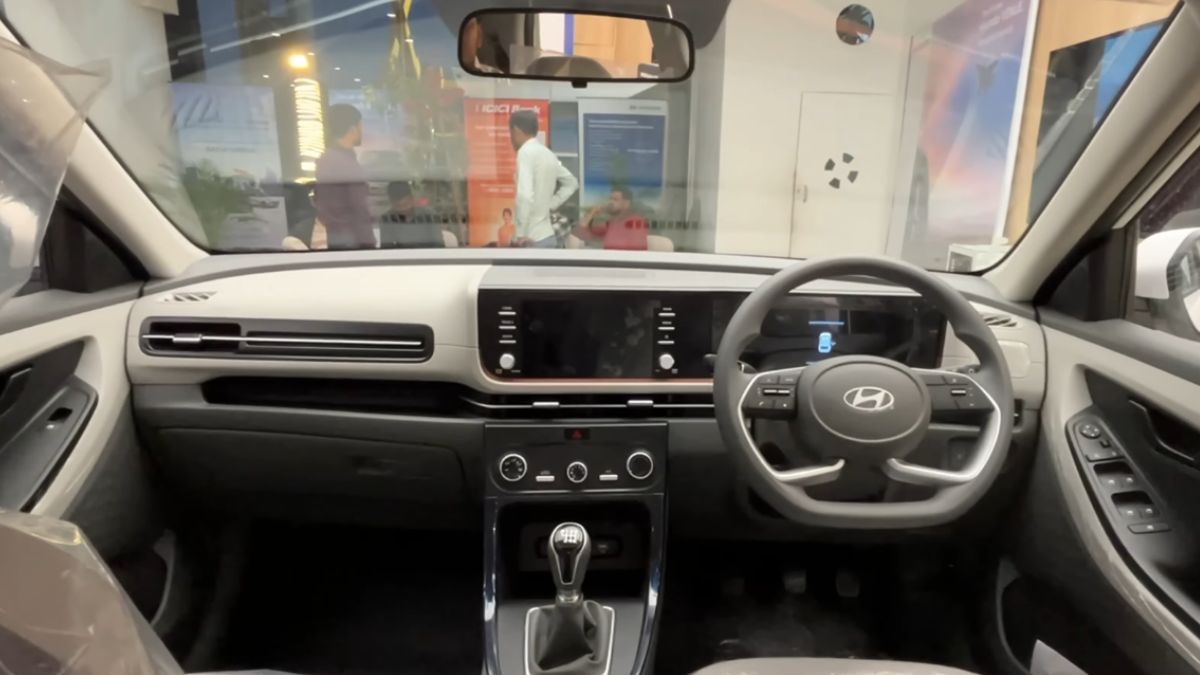
Other visible elements include a dual-tone grey and beige cabin theme with fabric seat upholstery, a 4-spoke steering wheel (now with audio controls), and a black finish for the door handles that remains unchanged from the base variant.
Hyundai has equipped it with adjustable headrests for the front occupants, a front centre armrest with storage and a foldout rear armrest with two cupholders. Also on offer are door scuff plates and 60:40 split-folding rear seats with the EX variant of the 2026 Hyundai Creta.
Features And Safety
The EX variant builds on the equipment set of the base-spec E and gets an 8-inch touchscreen infotainment unit (with wireless Apple CarPlay and Android Auto) and electrically adjustable outside rearview mirrors (ORVMs). It also comes with a 6-speaker music system (including two tweeters), voice recognition, and a push-button start/stop. Other features that have been carried forward include a height-adjustable driver seat, manual AC with rear vents, a semi-digital instrument cluster, and all four power windows.
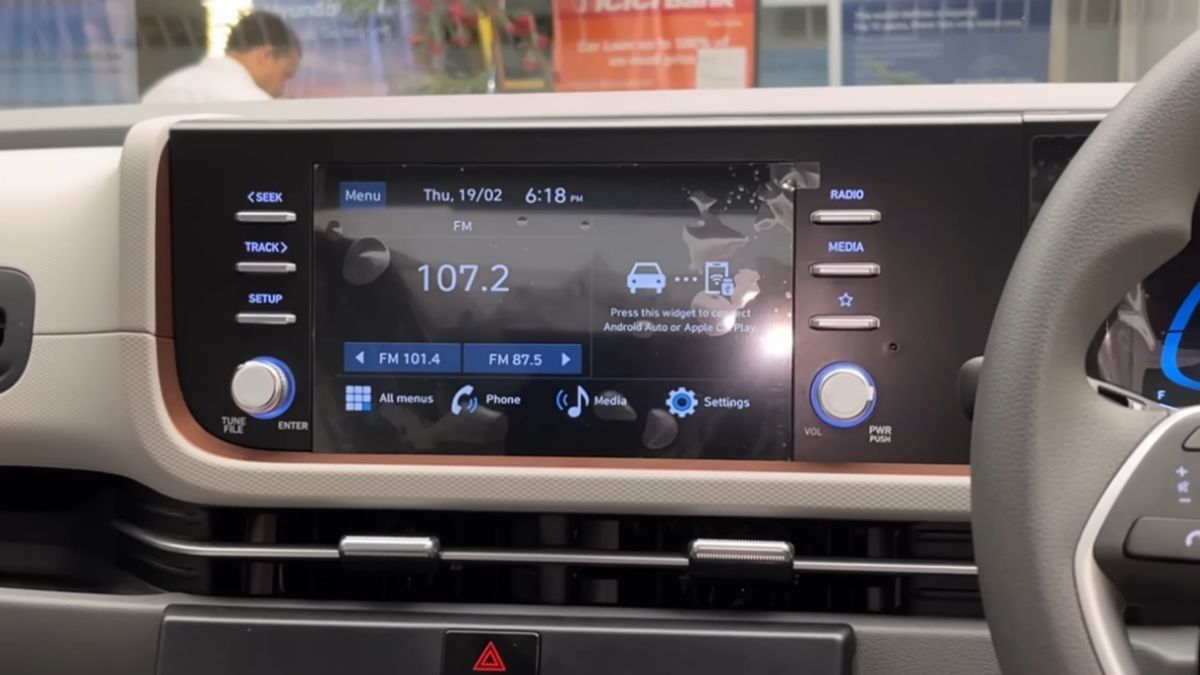
Its safety net remains identical to that of the base-spec E, with key offerings being six airbags, electronic stability control (ESC), ISOFIX child seat mounts, and a tyre pressure monitoring system (TPMS). However, despite the provision of a touchscreen infotainment system, Hyundai does not offer the EX variant with a rear parking camera.
Powertrain Options
The 2026 Hyundai Creta EX is offered with two engine options: a 1.5-litre naturally aspirated petrol engine and a 1.5-litre diesel engine. However, like the base-spec E variant, both are paired exclusively with a 6-speed manual gearbox in this variant.
| Specification |
1.5-litre Naturally Aspirated (N/A) Engine |
1.5-litre Diesel Engine |
| Power |
115 PS |
116 PS |
| Torque |
144 Nm |
250 Nm |
| Transmission |
6-speed MT |
6-speed MT |
While the petrol engine is available with an iVT and the diesel with a 6-speed automatic gearbox in higher variants, the EX misses out on both automatic options. Hyundai also offers a more powerful 1.5-litre turbo-petrol engine, which produces 160 PS and 253 Nm and is paired with a 7-speed dual-clutch transmission (DCT). However, this engine is reserved for the top-spec King variant.
Rivals
Hyundai’s compact SUV takes on the Kia Seltos, Maruti Grand Vitara and Victoris, Tata Sierra, MG Astor, Toyota Urban Cruiser Hyryder, Honda Elevate, Skoda Kushaq, Nissan Tekton, Volkswagen Taigun, Citroen Aircross and Renault Duster. It also competes with similarly sized SUV-coupes like the Citroen Basalt and Tata Curvv.
CarDekho Says…
The Creta EX makes a stronger case for itself than the base E, particularly if you want a touchscreen infotainment system and better in-cabin connectivity without moving too far up the variant ladder. The addition of wireless Apple CarPlay and Android Auto, a six-speaker audio setup, electrically adjustable ORVMs and a smart key with push-button start makes it more convenient for everyday use.
However, the EX still feels like a halfway step. You don't get a rear parking camera, a sunroof or an automatic gearbox, and the powertrain choices remain limited to the manual versions of the naturally aspirated petrol and diesel engines. For a premium of around Rs 1.1 lakh over the E, the EX does bring some meaningful upgrades, but whether they're worth paying extra for depends on how much you value in-car technology and convenience.
If those are priorities, the EX is the more rounded entry point into the Creta range. However, if you're looking for a more substantial jump in features, it may be worth exploring the higher variants before making your decision.
What do you think about this variant? Let us know in the comments!
Image Source: Sunil Autocar via Youtube