
2026 Maruti Baleno New Vs Old Compared: More Than Just A Huge Grille?
Compared to the older model, the biggest change is in the powertrain and safety departments!


- Write a comment
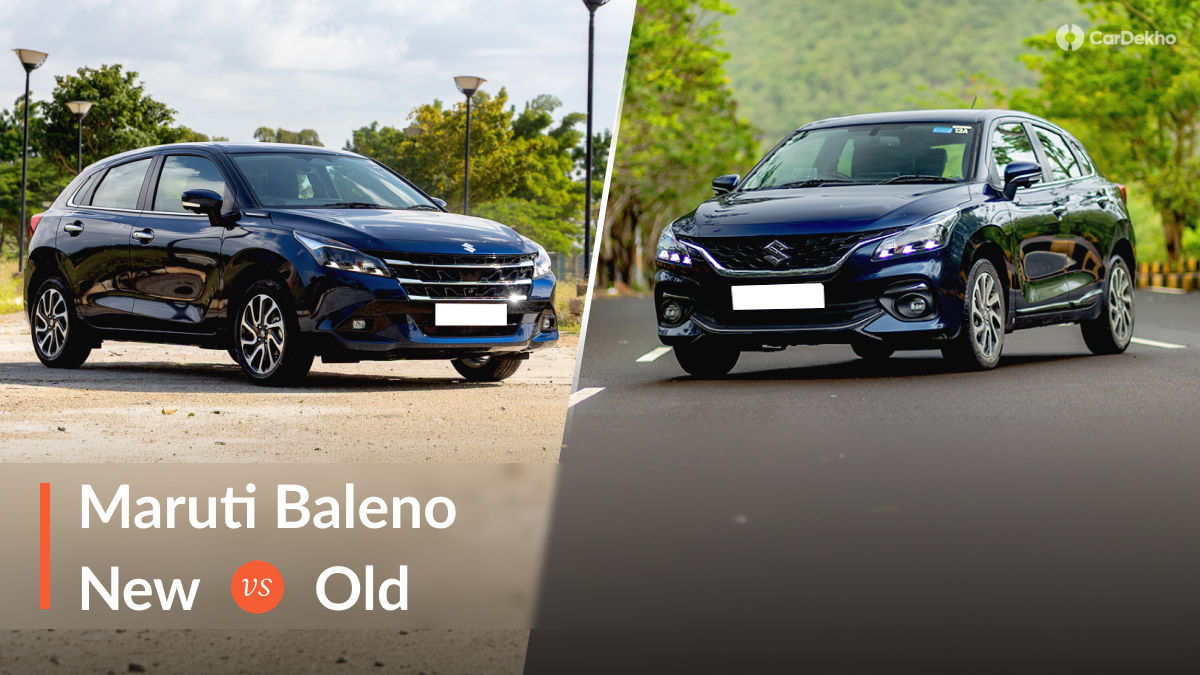
Maruti has launched the updated version of its popular hatchback, the Baleno recently, which adds new features such as ventilated seats, new powertrains, and a lot of equipment compared to the outgoing model. As the first hatchback in the segment to receive such safety equipment, this Baleno now seems to be a perfect recipe for success.
But what exactly has been updated and even carried forward compared to the outgoing version? Let’s find out!
Design
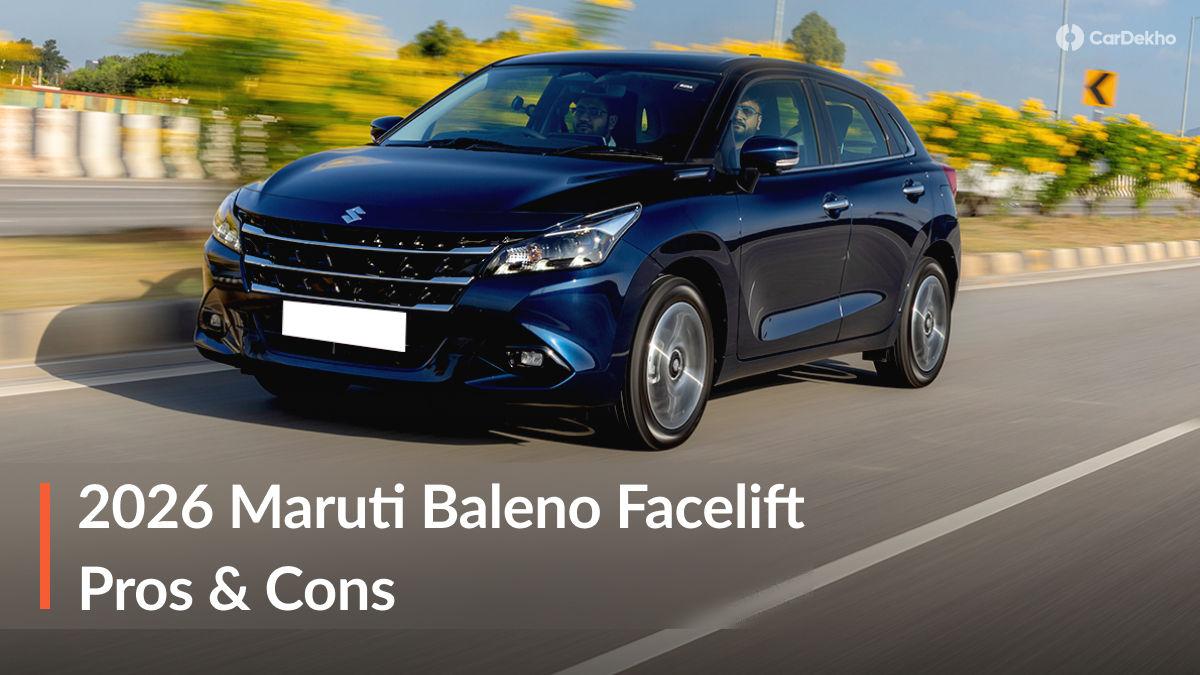
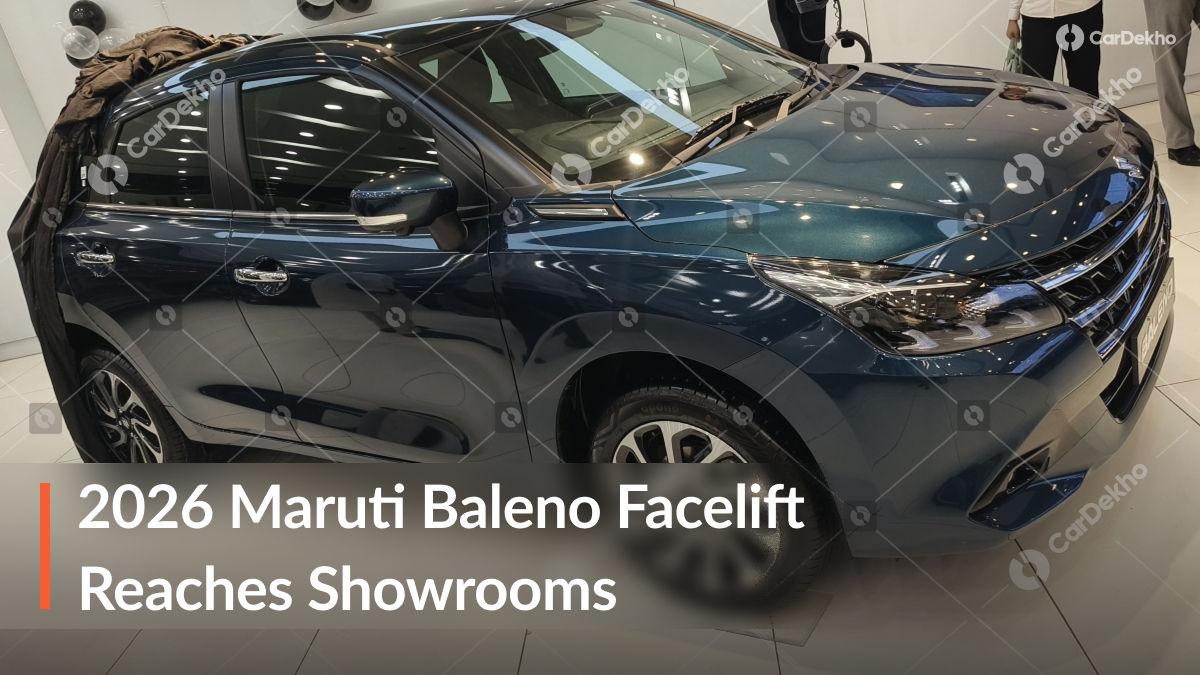
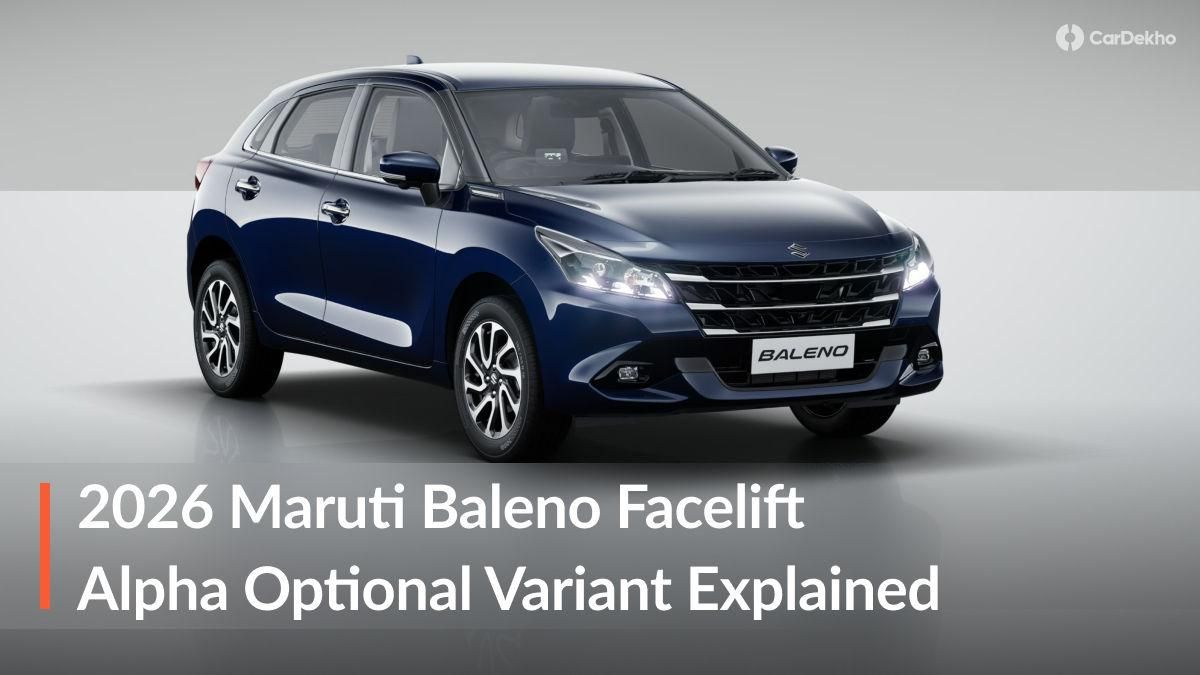
Looking at the front, the biggest change we can notice is the fascia of the new 2026 Baleno, which gets a larger three-slat chrome-finished grille, which houses the ADAS sensor and the 360-degree camera. The older model had a single chrome strip running below the textured grille, which had the Maruti logo in the center. The new grille on the facelifted Baleno looks very polarizing, and it will be interesting to see how well the Indian buyers will react to it.

Both models share the same LED projector headlamps with LED DRLs, which provide good visibility upfront. The bumpers are redesigned in the facelift and also replace the new rectangular-shaped LED fog lamps with them, which enhances the appeal of the new Baleno.
Coming to the side, you have a similar silhouette to both models, but keen-eyed people would notice that the updated version now gets a shark fin antenna and a chrome insert on the front fender. Other than that, both versions come equipped with the same 16-inch dual-tone alloy wheels, chrome door handles, and ORVMs with LED indicators.
At the rear, the Baleno facelift is identical to the outgoing model, with C-shaped LED tail lamps, a chrome strip connecting the taillamps, a rear wiper and washer, and the Maruti logo at the center.
Overall, the Baleno continues with this much-loved design and brings in a few differences upfront.
If you want to have a detailed look at the new Baleno, check out our story about it.
Colour Options
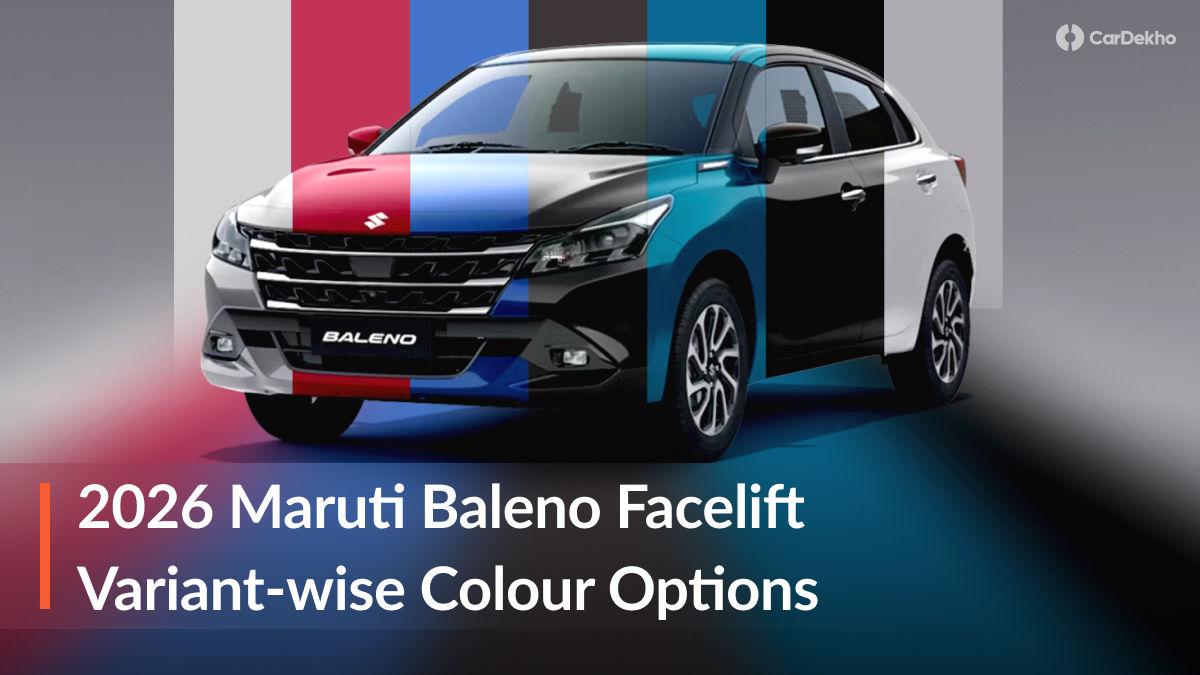
The updated Baleno offers seven shades, which include Splendid Silver, Arctic White, and many more, including the new Enigmatic Teal colour, which has replaced the Luxe Beige.
Here’s a detailed look at the colours available for both models:
| Baleno (Facelift) |
Baleno (Old) |
| Arctic White |
Arctic White |
| Splendid Silver |
Splendid Silver |
| Grandeur Grey |
Grandeur Grey |
| Nexa Blue |
Nexa Blue |
| Opulent Red |
Opulent Red |
| Bluish Black |
Bluish Black |
| Enigmatic Teal (New) |
Luxe Beige (Replaced) |
To know more about which colours are available in each variant, check out the variant-wise colours explained story of the new Baleno.
Interior
The Interior of the 2026 Baleno is very similar in terms of design, materials used, and equipment as compared to the old model. The key difference would be the addition of ventilated seats, which have controls present next to the USB charge port, and additional buttons on the leather-wrapped steering wheel for some of the ADAS features, such as adaptive cruise control.
The Baleno features a black and blue cabin theme, a large free-standing infotainment screen, and the dashboard even has an aluminium insert, which does uplift the premiumness of the cabin.
Other than that, you will visually have a similar experience with a spacious and comfortable cabin, and very good seats as well for those longer drives.
Features
The Baleno facelift has introduced new features with this update, such as the ventilated front seats, which are useful for our climate conditions, a wireless phone charger, a Clarion sound system, and a shark fin antenna.
Other features which are carried forward from the outgoing model include a large 9-inch infotainment touchscreen display with wireless Android Auto and Apple CarPlay, connected car technology, automatic climate control, auto-dimming IRVM, keyless entry, push-button start/stop, rear AC vents, USB Type-C charging ports, electrically adjustable and auto-folding ORVMs, and an analogue cluster with TFT MID for the driver.
Safety
In terms of safety, the 2026 Baleno offers segment-first Level-2 ADAS (Advanced Driver Assistance Systems), which includes features like adaptive cruise control (ACC), lane keep assist (LKA), lane departure warning (LDW), forward collision warning (FCW), automatic emergency braking (AEB), and a tyre pressure monitoring system (TPMS) as well. This increases the safety quotient of the new Baleno.
Whereas features such as 6 airbags, electronic stability control (ESC), a 360-degree camera with blind view monitor, hill hold assist (HHA), rear wiper and washer, reverse parking sensors, and ISOFIX child seat mount are features that were on the previous model and continue to be shared with the facelift as well.
The Maruti Baleno pre-facelift had a BNCAP rating of 4 stars, providing a physically stronger chassis than before. The Baleno facelift, as of now, is not tested, but we can expect similar scores from this hatchback.
Powertrain Options
The Baleno facelift is now powered by the new Z12E series 1.2-litre naturally aspirated petrol engine mated to a manual and AMT transmission, instead of the older K-series engine present on the outgoing model. Just like before, a factory-fitted CNG kit is also on offer, but with a manual gearbox only.
Here are its detailed specifications:
| Model |
Baleno (New) |
Baleno (Old) |
||
| Engine |
Z12E series 1.2-litre naturally aspirated petrol |
1.2-litre naturally aspirated petrol with CNG |
K12 Series 1.2-litre naturally aspirated petrol |
1.2-litre naturally aspirated petrol with CNG |
| Power |
83 PS |
70 PS |
90 PS |
78 PS |
| Torque |
112 Nm |
102 Nm |
113 Nm |
98.5 Nm |
| Transmission |
5-speed MT /5-speed AMT |
5-speed MT |
5-speed MT/ 5-speed AMT |
5-speed MT |
*MT- Manual Transmission, AMT- Automated Manual Transmission
Compared to the older model, it has slightly reduced power and torque figures, but the CNG powertrain has a slight gain in torque output. Overall, it is a refined and fuel-efficient engine, as we have seen previously in the Swift and Dzire.
Price & Rivals
The Baleno facelift starts at Rs 6.10 lakh (ex-showroom) for the base variant, whereas the older model used to start at Rs 5.99 lakh (ex-showroom), which translates to a Rs 10,000 price hike. As of now, full pricing for the new Baleno is not out there, but the older model used to top at Rs 9.17 lakh (ex-showroom)
It rivals the Hyundai i20, Tata Altroz, and the platform sibling, the Toyota Glanza. Other than the premium hatchback category, it also competes with the Tata Punch, Maruti Fronx, and the Maruti Swift in terms of a similar price bracket.
CarDekho Says…
As compared to the older Baleno, the facelift version does provide mechanical changes underneath with the new Z-series petrol engine, which is also offered with CNG as well. The facelifted Baleno packs in a few features such as ventilated seats, a wireless phone charger, and even the shark fin antenna, which add up to a more convenient experience.
The older Baleno was still offering plenty of features as well, but it did miss out on these key features. Also, giving the Baleno a Level-2 ADAS was actually a big step ahead since the recently updated Brezza also didn’t get it. This does make it more attractive in its segment, as safety equipment wise now has all that it needs.