
2026 Kia Syros EV Variant Compared: HTX Vs HTX Plus
While the Syros EV HTX comes loaded with a variety of features, the HTX Plus variant steps it up with even more equipment, such as rear seat ventilation and front parking sensors


- Write a comment
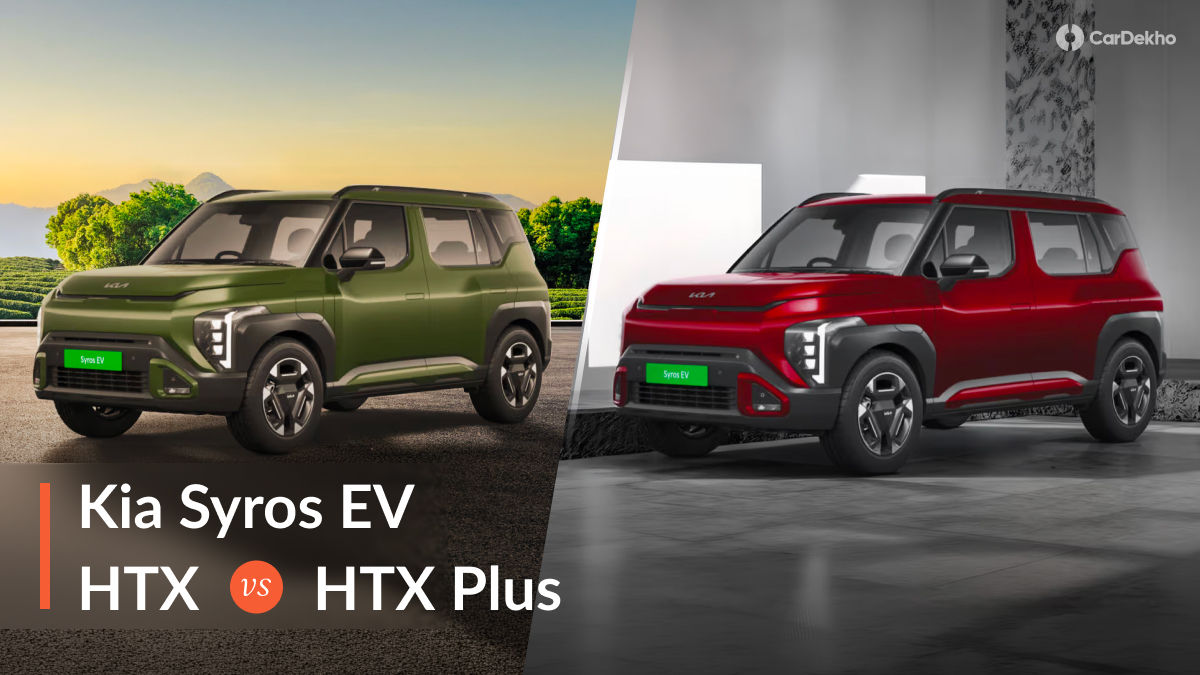
The Syros EV, being the smallest electric vehicle in Kia’s product lineup, has a very quirky exterior and spacious interiors with a premium cabin. But if you are in the market with a budget of around Rs 16 lakh to Rs 20 lakh and are considering the Syros EV, then, with the mid-spec HTX variant and the HTX Plus sitting in the same price bracket, which trim should you be looking out for? Let’s compare both and find out which brings more value for the money:
Price
| Variants |
Kia Syros EV HTX |
Kia Syros EV HTX Plus |
| Price (ex-showroom) |
Rs 16 lakh to Rs 18 lakh (ER) |
Rs 19.50 lakh (ER) |
-
The Syros EV HTX starts at Rs 16 lakh (ex-showroom) for the 42 kWh battery pack and goes up to Rs 18 lakh (ex-showroom) for the 51.4 kWh battery pack.
-
Whereas, the Syros EV HTX Plus is offered only with the larger 51.4 kWh battery pack, which is priced at Rs 19.50 lakh (ex-showroom)
Design
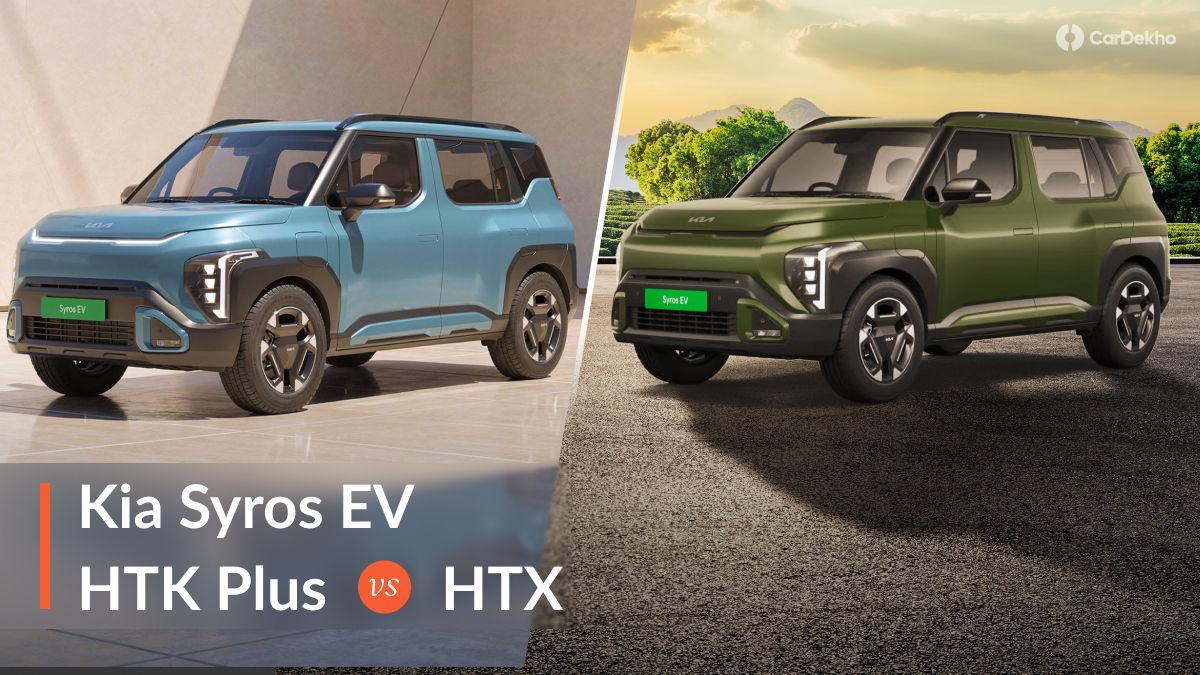
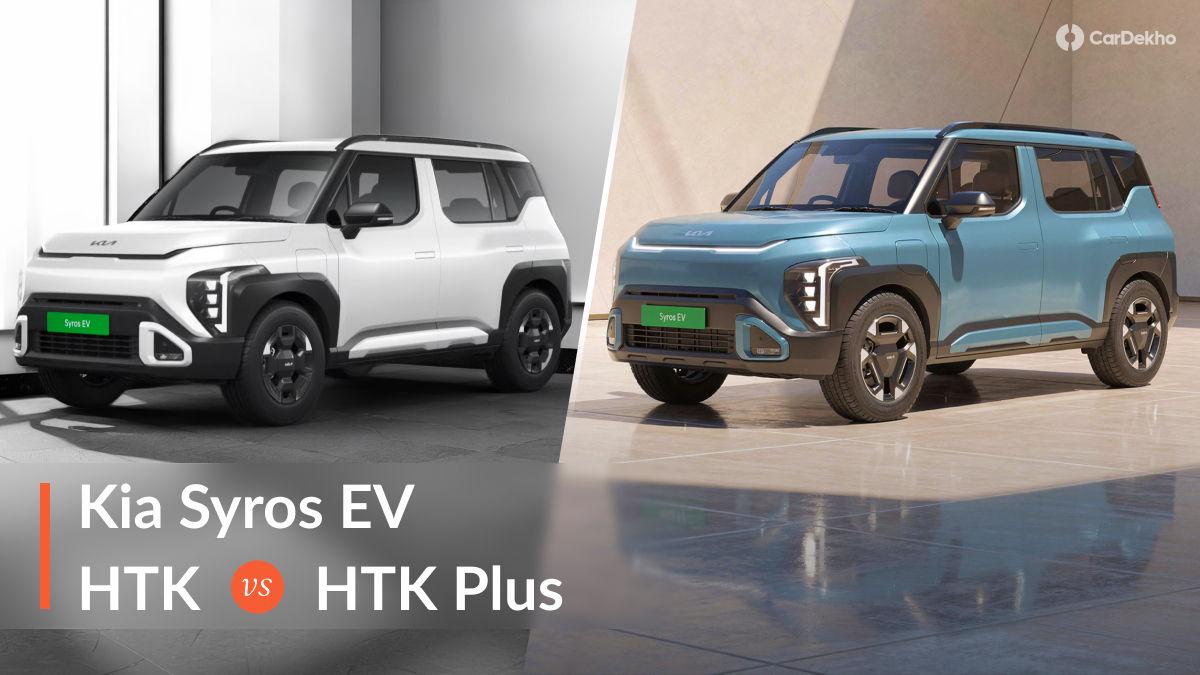
The Syros EV has a distinct look that makes it stand out from the crowd. Both variants look almost identical, and the easiest way to tell them apart is that the HTX Plus adds front parking sensors to its trim, whereas the HTX does not get this feature.

Overall, you have the same bulky body-coloured nose upfront with the Kia logo on top, vertical LED headlamps, body coloured inserts in the bumper with slim LED fog lamps in it.
Coming to the profile, both trims have the same boxy proportions with black roof rails, a unique body-coloured B-pillar, body-coloured inserts on the doors, front-fender-mounted charging port flap, and 17-inch dual-tone alloy wheels (with 51.4 kWh battery pack). The HTX Plus adds automatic flush door handles on top of the manually operated ones from the HTX.
At the rear, both are identical in looks, with the same split LED taillamps with LED turn signals, a flat tailgate with the Kia logo at the centre, body-coloured inserts on the bumper just like in front, and rear parking sensors with a reverse parking camera over the number plate housing.
| Colour Options: With both trims, you have the option to choose all the colours from its catalogue, except the Matte Graphite, which is reserved for the top-end X-Line Trim. To know more about the colours offered in the Syros EV, check out our variant-wise colours story. |
Interior
Stepping into the Syros EV, the main difference you notice between these variants is the theme of the cabin, where the HTX comes with dual-tone blue and grey semi-leatherette seat upholstery, and the HTX Plus is offered with dual-tone Onyx Black and Off-White leatherette seats.
The dashboard of both variants is perfectly laid out with tactile buttons, a soft-touch panel on the top, and a large triple-screen display setup. The difference between the two is that the HTX has the steering wheel derived from the Syros ICE, and the HTX Plus has the double D-cut style steering wheel derived from the Seltos. It even gets a set of sporty pedals compared to the regular ones on the HTX.
While the blue and grey theme of the HTX feels premium for the price, the Onyx Black and Off-white of the HTX Plus uplift the overall cabin experience and make it feel like a segment above as well.
Features
In terms of features, the HTX Plus, in addition to the HTX, offers a triple-screen setup featuring an updated 12.3-inch infotainment touchscreen with built-in navigation, a 12.3-inch digital driver’s display, and a 5-inch climate control display.
It also has a wireless phone charger, an 8-speaker Harmon Kardon premium sound system, auto-dimming IRVM, front and rear seat ventilation, which is the highlight of the Syros EV, and a 4-way powered driver’s seat. With the top-end variant you even get the ambient lighting in the cabin, LED front footwell light and the Kia logo projection on the ORVMs
So, HTX Plus offers multiple convenient features that do make a difference in driving as well.
Safety
Coming to safety, the Syros EV offers 6 airbags, electronic stability control (ESC), tyre pressure monitoring system (TPMS), hill hold assist, hill start assist, electric parking brake with auto hold, rear parking sensors, and ISOFIX child seat mount as standard across all variants.
The difference that sets these two apart is that the HTX Plus offers front parking sensors, a battery heating system, and a dashcam (available with a 51.4 kWh battery pack). Overall, for safety features, both variants are very well equipped.
Battery Options
The Syros EV with HTX trim is available with a 42 kWh battery pack and a 51.4 kWh battery pack, whereas in the HTX Plus, you only get the larger battery pack. Here’s a detailed specification of the battery packs available:
| Battery |
42 kWh |
51.4 kWh |
| Power |
135 PS |
171 PS |
| Torque |
255 Nm |
255 Nm |
| Claimed range (MIDC Part 1 + Part 2) |
443 km |
526 km |
| No of electric motor(s) |
1 |
1 |
Rivals
The Syros EV rivals the Tata Nexon EV, VinFast VF6, Mahindra XUV 3XO EV, and the MG Windsor EV.
CarDekho Says…
If you are looking for an electric vehicle that has more than enough features, a premium cabin, and the option to choose between the larger and smaller battery packs, the HTX trim will be suitable for most of your usage as well.
But if you want your electric vehicle to be fully loaded with features and safety equipment as well, the HTX Plus will certainly fulfil your needs, as on top of what you get with HTX, it offers front and rear seat ventilation, a dual-tone black and off-white theme for the seats and cabin, making it feel a segment above.