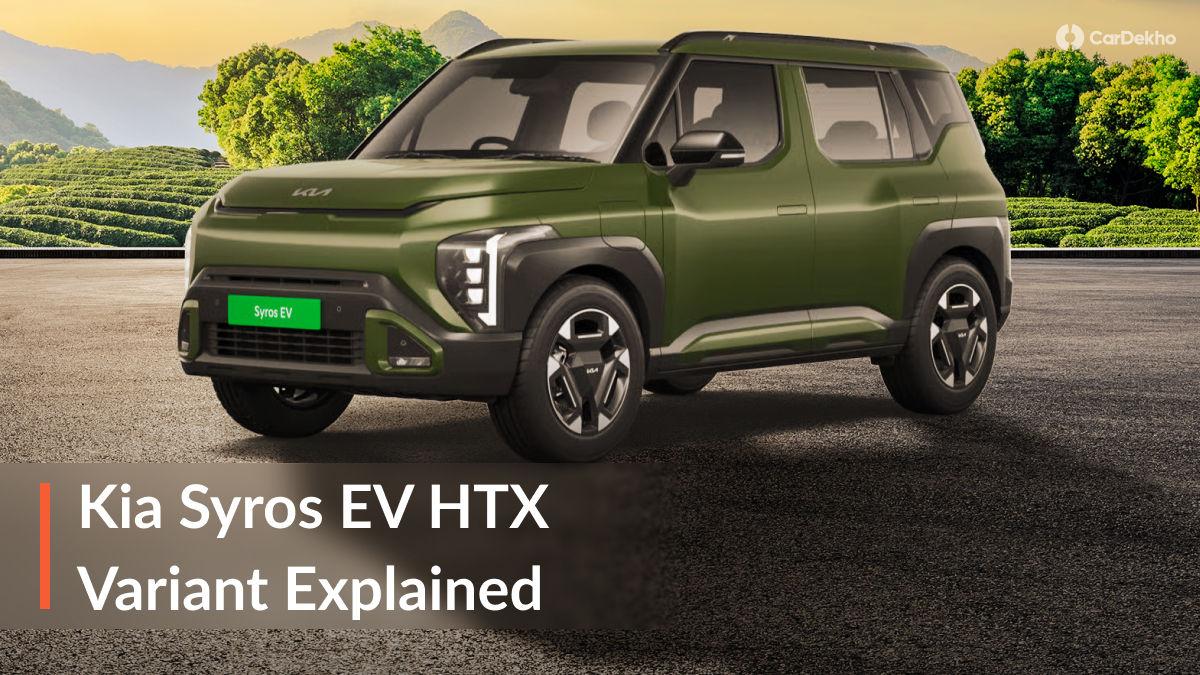

2026 Kia Syros EV Variant Compared: HTK Vs HTK Plus
Both variants are very well spec'd, with a minor difference in equipment offered


- Write a comment
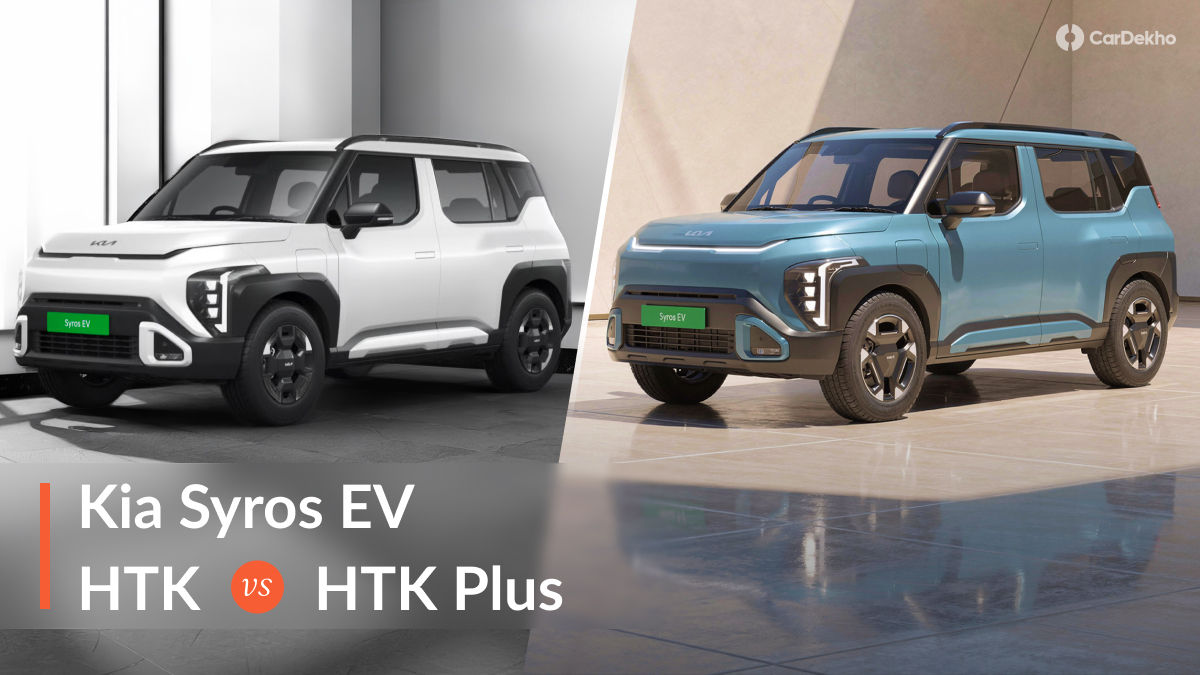
The Kia Syros EV was launched last month with a starting price of Rs 13.50 lakh (ex-showroom). It is an EV counterpart to the Syros ICE, and the two, in terms of looks, are very similar to each other.
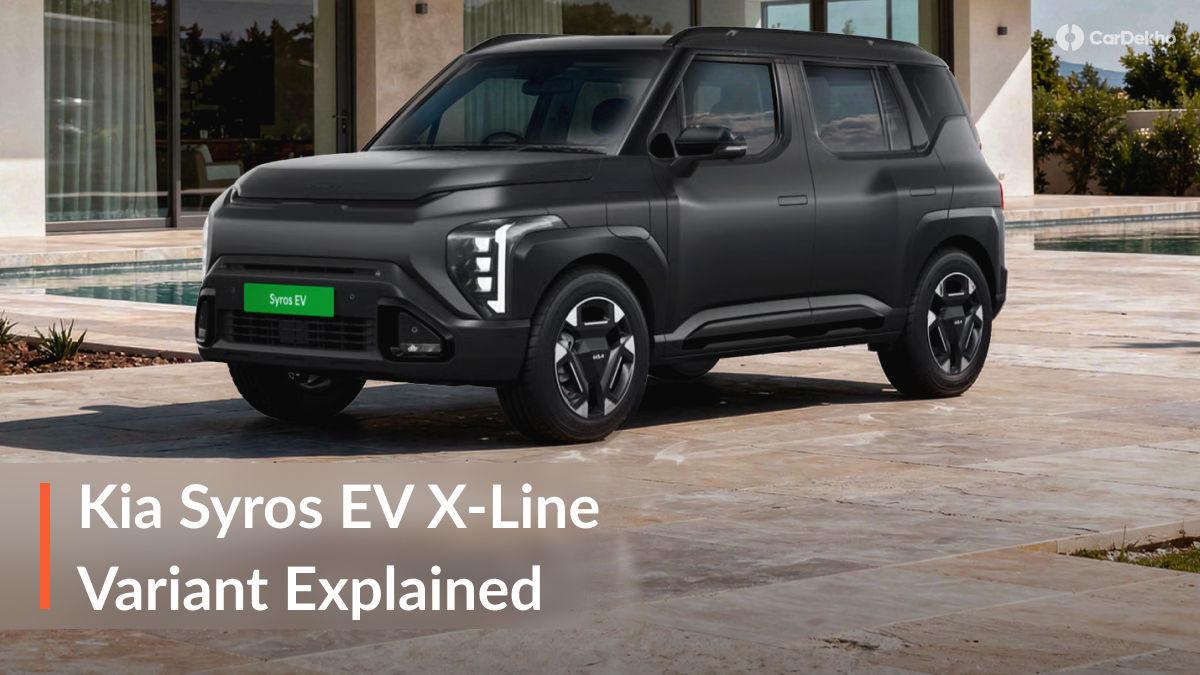
The Syros EV is offered in five trims, which are HTK, HTK Plus, HTX, HTX Plus and the X-line.
Except for the base HTK variant, all the other higher variants are available with an extended-range battery pack as well. While the base HTK variant offers plenty of features and equipment with it, does it feel worth it to upgrade to the HTK Plus variant? Let’s find out:
Price
| Variants |
Kia Syros EV HTK |
Kia Syros EV HTK Plus |
| Price (ex-showroom) |
Rs 13.50 lakh |
Rs 15 lakh to Rs 17 lakh (ER) |
-
The Syros EV with the HTK variant is offered with a single 42 kWh battery pack.
-
The higher HTK Plus is offered with both 42 kWh and 51.4 kWh battery pack options.
Design
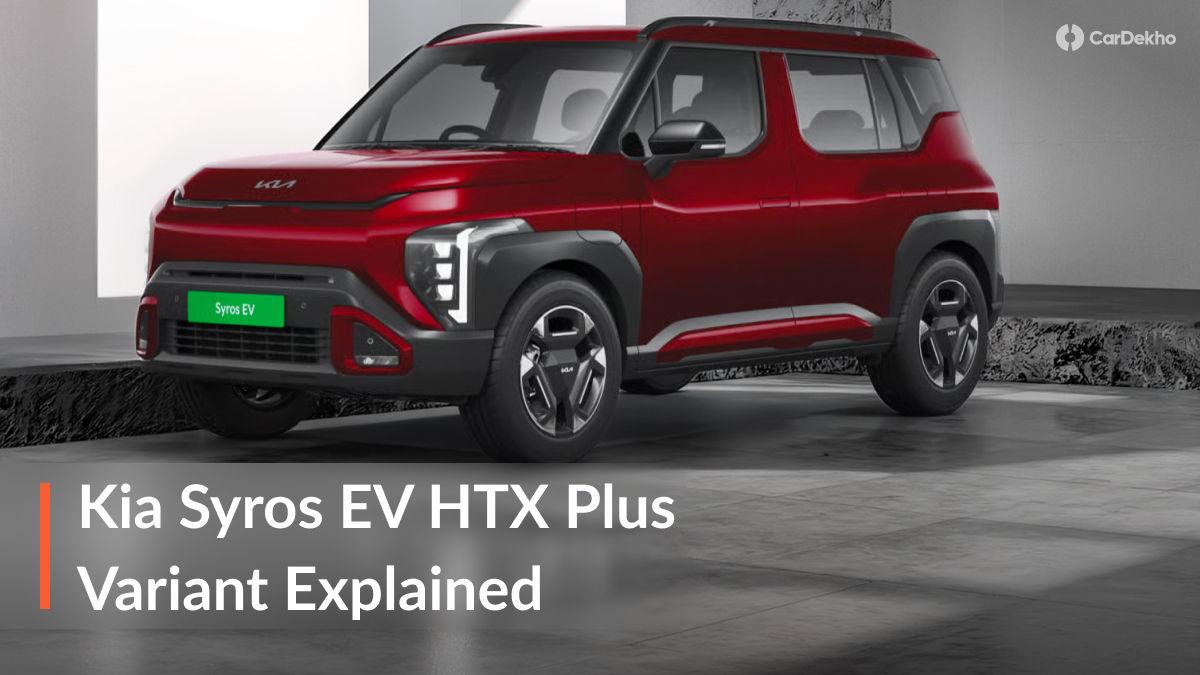
The Syros EV is completely based on its ICE counterpart, with boxy proportions and funky styling; it does standout in the crowd of crossovers in this segment. Both variants are nearly identical in the fascia with a large body-coloured nose panel at the front, body-coloured inserts on the bumper and slim LED headlamps.

Coming to the profile, the HTK and HTK Plus are similar in design with flush door handles, body-coloured B-pillar, black roof rails, chunky cladding which adds a rugged feel to it, shark-fin antenna, and front fender-mounted charge port flap. The difference comes in the wheels offered with both variants, where the HTK and the HTK Plus are offered with smaller 16-inch alloys, while the HTK Plus with the 51.4 kWh battery pack is offered with 17-inch dual-tone alloys.
At the rear, both variants are exactly the same, with split LED taillamps, a flat tailgate, and body-coloured bumper inserts which enhance the SUV look of it as well. Both variants miss out on the rear wiper with washer and defogger unit.
Interior
Step inside the Syros EV and both variants won’t make you feel that these are lower-spec variants, with a clean dashboard layout, a triple-screen setup, and a two-spoke steering wheel derived from the Syros ICE.
With the Syros EV, front occupants now have an additional storage space with a floating centre console, which is present instead of the gear lever, which is replaced by the steering-mounted column. Both variants come with dual-tone blue and grey semi-leatherette seat upholstery, which does enhance the premiumness of the cabin.
Features
On the features front, both variants are equipped with a triple-screen setup which includes a 12.3-inch infotainment system, a 5-inch climate control display, and a 12.3-inch digital driver’s display. Both also have wireless Android Auto and Apple CarPlay, 4-speakers with tweeters, steering-mounted controls, drive modes (Eco, Normal, Sport), Type-C charge ports for front and rear passengers, manual IRVM, and rear AC vents.
While both variants are well-equipped, the HTK Plus additionally features a faster 100W Type-C charging port at the front and a cruise control system.
Safety
In terms of safety, both variants are equipped with six airbags, rear parking sensors, hill hold assist, an electronic parking brake, a tyre pressure monitoring system (TPMS), all-wheel disc brakes, and a virtual engine sound system.
By opting for the HTK Plus variant, you get a reverse parking camera, which will help you when parking or reversing the car.
Battery Options
The Syros EV is offered with two battery packs, which are a smaller 42 kWh battery pack, which is suitable for office runs and city drives with occasional trips outside the city, and an extended-range 51.4 kWh battery pack suitable for long-distance travel. The base HTK variant is available only with the smaller battery pack, while the higher HTK Plus is available with both battery packs.
Here’s a detailed specification of the battery packs available:
| Battery |
42 kWh |
51.4 kWh |
| Power |
135 PS |
171 PS |
| Torque |
255 Nm |
255 Nm |
| Claimed range (MIDC Part 1 + Part 2) |
443 km |
526 km |
| No of electric motor(s) |
1 |
1 |
Rivals
The Syros EV’s primary rivals include the Tata Nexon EV, VinFast VF6, Mahindra XUV 3XO EV, and the MG Windsor EV.
CarDekho Says…
The Kia Syros EV's HTK and HTK Plus trims have similar exteriors, high-quality interiors with well-executed features, and comparable safety equipment.
The main difference lies in the battery packs; the HTK model is suitable for city driving and occasional weekend trips without losing significant features.
Frequent long-distance drives outside the city or interstate will likely require a large battery pack, which the HTK Plus offers the choice of two battery packs with it.