Hyundai Verna Bharat NCAP vs Global NCAP Crash Test Ratings Compared
The Verna has now scored 5 stars with both crash test agencies, but the facelift’s tests show some clear differences from the 2023 pre-facelift car


- Write a comment
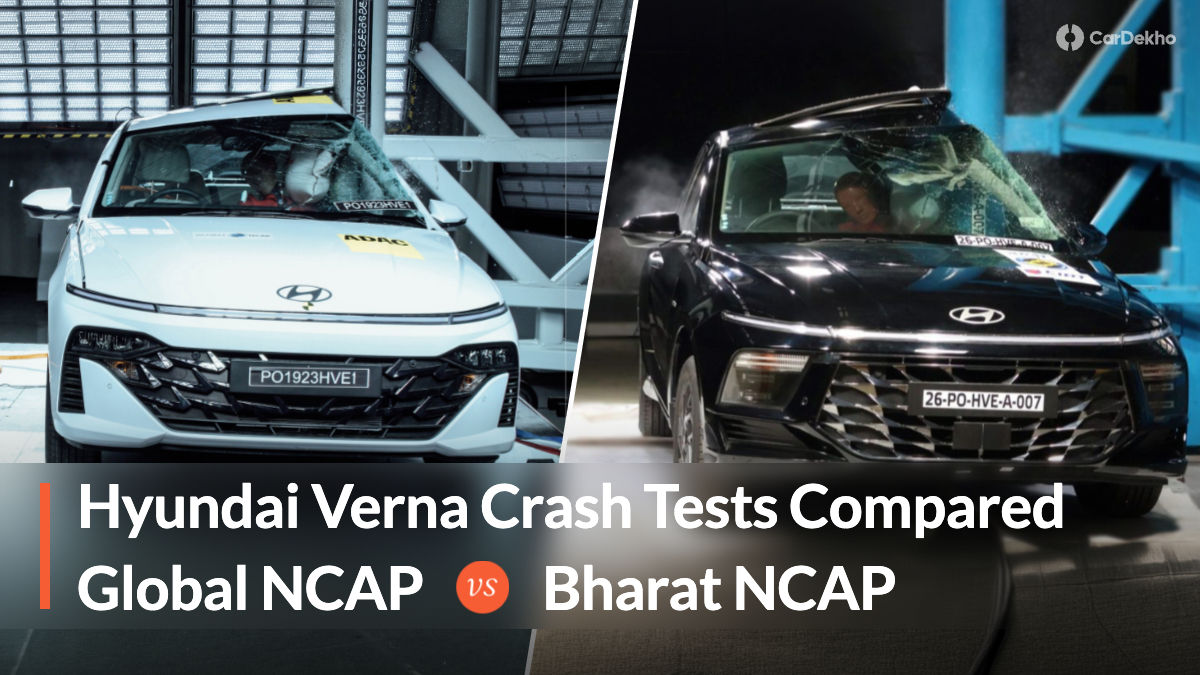
The Hyundai Verna is one of the few cars crash-tested by both Bharat NCAP and Global NCAP. Global NCAP tested the pre-facelift Verna in 2023, and recently Hyundai has shared its Bharat NCAP crash test results.
In both tests, the Verna scored 5 stars in both Adult Occupant Protection (AOP) and Child Occupant Protection (COP) categories. Do note that between the pre-facelift and facelift models, there are no structural differences, and both versions of the car belong to the same platform, sharing the same core DNA. Here is how the two sets of results compare.
Bharat NCAP Crash Test Results And Scores
| Parameters |
Bharat NCAP |
Global NCAP |
| Adult Occupant Protection (AOP) score |
28.22 / 32 points |
28.18 / 34 points |
| Adult safety rating |
⭐⭐⭐⭐⭐ |
⭐⭐⭐⭐⭐ |
| Frontal Offset Deformable Barrier Test score |
12.45 / 16 points |
11.5 / 16 points |
| Side Movable Deformable Barrier Test score |
15.77 / 16 points |
15.7 / 16 points |
| Child Occupant Protection (COP) score |
44 / 49 points |
42 / 49 points |
| Child safety rating |
⭐⭐⭐⭐⭐ |
⭐⭐⭐⭐⭐ |
| Child safety dynamic score |
24 / 24 points |
NA |
NA- Not Available
| Note: The AOP scores of both agencies aren’t directly comparable. Global NCAP’s total is out of 34 points, while Bharat NCAP’s is out of 32. |
Hyundai Verna Bharat NCAP Tests
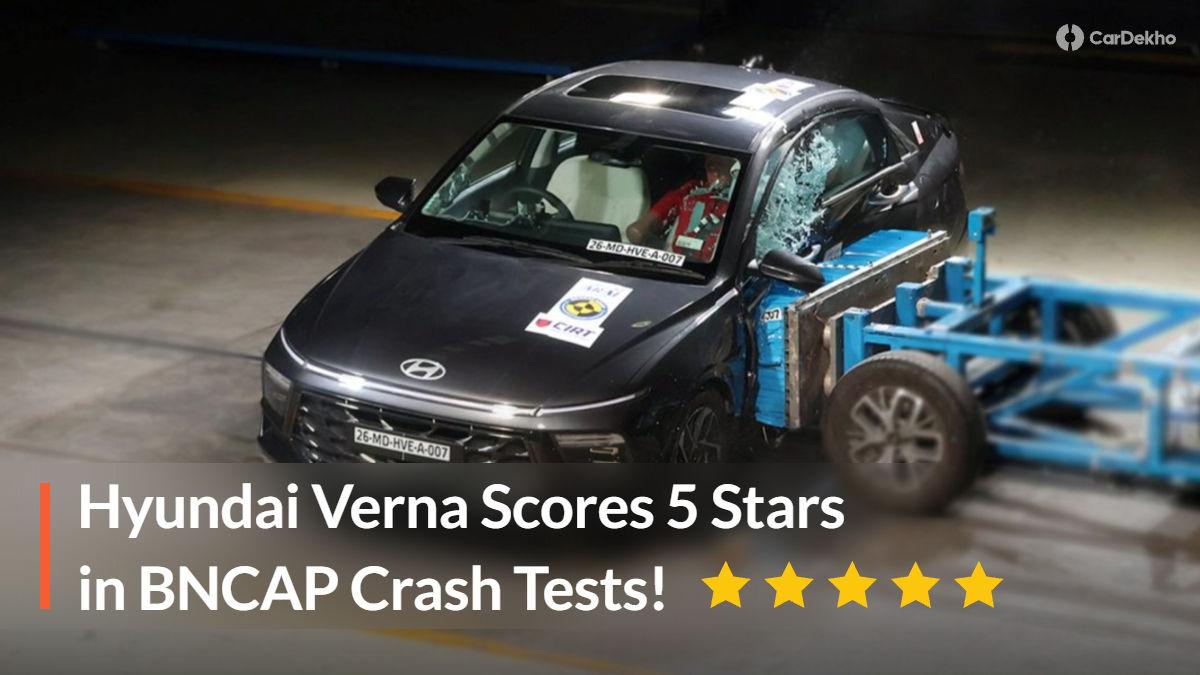
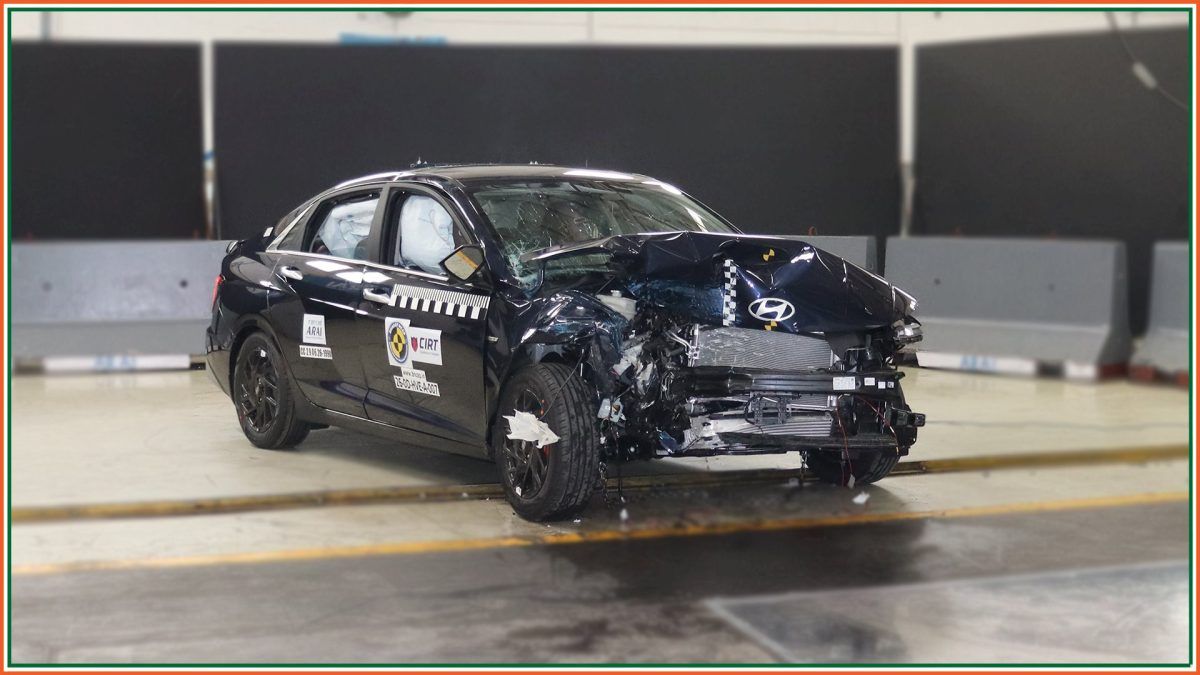
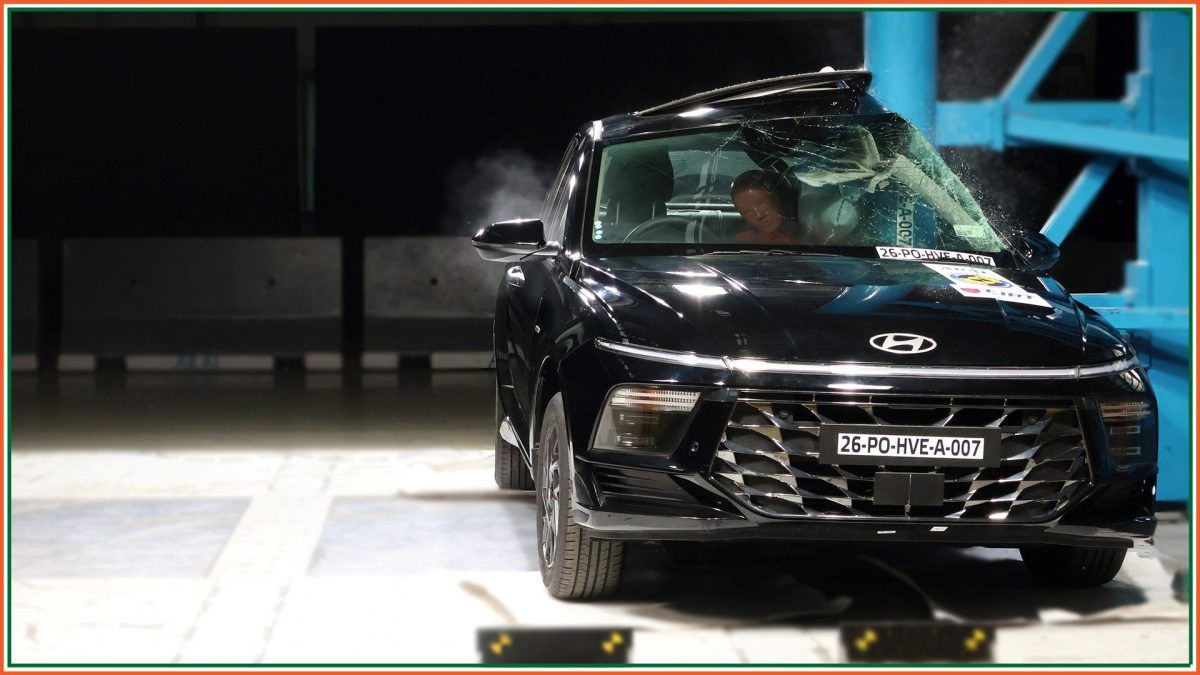
In the frontal offset deformable barrier test at 64 kmph, the Verna scored 12.45 out of 16 points. Comparing the safety provided to different body parts, the driver’s head was rated ‘good’, the chest and legs ‘adequate’, and the pelvic region ‘marginal’. Similarly, for the passenger, the head, chest and left leg were rated ‘good’, the right leg ‘adequate’, and the pelvic region ‘marginal’.
There was a minor improvement in the side movable deformable barrier test at 50 kmph, where it scored 15.77 out of 16 points, with ‘good’ protection for the head and pelvis and ‘adequate’ for the chest. In the side pole impact test, the head, chest, and pelvis were all rated ‘good’.
In the COP tests, the Verna scored a perfect 24 out of 24 in the dynamic assessment and 12 out of 12 for CRS installation. However, it lost some crucial points in the vehicle assessment, scoring 8 out of 13. Both the 18-month-old and 3-year-old dummies scored full marks (8/8 in frontal and 4/4 in side impact) with child seats on the ISOFIX mounts.
Hyundai Verna Global NCAP Tests
The version of the Verna used for testing by the Global NCAP in 2023 had fewer safety features but had all the essentials and basic safety amenities. In the frontal offset test, the head and neck of both the driver and passenger were rated ‘good’. The driver’s chest was ‘marginal’, while the passenger’s chest was ‘good’. Both occupants’ knees were ‘marginal’; the driver’s tibias were ‘adequate’, and the passenger’s were ‘good and adequate’.
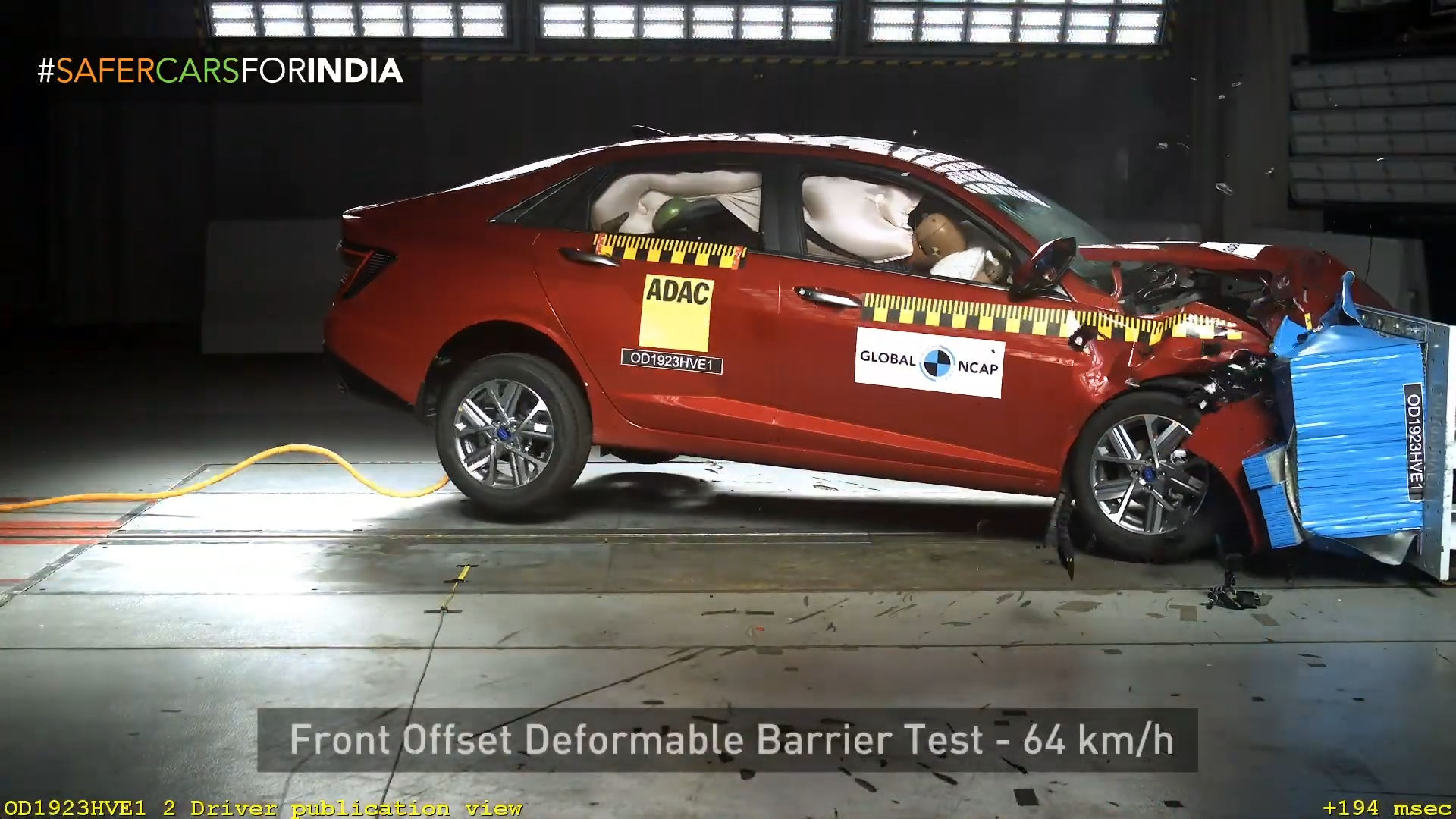
The negative outcome was that both the footwell area and bodyshell were rated ‘unstable’, and the shell was deemed incapable of withstanding further loadings.
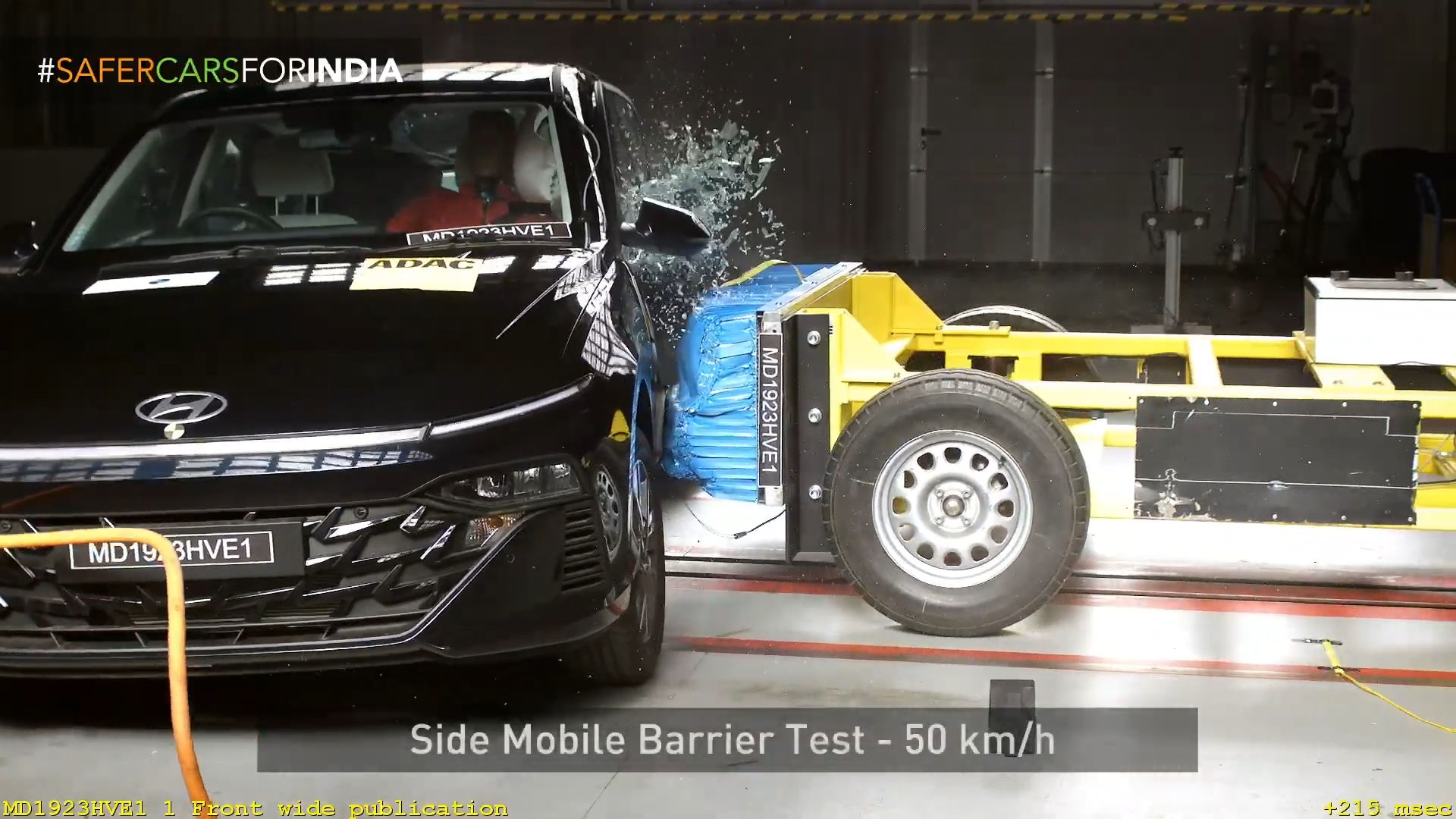
In the side impact test, the head, abdomen and pelvis were ‘good’ and the chest ‘adequate’. In the side pole test, the head and pelvis were ‘good’, the abdomen ‘adequate’, and the chest ‘marginal’. Its ESC also met Global NCAP’s requirements. In the COP tests, both the 3-year-old and 18-month-old dummies were seated in rearward-facing child seats, which provided full protection in both frontal and side impacts.
Takeaways And Observations
The adult protection ratings are more or less similar at both agencies. In the frontal test, the head, chest, and legs were rated ‘marginal’ to ‘adequate’, and the pelvic region was a weak point at Bharat NCAP, just as the knees were at Global NCAP. There was hardly any difference between the side impact results, with the chest rated ‘adequate’ in both.
However, there was a clear difference in the side pole test. Global NCAP rated the chest ‘marginal’ and the abdomen ‘adequate’, while at Bharat NCAP the head, chest and pelvis were all ‘good’. The facelift also did better on child occupant protection, scoring 44 points against 42 for the pre-facelift car.
Safety Features
With the facelift, Hyundai offered an additional airbag with the Verna, increasing the total from 6 airbags to 7. The update also introduced a 360-degree camera with a blind-spot monitor, and an in-built dashcam.
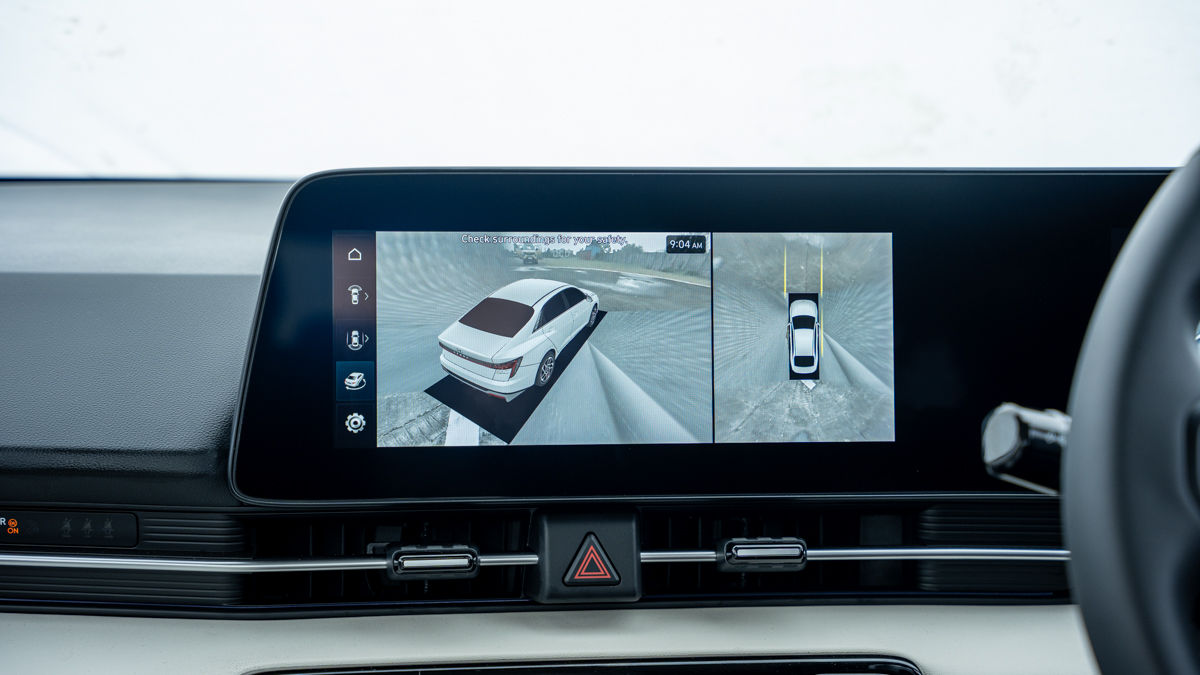
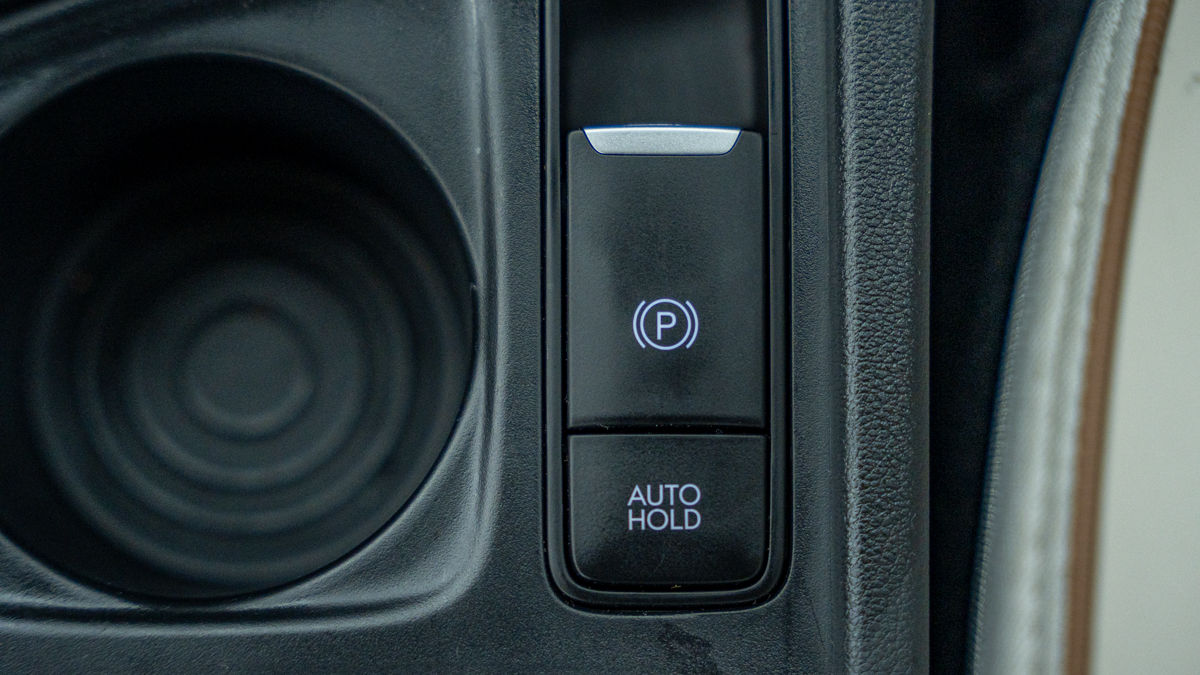
Other safety features include ABS with EBD, electronic stability control (ESC), ISOFIX child seat mounts, and a tyre pressure monitoring system (TPMS) as standard. Higher variants also add front and rear parking sensors, an electronic parking brake with auto-hold, and Level-2 ADAS (Advanced Driver Assistance Systems).
Price And Rivals
The Hyundai Verna is priced between Rs 10.99 lakh and Rs 18.46 lakh (ex-showroom). It rivals the Honda City, Volkswagen Virtus and Skoda Slavia.
CarDekho Says…
While both crash tests cannot be compared directly as the testing standards would be different across both agencies, we can confidently say that the Verna’s results show that Hyundai’s mid-size sedan is one of the safest sedans in its segment. The good thing is that with the facelifted model, the Korean automaker added a few new features to improve the safety kit.
The adult protection scores are almost identical, and the child protection score has actually gone up, with a perfect dynamic score at Bharat NCAP. The improvement in side pole impact tests is also worth noting, with the chest going from ‘marginal’ at Global NCAP to ‘good’ at Bharat NCAP.
For those buyers who prioritise safety alongside highway comfort and a feature-rich cabin, the Verna remains a strong option.