PUC Certificate Rules Revised Drastically: Massive Benefit For BS6 Vehicle Owners!
While new cars will benefit from this change, owners of older cars will face some inconvenience


- Write a comment
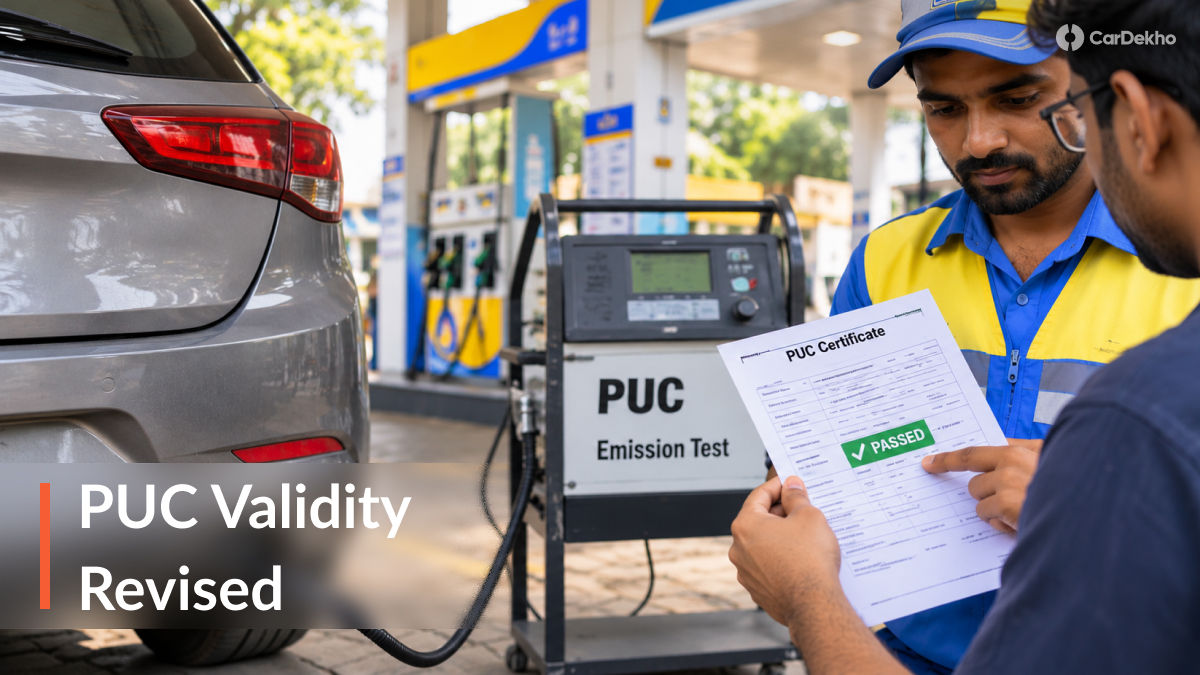
The Government of India has changed the validity of PUC (Pollution Under Control) certificates for both new and old cars, and this change will definitely have an impact on car owners. Till now, every vehicle on Indian roads needed a PUC certificate, the validity of which expired after 12 months, and while the certificate is still needed to avoid challans, the validity will now be different for different cars.
Do note that while these new guidelines have been revealed, when they will be introduced is something that is yet to be known.
BS VI Private Vehicles
For the people who own cars which are compliant with the BS VI emission norms and are less than 6 years old, the change in PUC validity is a major relief. For these owners, the PUC validity will go up from 1 year to 3 years, which means less worry about the expiry of the certificate, and once it is renewed, you won’t have to think about it for the next 3 years.
For cars which are older than 6 years and less than 10 years old, the validity of the PUC certificate remains the same at 1 year, but for cars older than 10 years, the validity of the PUC will be reduced to just 6 months.
Also, if the PUC check is done within 10 days of the date of expiry, the new certificate will start from the date of expiry, instead of the date of renewal, which was applicable till now. This is applicable to all cars.
Older Private Vehicles
For all BS 4 cars on the road, the validity of the PUC certificate will be reduced to 6 months. And for owners of BS 1, BS 2, and BS 3 vehicles, the PUC validity will be the lowest at just 3 months.

For these owners, getting updated PUC certificates will be a frequent activity and will also increase expenses since they'll have to get more certificates per year compared to new car owners.
BS VI Commercial Vehicles
Lastly, for commercial vehicles compliant with BS VI emission norms, the validity changes as well. Commercial vehicles less than 6 years old will have a PUC certificate validity of 2 years. For vehicles older than 6 years and vehicles older than 10 years, the validity will be 1 year and 6 months, respectively.
| Emission Norm |
Registration Date |
Validity |
| BS 1 |
March 31, 2017 or older |
3 months |
| BS 2 |
||
| BS 3 |
||
| BS 4 |
March 31, 2020 or older |
6 months |
| BS 6 (Private) |
April 1, 2020 or newer |
3 years (Up to 6 years from date of registration), 1 year (more than 6 years but less 10 years from date of registration), 6 months (more than 10 years since registration) |
| BS 6 (Commercial) |
April 1, 2020 or newer |
2 years (Up to 6 years from date of registration), 1 year (more than 6 years but less 10 years from date of registration), 6 months (more than 10 years since registration) |
Do note that these changes will be applicable only after you renew your PUC certificate the next time, and your current PUC validity will remain unchanged.
CarDekho Says…
Since new cars are becoming increasingly environmentally friendly with stricter emission norms, the government has decided that there is no need for new cars to get PUC certificates every year. This will definitely ease the load on new car owners and eliminate the hassle of frequent visits for renewals.
However, to monitor the pollution of older vehicles better, the government has reduced their PUC certificate validity, as they are more prone to cause higher levels of pollution compared to modern cars. This may impact owners of older cars, especially those complying with BS3 and older emission norms, who will now have to get a pollution check done every quarter.