
2026 Maruti Suzuki Baleno Facelift Alpha vs Alpha (O): Is The Top-spec Variant Worth It?
The Alpha (O) is almost identical to the Alpha, but gets one important addition that makes the extra spend worth it


- Write a comment
The 2026 Maruti Suzuki Baleno facelift brings a sharper design, more features and a more comprehensive equipment list. And when you are already spending over Rs 9 lakh on a Maruti Baleno, the differences between the top-spec Alpha and Alpha (O) variants become much harder to spot.
Both the variants are separated by Rs 40,000 and are almost identical in terms of what they offer. Yet, that additional amount gets you something the Alpha does not. So, is it enough to make the Alpha (O) worth stretching your budget for, or is the Alpha the smarter pick? Let’s find out.
Price
| Variant |
1.2-litre naturally aspirated petrol |
1.2-litre naturally aspirated petrol |
| MT |
AMT |
|
| Alpha |
Rs 9.10 lakh |
Rs 9.60 lakh |
| Alpha (O) |
Rs 9.50 lakh |
Rs 9.99 lakh |
The Alpha (O) costs Rs 40,000 more than the Alpha with both manual and automatic transmissions. Considering that both variants share the same exterior design, interior and most of their features, the additional amount is primarily for the extra safety technology offered with the top-spec variant.
If you want to further understand how the different variants of the Baleno are positioned, check out our detailed variant-wise guide covering the entire 2026 Baleno lineup.
Exterior
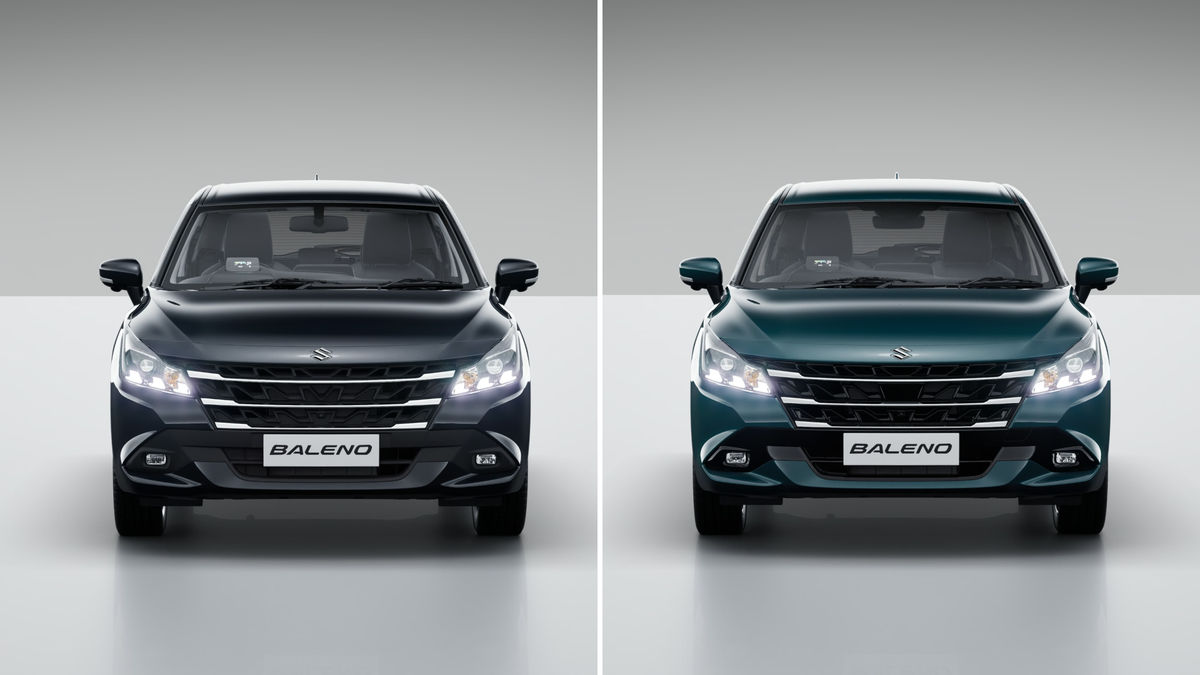
On the outside, both the Alpha (O) and Alpha are identical, with both variants getting the same design and equipment. At the front, they feature the large three-slat grille, LED projector headlamps with three-piece LED DRLs, and rectangular LED fog lamps integrated into the redesigned bumper. The only noticeable difference is the radar sensor for the Level-2 ADAS system on the Alpha (O). It sits within the grille and gives the top-spec variant an additional triangular-ish element, while the Alpha does not get this sensor.

Both variants come equipped with 16-inch dual-tone alloy wheels, chrome-finished door handles, a chrome window beltline, ORVMs with integrated turn indicators, a chrome insert on the front fender and a shark-fin antenna.
The rear design is also identical, with both variants featuring C-shaped LED tail lamps extending onto the tailgate, a chrome strip below the rear windshield and the Baleno badge on the tailgate.
Colour Options
Both the Alpha and Alpha (O) variants are available in the same seven colour options, which include:
-
Arctic White
-
Grandeur Grey
-
Splendid Silver
-
Nexa Blue
-
Opulent Red
-
Bluish Black
-
Enigmatic Teal
Checkout all these colours, and their variant-wise split here.
Interior
The cabin experience is also largely identical between the two variants. Both get the same dark grey, black and blue theme, along with black-and-blue leatherette seat upholstery and a layered dashboard design. The dashboard features a silver accent panel, a free-floating 9-inch touchscreen infotainment system and a coloured MID in the instrument cluster. Both variants also get a leather-wrapped three-spoke steering wheel with silver inserts, and adjustable headrests for all passengers.
In terms of practicality, both variants get front and rear Type-C charging ports along with cup holders at the front. The cabin continues to offer a spacious layout, making the Baleno a practical option for everyday use. There is, therefore, very little to distinguish the Alpha from the Alpha (O) inside the cabin. Both offer the same premium features and overall ambience, with the differences between the two variants primarily limited to safety equipment.
Check out our detailed Alpha (O) variant image gallery, for a closer look at the top-spec variant, including its exterior and cabin.
Features
The Alpha is already a well-equipped variant and gets a 9-inch touchscreen infotainment system with wireless Apple CarPlay and Android Auto, connected car technology, head-up display, automatic climate control, a wireless phone charger and a USB Type-C charging port. It also gets ventilated front-row seats, along with a 6-speaker Clarion sound system, and keyless entry with push-button start/stop.
For a more detailed look at what you get with the Alpha variant, you can also check out our dedicated Alpha variant explainer.
The Alpha (O) carries forward the same feature list, so there are no major differences in terms of cabin convenience or entertainment features between the two variants.
Safety
This is where the Alpha (O) gets its biggest advantage over the Alpha. Both variants get six airbags, a 360-degree camera, electronic stability control (ESC), hill-hold assist, rear parking sensors, tyre pressure monitoring system and ISOFIX child-seat mounts. However, the Alpha (O) adds a Level-2 ADAS package, which is not available on the Alpha. The system includes adaptive cruise control, automatic emergency braking, lane keep assist, lane departure warning, forward collision warning and automatic high-beam assist.
The Alpha (O) also gets a blind-view monitor as part of its 360-degree camera setup. Additionally, Bharat NCAP crash-tested the pre-facelift Maruti Suzuki Baleno. Both the 2-airbag and 6-airbag variants scored 4 stars for adult occupant protection and 3 stars for child occupant protection.
Powertrain Options
Both the Alpha and Alpha (O) are offered with the same 1.2-litre three-cylinder naturally aspirated petrol engine, and neither gets the CNG powertrain as an option.
Here are the detailed specifications:
| Engine |
1.2-litre naturally aspirated petrol |
| Power |
83 PS |
| Torque |
112 Nm |
| Transmission |
5-speed MT/5-speed AMT |
| Fuel Efficiency (ARAI-claimed) |
23.80 kmpl (MT)/24.77 kmpl (AMT) |
MT- Manual Transmission, AMT- Automated Manual Transmission
Since the powertrain options are identical, there is no difference in performance or claimed fuel efficiency between the Alpha and Alpha (O). The choice between the two, therefore, comes down almost entirely to the features and safety equipment on offer.
CarDekho Says…
The Alpha is already a well-equipped variant and gets most of the features you would expect from a top-spec Baleno, including ventilated front seats, a 9-inch touchscreen, automatic climate control, a wireless charger, connected car technology and a 360-degree camera.
The Alpha (O), however, adds something that the Alpha cannot match: Level-2 ADAS. For an additional Rs 40,000, you get adaptive cruise control, automatic emergency braking, lane keep assist, lane departure warning, forward collision warning and automatic high-beam assist, along with a blind-spot monitor.
There are no meaningful differences in terms of design, interior or powertrain, so the decision is quite straightforward. If you are happy with the Alpha's already extensive feature list and do not specifically need ADAS, the regular Alpha makes more sense from a value perspective. However, if you want the added safety net of Level-2 ADAS, the Rs 40,000 premium for the Alpha (O) is relatively easy to justify.