
2026 Renault Duster: India-Spec Vs Global-Spec Model Compared
Rather than being a straight copy of the global model, the India-spec Duster comes with multiple market-specific changes inside and out


- Write a comment
UPDATE: Renault India has launched the new Duster from Rs 10.49 lakh (ex-showroom). DETAILED RICE LIST HERE!
Renault has officially revealed the new Duster for India, marking the return of a nameplate that once played a crucial role in establishing the brand in the country. While the new Duster is based on the latest global model sold under the Dacia badge in several international markets, the India-spec version is not a direct copy. Instead, Renault has introduced many market-specific changes to better align the SUV with Indian buyer preferences.
The 2026 Duster represents a significant generational jump for Indian customers. From styling and cabin layout to features and powertrain choices. Here’s a detailed comparison of how the India-spec 2026 Renault Duster differs from its global-spec counterpart.
Design
Front
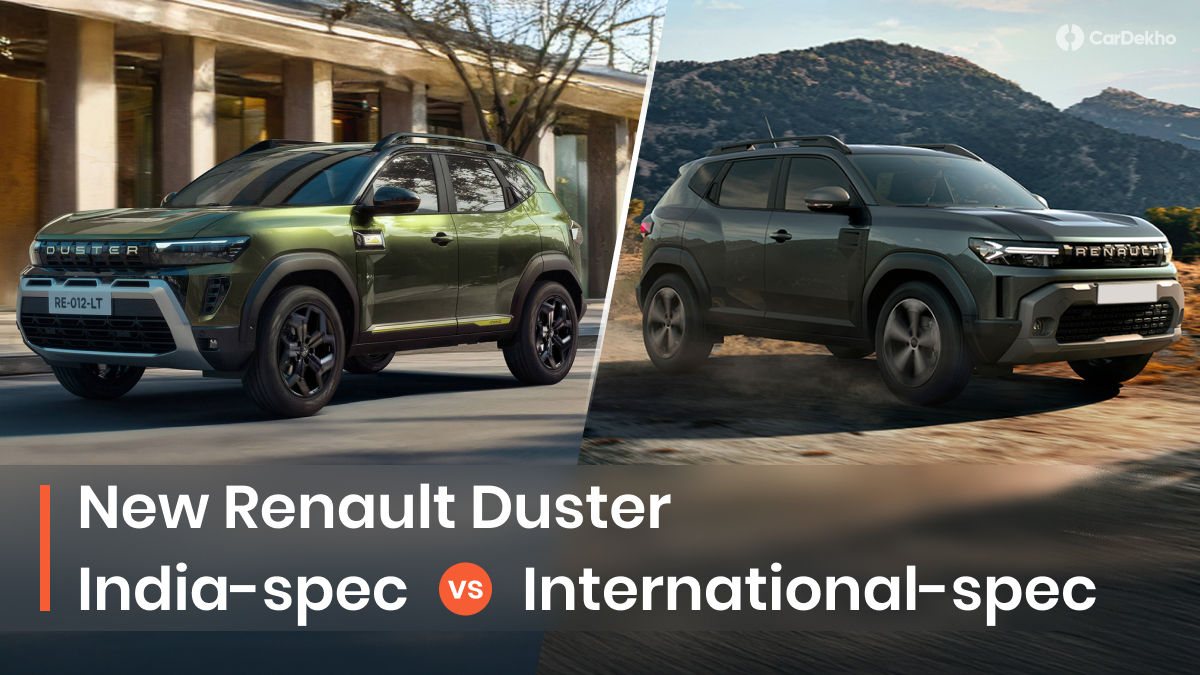
One of the most prominent differences lies in the branding. Global-spec models feature bold ‘Renault’ lettering on the grille. In contrast, the India-spec version spells out ‘Duster’, focusing on the strong recall the nameplate enjoys on our shores.

The headlamp shape remains unchanged, but the lighting signature is different. Global models feature Y-shaped LED daytime running lights, whereas the India-spec Duster uses slimmer LED DRLs. The headlamp internals have also been revised slightly to suit the new lighting layout.
Another noticeable change is the bumper design. While both versions retain a silver-finished overhang on the front bumper, the India-spec Duster gets a revised layout with triple air intakes positioned higher up. The fog lamps have been pushed towards the corners, and the lower grille now features vertically oriented air intakes with black plastic housings. The fascia of the India-spec model looks more premium, while the global model looks more rugged.
Side
From the side, the India-spec Duster gets Himalayan-inspired fender badges on select variants, replacing the simpler plastic trims seen on the global model. There is also a yellow ‘Iconic’ accent strip running along the lower door line, along with yellow ‘Duster’ branding on the roof rails, both of which are absent internationally. All these subtle tweaks add flavour to the design of the India-spec Duster.
Wheel size remains the same at 18 inches for both versions. However, the India-spec SUV gets black-finished alloy wheels, while global models usually feature dual-tone or silver finishes. The black alloy wheels add a hint of sportiness to the profile and complement the Duster's design language.
| A small detail: Keen-eyed observers will notice that the Duster’s real door handles are mounted on the C-pillar instead of their conventional position. This wasn’t the case in the old Duster. |
Rear
At the rear, the overall design remains similar, but the India-spec Duster gains a few notable additions. A connected LED light strip spans the width of the tailgate on the Indian model, whereas global versions use standalone tail lamps.
The triangular tail-lamps on the India-spec Duster also get a sleeker LED layout. Additionally, the tailgate features a mix of glossy and matte black trim, and the rear bumper has been redesigned with a two-tone finish and a silver surround effect. Global models, in comparison, feature a simpler rear bumper design.
The Duster has come a long way from, with the new one being a big upgrade from the old one that was sold in India. Here’s a detailed report on the Duster’s evolution in India.
| Following the trend: Most Indian carmakers are offering connected tail lamps in their SUVs, and it seems like Renault has done their research well and followed the market trend. |
Interior: A More Premium Cabin For India?
The differences between the India-spec and global-spec Duster are even more evident once you step inside.
In the global model, you get a monotone grey interior with minimal contrast. On the other hand, the India-spec model uses yellow contrast stitching across the steering wheel, seats, armrest, dashboard, and door pads. Yellow ‘Duster’ branding on the dashboard further distinguishes the Indian version, and reinforces the Duster brand.
Renault has also added faux carbon-fibre inserts, satin silver trim and two-tone leatherette upholstery in the India-spec SUV, giving it a noticeably more premium look and feel than the global model.
Another significant difference is the dashboard layout. The India-spec model adopts a driver-oriented dashboard and centre console. Even the AC vents are designed differently in the India-spec Duster. That being said, Renault has not tweaked the layout of the lower centre console.
Overall, the feel of the India-spec model is on the more premium side, and also a sporty theme to it.
| Brownie points for: We appreciate Renault providing nice physical buttons for AC controls and other essential functions. |
Features
Renault has also added some extra features on the India-spec version of the Duster, thereby helping it compete in a segment where SUVs are loaded with features.
Both models get a 10.1-inch touchscreen infotainment system with wireless Apple CarPlay and Android Auto. However, the India-spec Duster comes with Renault’s latest system that supports built-in Google apps as well.
Higher variants in India also get a larger 10.25-inch digital instrument cluster, while global models and lower Indian trims feature a smaller 7-inch unit.
Other features that you get to see on the Indian Duster include a panoramic sunroof, powered and ventilated front seats, dual-zone climate control with an air filter, and multi-colour ambient lighting
Both versions offer strong safety credentials, including six airbags, ESC, ISOFIX mounts, and a 360-degree camera. However, the India-spec Duster stands out by offering an enhanced suite of ADAS features.
Powertrain
Renault has taken a market-specific approach with the Duster’s engine lineup.
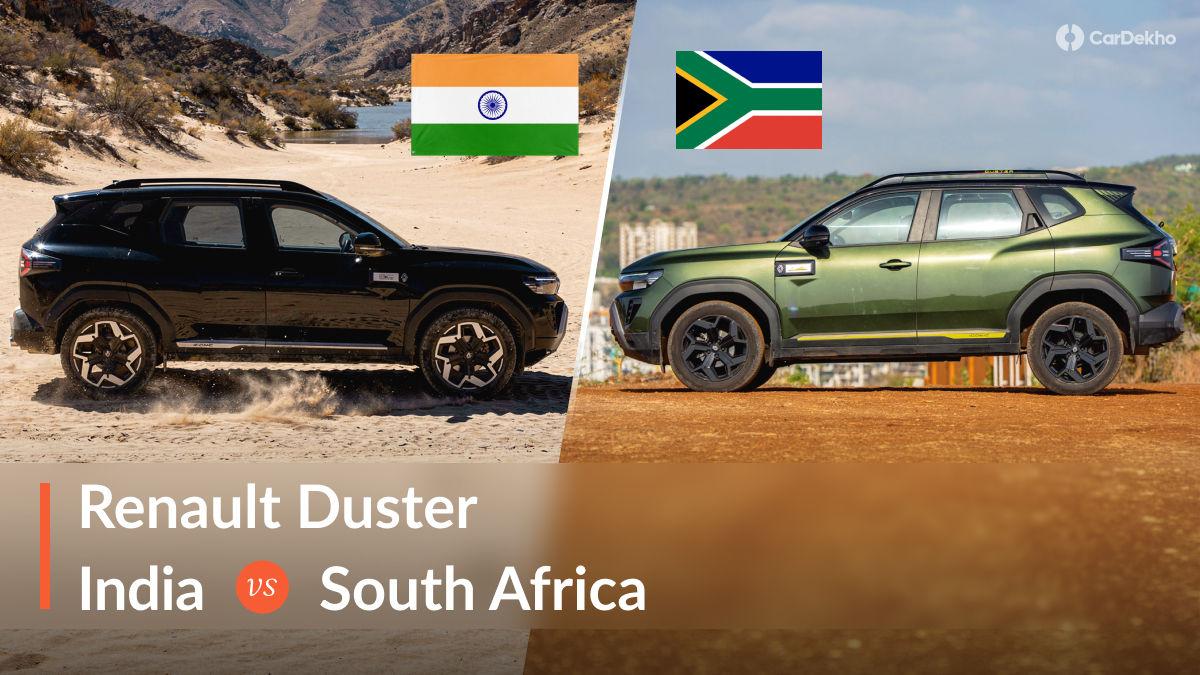
Global markets such as Australia and South Africa offer a 1.2-litre three-cylinder hybrid setup. In foreign-spec models, you also get a 1.3-litre turbo-petrol engine, a 1-litre LPG option, and a 1.6-litre unit with strong hybrid. To know more about the specs of these engines, head over to this story
In India, we get three engine options, including a strong-hybrid version as well. Here’s a closer look at the numbers:
| Engine |
1-litre turbo-petrol |
1.3-litre turbo petrol with mild-hybrid |
1.8-litre strong hybrid |
| Power |
100 PS |
163 PS |
TBA |
| Torque |
160 Nm |
280 Nm |
TBA |
| Transmission |
6-speed manual |
6-speed manual, 6-speed DCT |
8-speed DHT |
One major difference is that Duster models abroad also get an all-wheel drive option, which the India-spec model misses out on.
Price And Rivals
The India-spec Duster is expected to be priced from around Rs 10 lakh (ex-showroom), and compete with the likes of the Hyundai Creta, Kia Seltos, Honda Elevate, Skoda Kushaq, Maruti Victoris, and Tata Sierra.
To know more about the India-spec model, head over to our in-depth report on the Duster’s reveal in India.
2 out of 2 found this helpful