
How Different Is The MG Hector Tomahawk PHEV From The Maruti Grand Vitara? Plug-in Hybrid Vs Hybrid Explained!
Over 100 km of pure EV mode and 1000 km of range, too good to be true?


- Write a comment
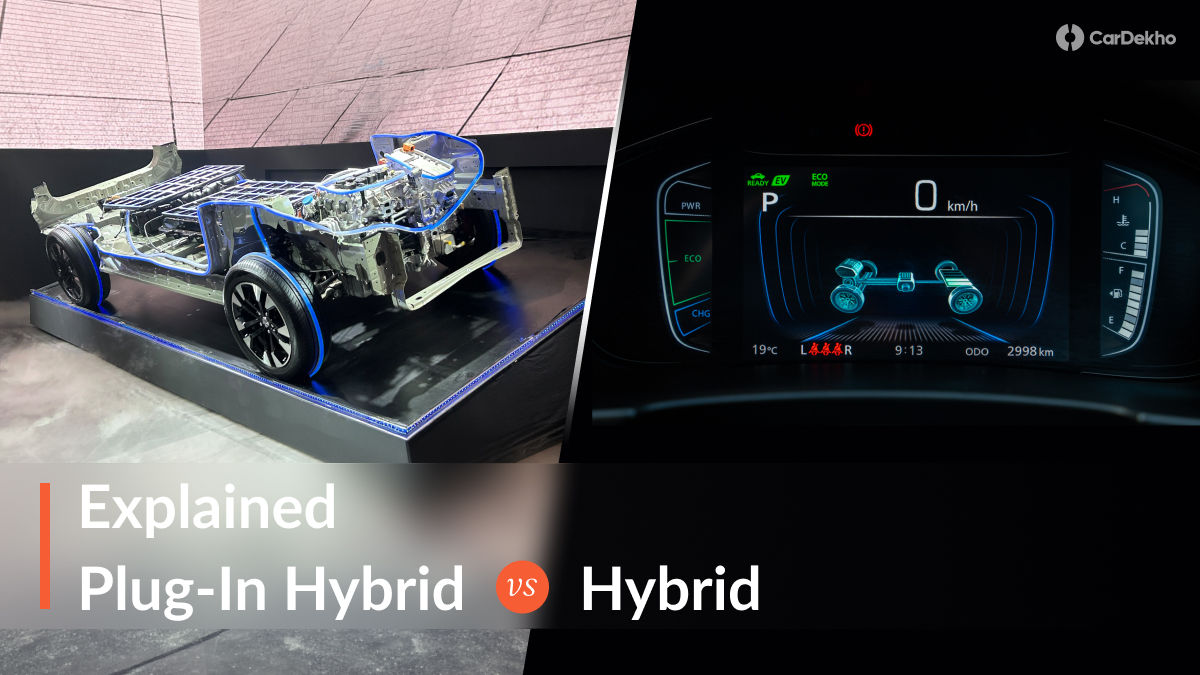
The last few years have seen major changes in the automotive market in India. Fuel and currency uncertainties have brought in blended petrol. This has also caused a push for the EV market as well. While blended petrol reduces the fuel economy of cars and EVs have uncertain ownership, hybrids seem to be a middle-ground solution to the problem. It remains predominantly powered by petrol while giving great fuel economy.
Today we have two types of hybrid cars available in the mass market. Regular parallel hybrid systems, which are in cars like the Grand Vitara and the Honda City and the plug-in hybrid system available in the recently launched MG Hector Tomahawk PHEV. Let’s explore the differences between these two:
What Is A Hybrid?
Technically, hybrid cars are those that are powered by more than one type of fuel. Hence, a car which is compatible with petrol and CNG, petrol with LPG, petrol and hydrogen, and petrol and electricity are all called hybrids. In rare instances, these also apply to diesel-engined cars as well. The use of these alternative fuels in cars has traditionally increased efficiency and lowered running costs.

But in most common references, cars running on petrol and electricity have been called hybrid cars. For your basic understanding, these hybrid systems consist of an engine, a battery pack with a battery management system (BMS), and an electric motor.
There are different types of hybrid systems which use this powertrain combination for different applications. Today, we are focusing on the most common hybrids, which are the parallel hybrid system and the newly introduced plug-in hybrid cars in India.
How Do Both Hybrids Work?
Let’s address the commonalities of the two. Cars of each system include a petrol engine, a battery pack and an electric motor. These work in tandem to achieve the best fuel efficiency possible. In this process, the cars will have a bias to run on electric power, which is called the pure EV mode, as much as possible until the battery almost runs out of charge. That is when the petrol engine turns on and starts charging the battery. This is called the series hybrid mode. The engine is not powering the wheels, but only works to charge the battery.
However, when you need extra power, the moment to stamp on the throttle, both the electric motor and the engine give you their total combined power to make an overtake or when you are driving up hills. This is called the parallel hybrid mode.
Lastly, when you are driving on the highway at highway speeds, the electric motor will be in its least efficient state. That is when the engine mode kicks in and only the engine will power the wheels of the car. This is called the pure engine mode. The electric motor does not play a role in driving the car.
PHEV Vs Hybrid
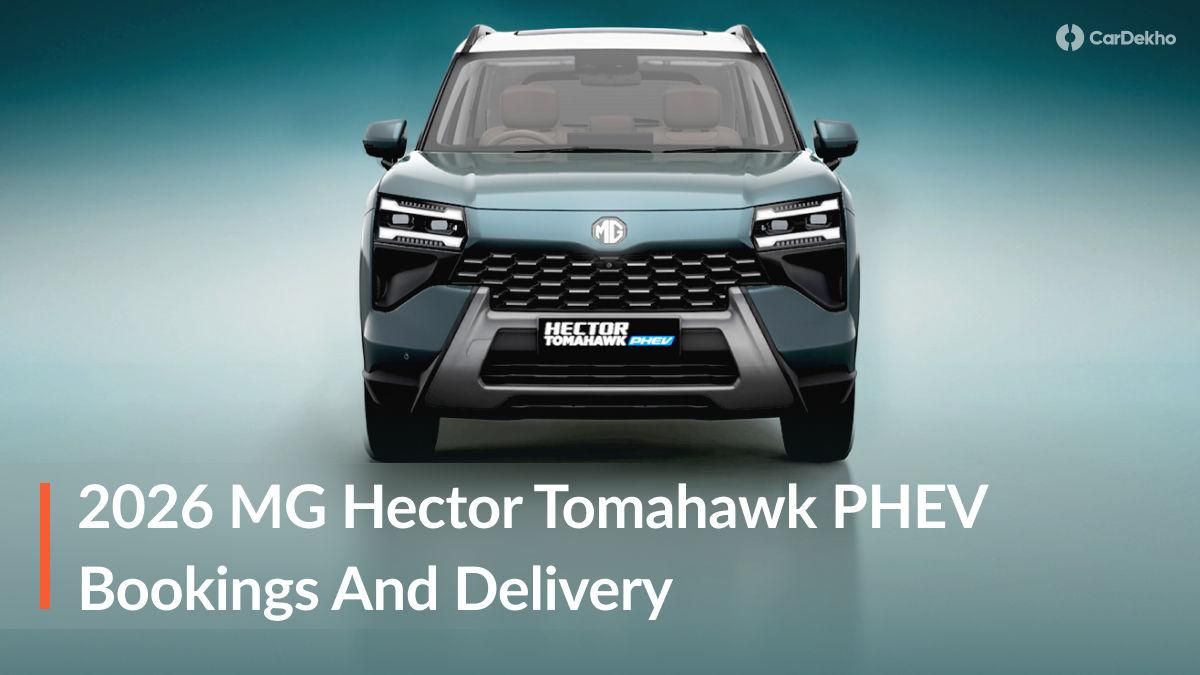
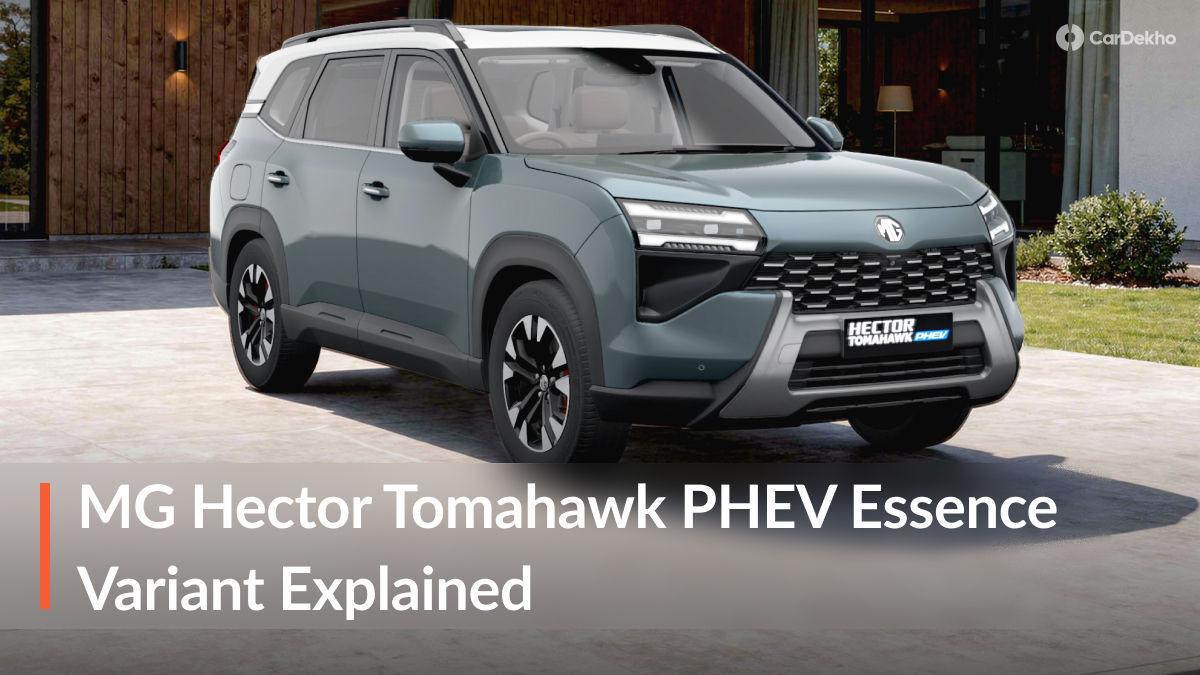
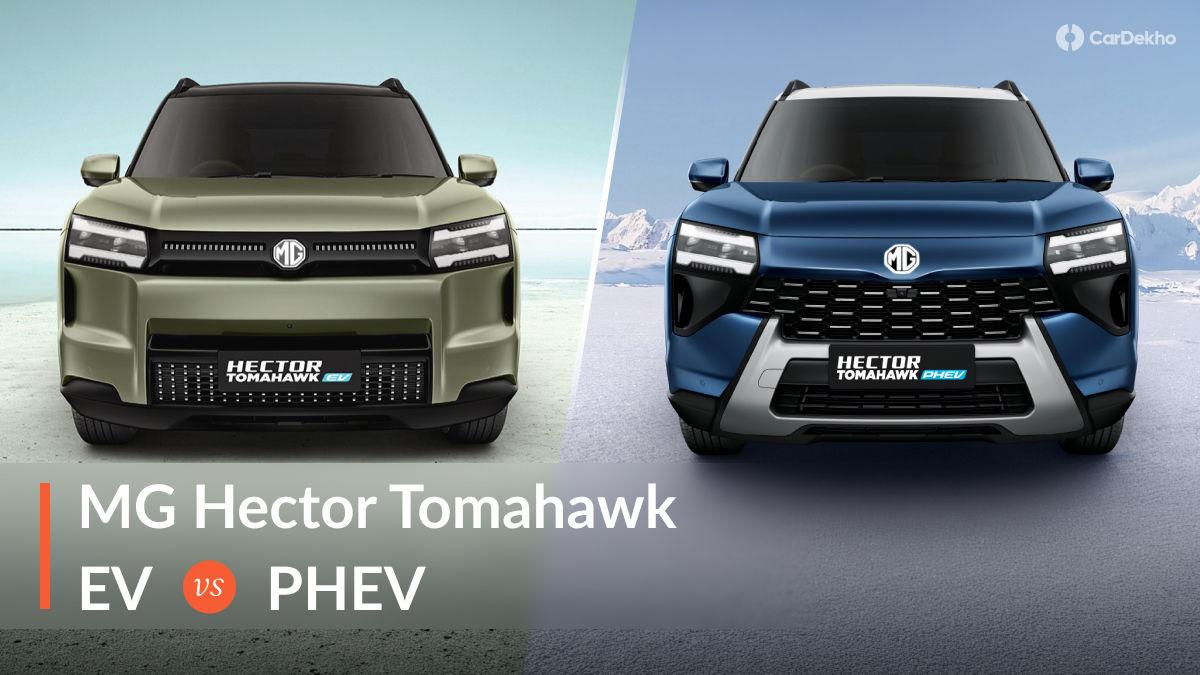
Given the recent launch of the Hector Tomahawk PHEV, it has opened up a new option of powertrain which the common man did not have. The plug-in hybrid system includes a much larger battery as opposed to a regular parallel hybrid car. For example, the current Grand Vitara hybrid has a 0.60 kWh battery pack versus the Hector Tomahawk PHEV, which has a 20.5 kWh battery. Both are powered by a 1.5-litre naturally aspirated engine running on an efficient Atkinson cycle. And interestingly, both are also capable of running over 1000 km on a single tank of fuel.
Where the PHEV has an advantage over the regular hybrid is the fact that it usually has over 100 km of pure EV range. This makes it flexible enough for people doing city commutes within 100 km. The option of charging the car at home makes it virtually an EV that doesn’t sip a single drop of petrol, thus reducing the running costs of commuting to the office drastically. And when you drive long distances on highways, the engine will assist in driving the wheels and also recharge the battery, which achieves great fuel efficiency.
A regular hybrid is only capable of self-charging and cannot charge externally like a PHEV. And since it doesn’t carry the extra weight of a much larger battery, it can be more efficient than the PHEV on some occasions.
Here is a list of PHEV and hybrid cars in India:
| PHEV |
Hybrid |
| MG Hector Tomahawk PHEV |
Maruti Suzuki Grand Vitara |
| BMW M5 |
Toyota Hyryder |
| Mercedes-Benz S-Class |
Honda City |
| Range Rover Sport |
Toyota Vellfire |
| BYD Seal U DM-i (Upcoming) |
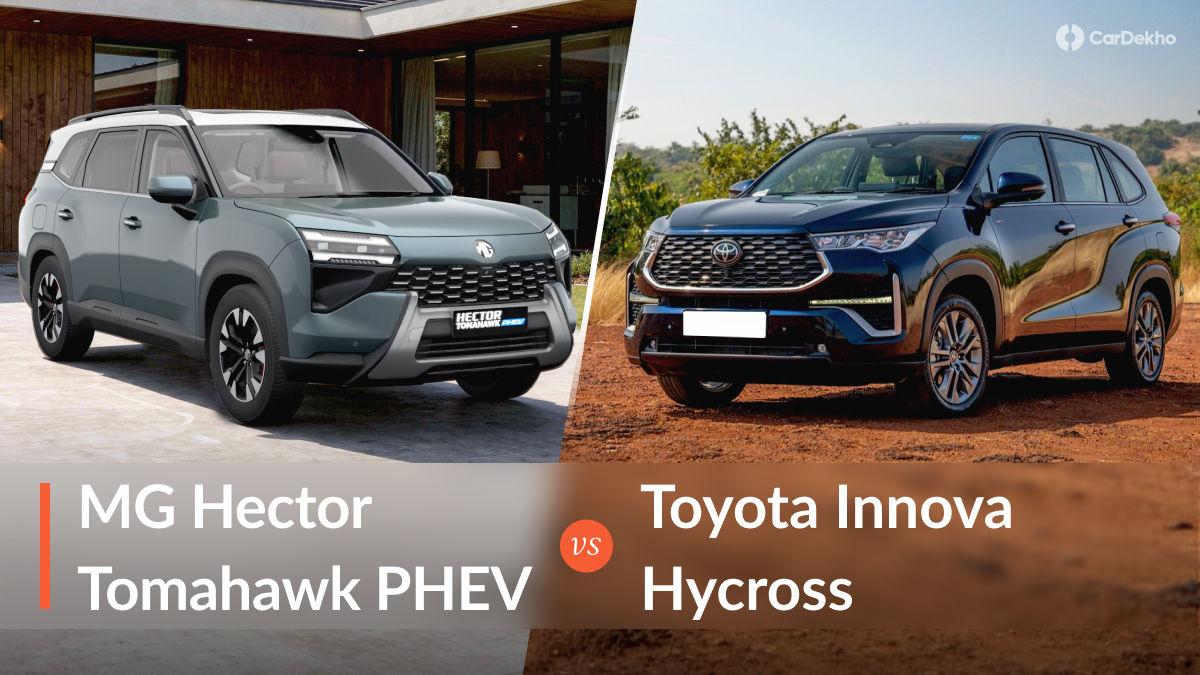
Toyota Innova Hycross |
While there are more cars in India with hybrid powertrain options, PHEV is still rare in India.
CarDekho Says…
The option of more powertrain options is a win for the consumer, giving a wider demographic of people more options. The PHEV can be for those who are on the fence about buying an ICE (internal combustion engine) or an EV. This can be a great middle ground. Charge up the car and use it as an EV in the city with no range anxiety. Meanwhile, the hybrid is for people who have mixed usage patterns.
Cars which are capable of running beyond 1000 km on a single tank are not new. Diesel engines achieve such numbers. However, traditional ICE cars are the most inefficient in the city and waste a lot of fuel while idling in traffic. This is where hybrids shine. While hybrids are the most efficient in the city, they aren’t as great at high-speed highway driving, yet still achieve respectable fuel economy numbers.
Which do you think is best for you? Let us know in the comments.
2 out of 2 found this helpful