
2026 Volkswagen Taigun: What Gives It Its Premium German Character?
Premium isn't always loud. Sometimes it's just a door that shuts with the right sound, and a cabin that never lets you down.


- Write a comment
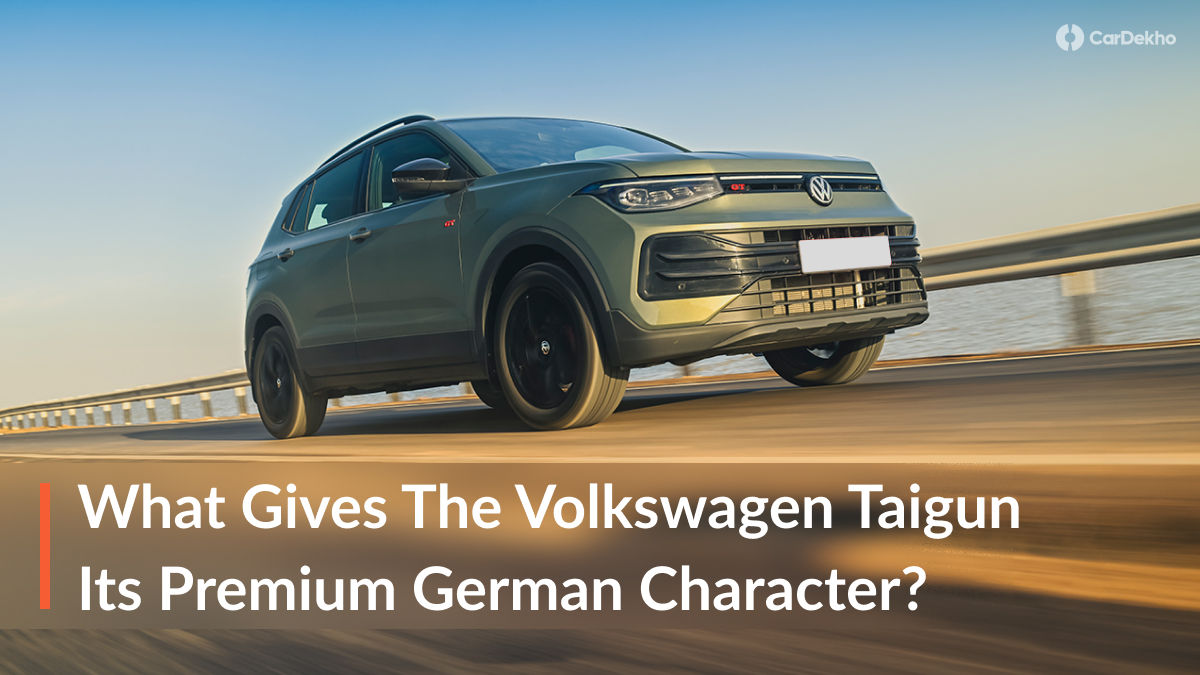
Many Indian buyers today judge a car by the number of features it offers rather than how well those features are executed. Ambient lighting, larger screens, contrast stitching and sunroofs can certainly add to the experience, but they aren't the only things that define a premium car.
Real premium feel comes from something harder to master: how solidly a car is built, how consistently its materials hold up, and how much thought has gone into details that most owners will never consciously notice but will always subconsciously feel. This is exactly the space where the 2026 Volkswagen Taigun continues to set itself apart. Its German engineering and solid build quality are best experienced rather than simply described in a brochure. Read on as we cover some key aspects of the Taigun and what gives it its premium character:
Cabin Quality Built On Consistency
Step into the facelifted Taigun and the first thing that stands out isn't a specific feature or a massively oversized screen; it's how tightly everything fits together. Most buyers have consistently noted that the cabin feels solidly put together, with tight, consistent panel gaps throughout, rather than varying noticeably from one section of the dashboard to the next.
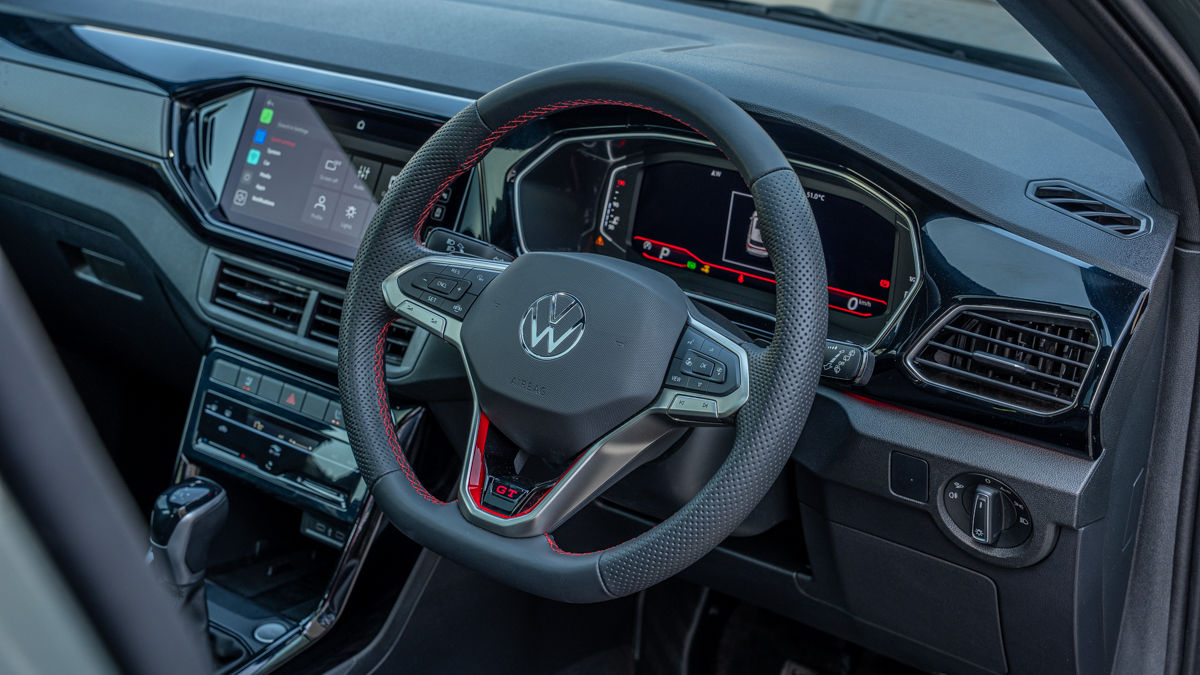
This kind of consistency is a genuine marker of manufacturing discipline. It's easy to make a cabin look good in isolated photographs; it's much harder to make every panel, seam and joint hold to the same standard across the entire interior, and this is precisely where the Taigun's German engineering DNA prevails.
Material Choices: Durability Over Flash
The Taigun's dashboard uses textured plastics with padded inserts on the door panels, paired with light-coloured leatherette upholstery on seats that feature perforated sections for ventilation. The materials are chosen less for how plush they feel in a showroom and more for how well they hold up over years of daily use, something that is consistent in most German cars.
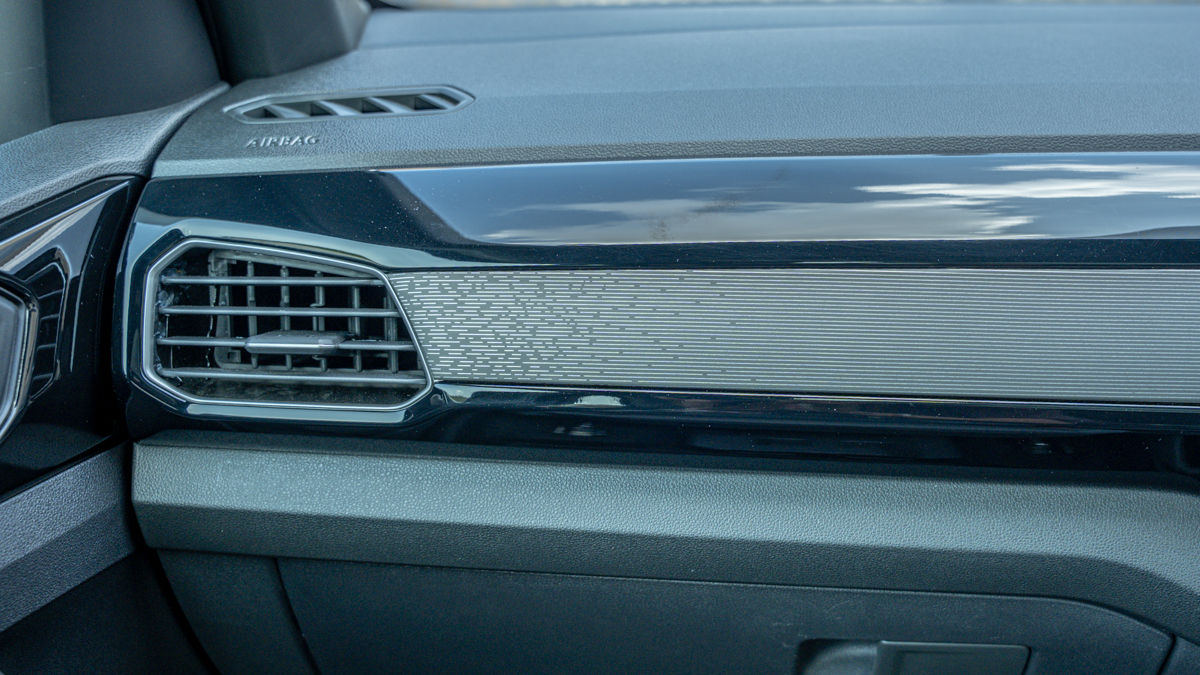
Some rivals have moved towards richer textures and finishes in recent updates, and the Taigun's material palette, while dependable, doesn't always feel as indulgent as some newer rivals. What it does deliver consistently, though, is smooth, tightly finished plastics rather than the rough or hollow-feeling surfaces that plague more utilitarian cabins at this price point. More importantly, the Taigun holds up better after a few years when compared to some key rivals.
Fit And Finish That Works Well
There's a meaningful difference between a car that's simply assembled to spec and one that feels engineered as a cohesive whole, and the Taigun leans firmly toward the latter. The touch-based climate controls sit within a glossy black centre console that contrasts cleanly against the surrounding matte surfaces; the three-spoke multifunction steering wheel is angled slightly toward the driver, and the recommended tyre pressures listed for both unladen and fully loaded conditions point to an attention to detail that goes beyond what most buyers will consciously register. Material quality remains solid throughout, and the cabin carries what buyers eventually describe as typical Volkswagen sturdiness, dependable rather than plush, but dependable in a way that inspires genuine confidence.
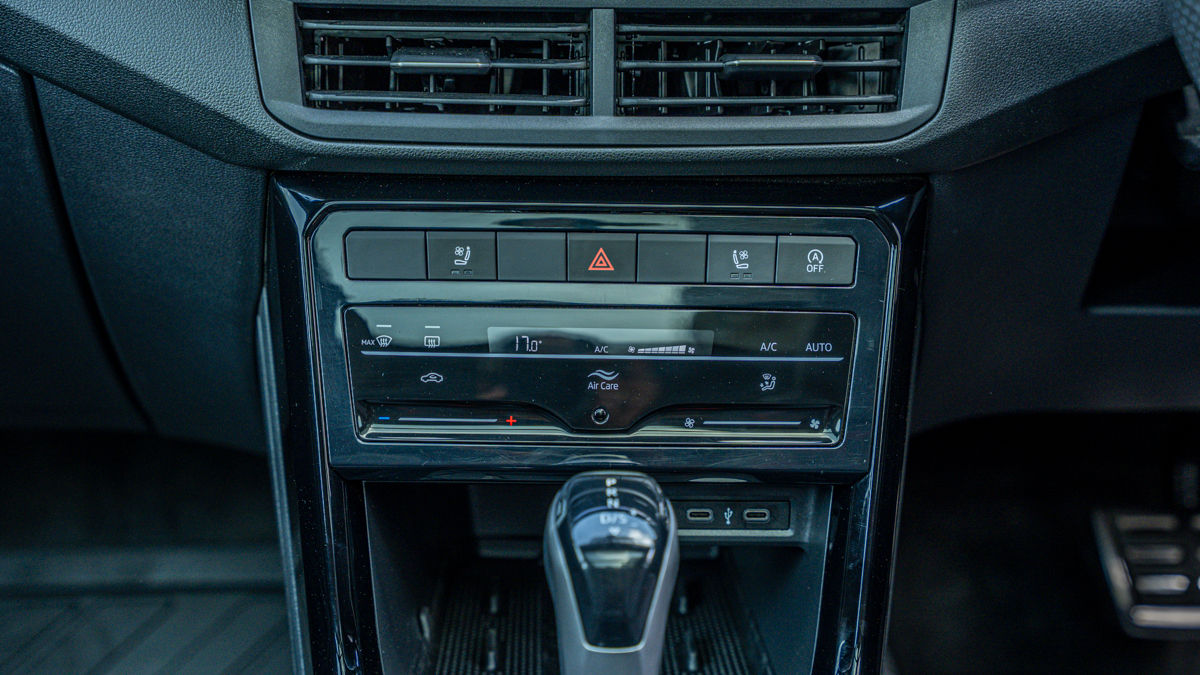
In the Taigun’s cabin, there are hardly any loose ends or touchpoints that feel out of place or fragile. The fit and finish feel in line with what you would expect from a German brand, including in cars positioned higher in the market.
Design Maturity That Doesn't Chase Trends
The Taigun's cabin architecture has been deliberately kept familiar through this facelift rather than reinvented for the sake of visual novelty. The dashboard retains its horizontal layout with layered dual-tone surfaces, now updated with new trim finishes, improved surface materials, and variant-specific upholstery. You get a lighter beige theme on the Topline for an airier feel, and an all-black cabin with red contrast stitching on the GT variants for a sportier, more driver-focused character.
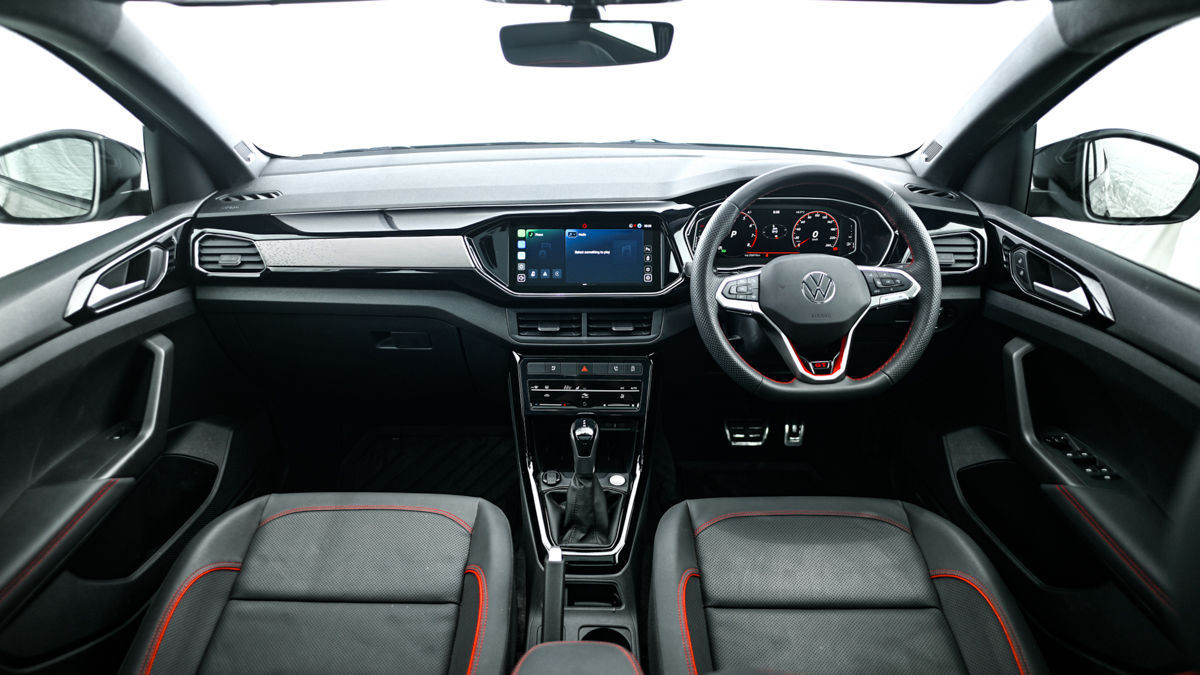
This restraint is itself a form of design maturity: rather than chasing whatever visual trend is currently popular in the segment, Volkswagen has refined a layout that already worked, focusing the update on quality and feel rather than reinventing the wheel purely to look different. In typical VW fashion, the cabin design feels timeless and gives the confidence of not looking outdated even after 5 years. The combination of touch controls and physical buttons is intuitive, while the placement of the screen and AC vents keeps the main functions within easy reach.
Buyers looking for a sportier character can opt for the GT Plus variants, which add GT-specific styling and interior details.
Backed By German Engineering
All of this ties back to a broader engineering philosophy that shows up in ways beyond the interior alone. The same structural strength that earned the Taigun's platform a 5-star Global NCAP rating back in 2022 is what underpins the sense of solidity you feel every time you shut a door or lean on the dashboard. It's not a single headline feature; it's a consistent standard applied across the structural, mechanical and material choices of the entire car, which is ultimately what "German engineering" means in practice rather than as a marketing phrase. The trusted and proven MQB A0 IN is a fundamentally strong platform that ensures that the core of the car remains strong.
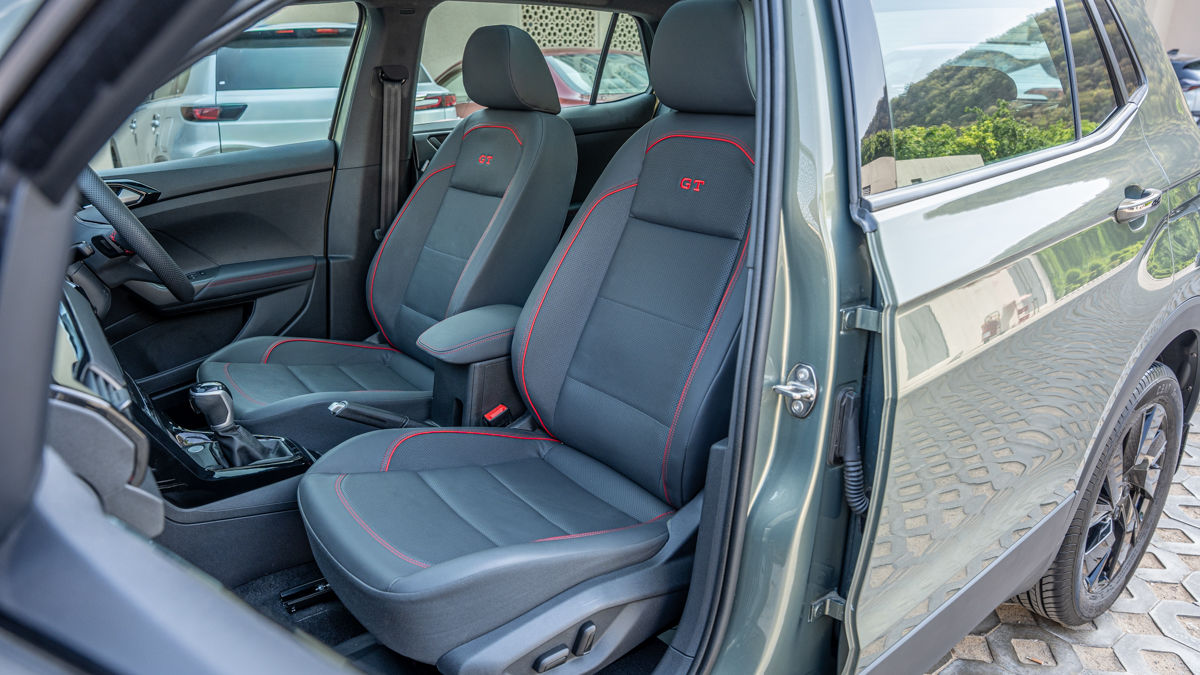
The GT Plus variants in particular embody this philosophy in its purest form. Beyond the red brake callipers, GT badging and blacked-out styling cues, what stands out is how the sportier intent is carried through to the way the car feels to interact with, whether it is the metal pedals underfoot, the heavily bolstered seats, or the accurate steering response. This is where German engineering philosophy shows its range: the same structural rigour that makes the regular Taigun feel solid is simply redirected in the GT Plus toward a sportier, more engaging character, rather than being diluted for the sake of visual drama. It's a reminder that "premium" and "sporty" aren't opposing ideas in Volkswagen's playbook.
Taigun Vs The Competition
This is where the Taigun's approach diverges most clearly from several rivals in the segment. Several competing SUVs lean heavily on fancy tech and eye-catching elements to create an impression of premiumness, while the underlying execution remains noticeably more utilitarian: looser panel gaps, thinner-feeling plastics, or materials that lose their shine after a few years.
This gap often isn't obvious on a showroom walkaround, where lighting and unfamiliarity can mask inconsistencies, but it becomes apparent over months of ownership, as with any car where quality has been prioritised behind features rather than alongside them.
The Taigun's premium character comes from quality and engineering as the foundation, with features layered on top rather than substituting for it.
CarDekho Says
Premium character isn't manufactured by adding one more feature to a spec sheet; it's built through the accumulation of small, consistent engineering decisions that most owners will never explicitly list but will always feel. The 2026 Volkswagen Taigun's well-aligned panels, durable material choices, and thoughtfully resolved cabin details are exactly the kind of premium that is more meaningful over years of ownership.
For buyers who value substance over showroom spectacle, this is precisely what continues to give the Taigun its distinct German character, making the Taigun a smarter buyers’ choice.