New Renault Duster Hybrid Vs 1.3-litre Turbo-petrol Running Costs Compared: How Much More Affordable Is The Hybrid To Use?
Renault says the Duster delivers 29 kmpl, but is the advantage in running costs worth the premium you pay?


- Write a comment
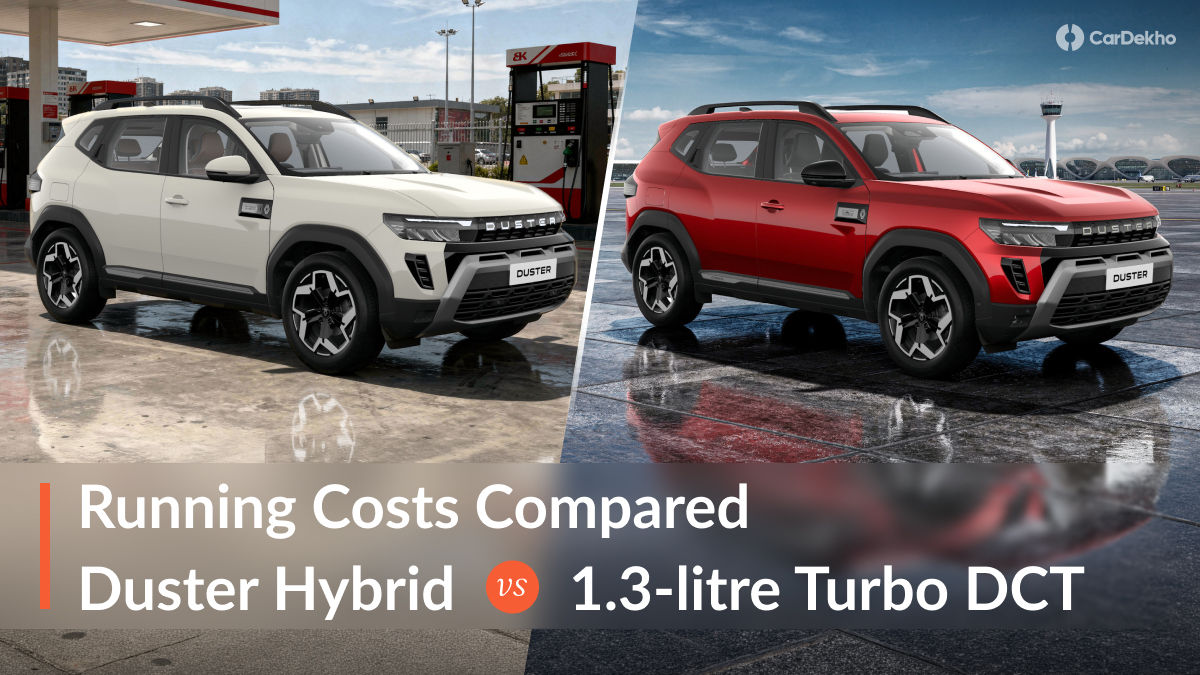
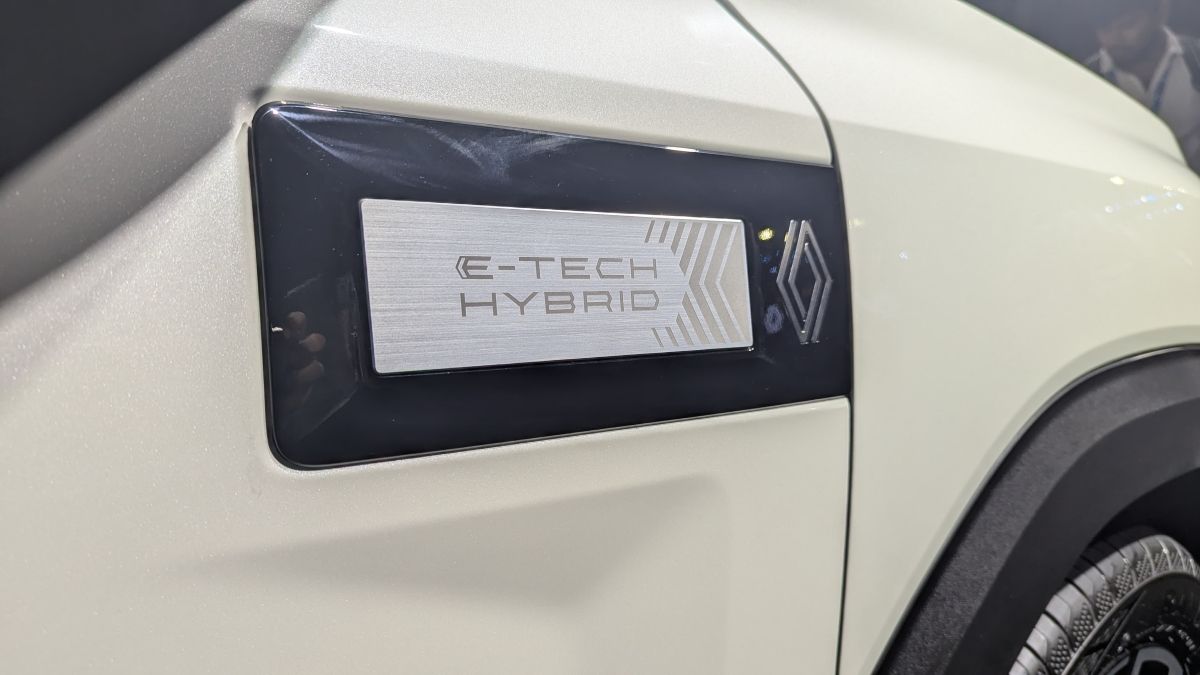
Renault recently launched the Duster with a strong-hybrid powertrain at Rs 16.99 lakh (ex-showroom). It is available in three variants, and features class-leading fuel-efficiency and performance figures compared to its Japanese competitors. However, one big factor it will have to deliver on, is running costs which have to justify the premium you pay over its turbo-petrol powertrain.
With that in mind, we only felt it fit to compare them in this department, and to keep it fair, we are considering the more powerful 1.3-litre turbo-petrol engine of the SUV, paired to its DCT automatic gearbox. So then let’s take a closer look at the two powertrains, their running costs and if you should cross the fence into the first step of electrification with the Duster.
Price
| Renault Duster Hybrid |
Renault Duster 1.3-litre turbo-petrol DCT |
| Rs 16.99 lakh to Rs 19.49 lakh |
Rs 14.49 lakh to Rs 18.49 lakh |
-
Prices for the Duster Hybrid range between Rs 16.99 lakh and Rs 19.49 lakh, which is a premium of around Rs 1 lakh to Rs 1.5 lakh compared to the corresponding variants of the turbo-petrol DCT.
-
Do note that the Hybrid misses out on some of the features of the top-spec turbo-petrol DCT variant, such as a 360-degree camera, Level-2 ADAS and auto-dimming IRVM.
-
For this comparison we will consider top-spec variants of both powertrains, which are priced at Rs 19.49 lakh and Rs 18.49 lakh, respectively.
Powertrain Specifications
| Specification | Renault Duster Hybrid |
Renault Duster 1.3-litre turbo-petrol DCT |
| Engine |
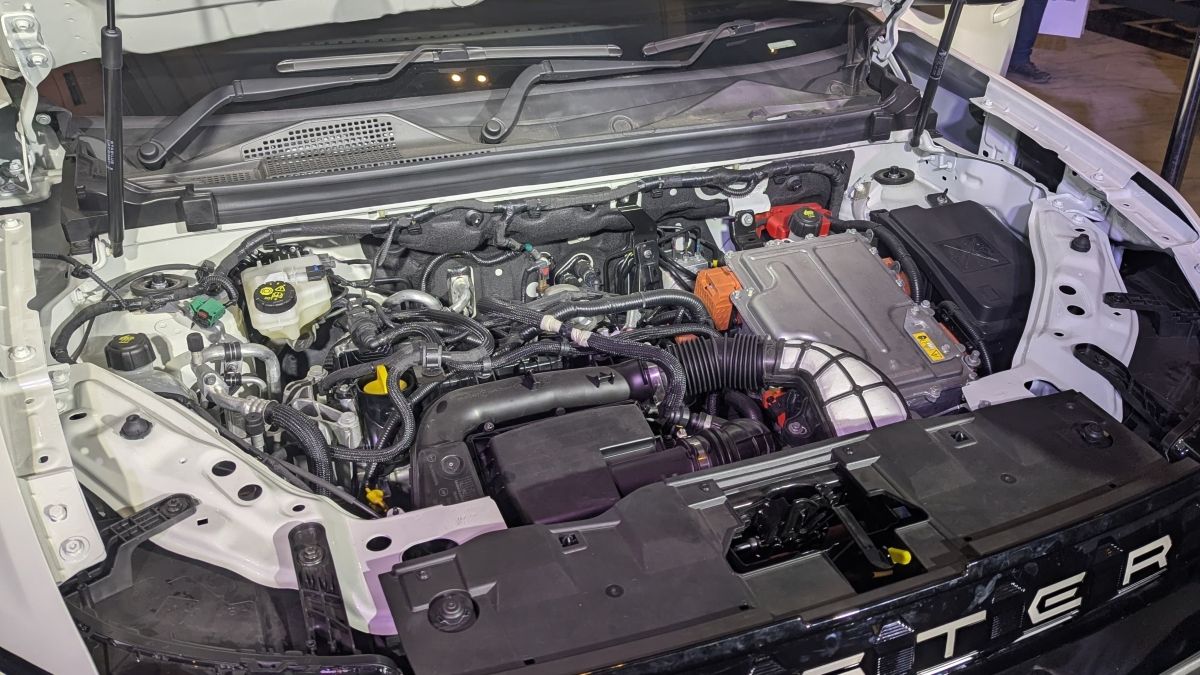
1.8-litre naturally aspirated petrol with strong-hybrid |
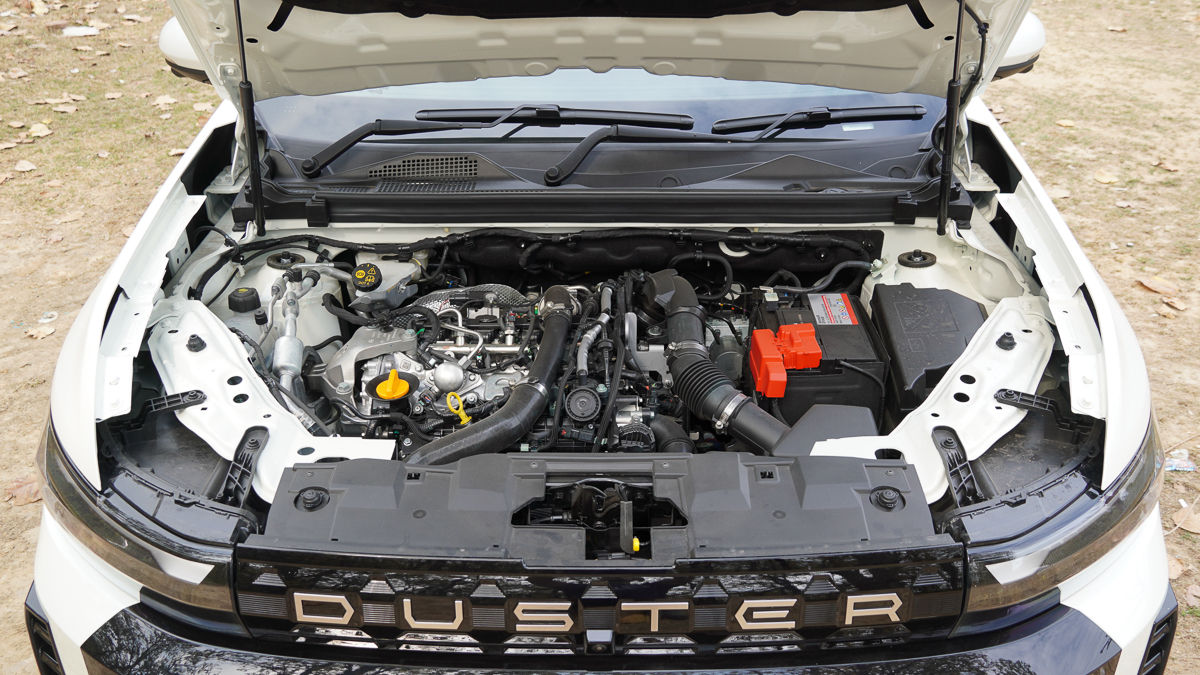
1.3-litre turbo-petrol with mild-hybrid |
| No. of electric motor (s) |
2 |
- |
| Battery Pack |
1.4 kWh |
- |
| Power |
160 PS (Combined) |
163 PS |
| Torque |
208 Nm (Motor only) |
280 Nm |
| Transmission |
8-speed DHT |
6-speed DCT |
| Claimed Fuel Efficiency (ARAI) |
29 kmpl |
18.45 kmpl |
DHT- Dedicated Hybrid Transmission (automatic), DCT- Dual Clutch Transmission (automatic)
-
When it comes to performance, the Turbo DCT has a power advantage of 3 PS, but the masking of turbo-lag and twin electric motors in the Hybrid could make it more responsive to drive.
-
The Duster Hybrid beats out all its strong-hybrid competitors in its segment, with class-leading fuel-efficiency and electric motor torque making it an attractive choice.
-
Renault also claims that the Duster Hybrid can operate on electric power alone for 80 percent of time in urban conditions, and also has a combined range of more than 1400 km on a single tank of fuel.
Running Costs
| Powertrain |
Renault Duster Hybrid |
Renault Duster Turbo DCT |
Difference |
| Ex-showroom Price |
Rs 19.49 lakh (Emotion) |
Rs 18.49 lakh (Iconic) |
+ Rs 1 lakh |
| Fuel Cost (A) |
Rs 111.78 per litre* (Maharashtra fuel prices considered) |
No difference |
|
| Fuel Efficiency (ARAI-claimed) (B) |
29 kmpl |
18.45 kmpl |
+ 10.55 kmpl |
| Distance (C) |
1000 km |
1000 km |
No difference |
| Fuel Used (C÷ B=D) |
34.48 litres |
54.20 litres |
(- 19.72 litres) |
| Total Cost (A*D=E) |
Rs 3,854 |
Rs 6,058 |
(- Rs 2,204) |
| Running Cost Per Km (E÷ C=F) |
Rs 3.85 per km |
Rs 6.06 per km |
(- Rs 2.3) |
*At the time of writing this article
-
As seen above, there is a significant difference in terms of running cost per km to the tune of Rs 2.3 between the two powertrains.
-
By opting for the Hybrid, and covering a typical distance of 1000 km per month, you will use 19 litres of petrol less, which will result in savings of over Rs 2,200.
-
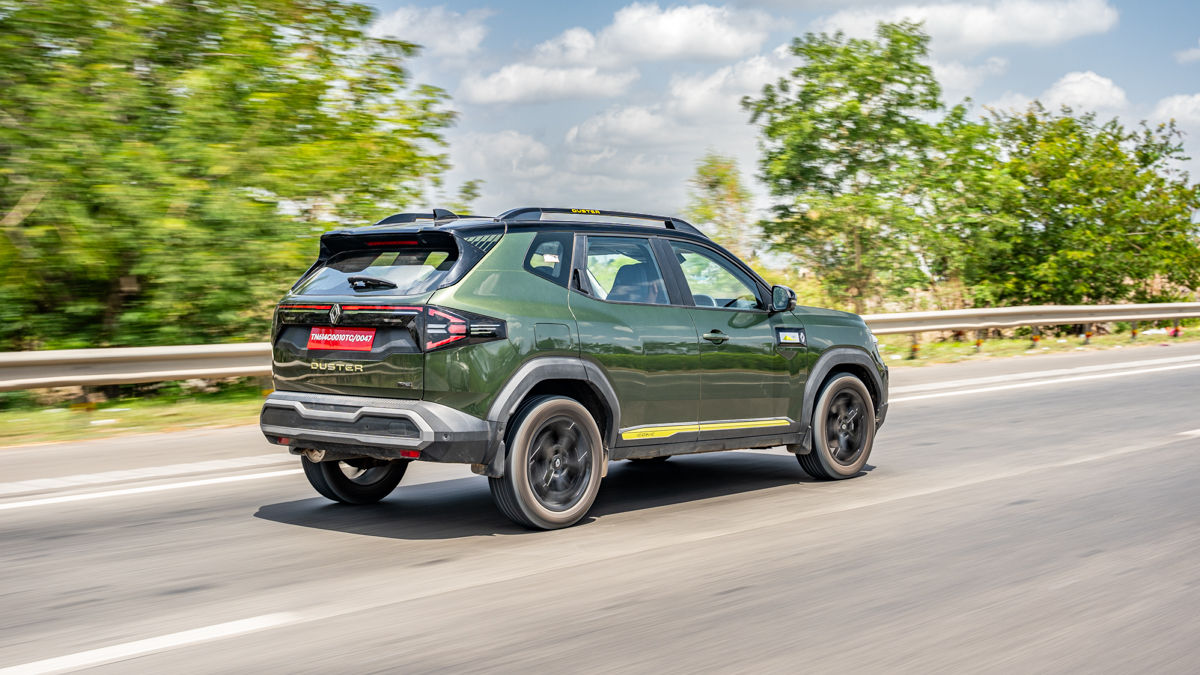
Since the difference in ex-showroom price of the cars is about Rs 1 lakh, you will recover the initial premium paid for the Hybrid in less than 45,500 km or less than four years of usage.
| Note: The above calculations are based on claimed mileage figures. They are merely indicative and running costs may vary based on various factors like real-world usage, fuel prices and distance used. Your breakeven point may also come earlier or later based on these factors. |
CarDekho Says…
Whichever way you look at it, you cannot ignore that Renault has priced the Duster Hybrid very competitively, while also offering best-in-segment performance figures. With this back-of-the-hand calculation we can already see a use case for a lot of people to upgrade to this powertrain option from the DCT variant in terms of running costs, besides the obvious refinement and smoothness advantage the Hybrid has over the Turbo-petrol.
That said, for users whose usage is not very high, or who do not intend to own their cars for more than 3-4 years, the Turbo DCT makes a decent proposition as well. The fact that the Hybrid misses out on some fancier equipment may also make some buyers hesitate in picking the more cost effective option.
Overall, we are eager to drive the Duster Hybrid and test out the bold claims made by Renault ourselves.
Would you pick the Duster Hybrid over its Turbo-petrol version? Let us know in the comments below!