
Supreme Court Rejects PIL Against E20 Petrol, Here’s What It Means For Car Owners
The PIL filed has pleaded for ethanol-free petrol options and proper labelling of ethanol content at pumps


- Write a comment
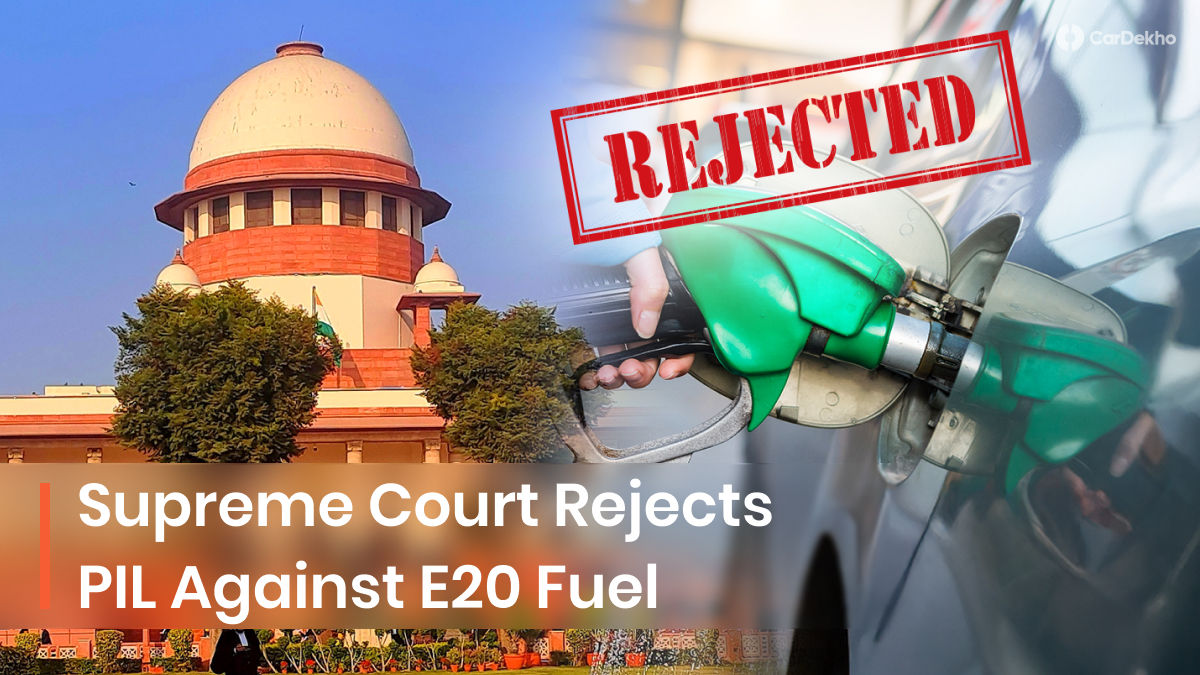
The Supreme Court has turned down a public interest litigation (PIL) that challenged the government’s move to make E20 petrol (20 percent ethanol blended fuel) the standard across India. The verdict makes it clear that India’s ethanol push is here to stay. While newer cars are E20 compliant, many older models will be affected by the use of E20 fuel. The plea had asked for ethanol-free petrol options and proper labelling of ethanol content at pumps, but the court backed the government’s plan to push ahead with the cleaner fuel.
So, Why Was The PIL Filed?

The petition was filed on the grounds that not every vehicle on Indian roads is designed to handle E20 fuel. The cars manufactured before April 2023 and even some BS6 models are not fully compatible with this fuel. Concerns were raised about potential engine wear, reduced mileage, and possible issues with insurance and warranty claims if something went wrong. The petitioner also wanted fuel stations to offer ethanol-free petrol and to display ethanol content clearly so that customers could make informed choices.
What Does This Decision Mean For Car Owners Like You?
The Supreme Court mentioned that the use of E20 fuel will help sugarcane farmers while also reducing dependence on crude oil and lowering emissions as well. With this verdict, fuel stations are not required to sell ethanol-free petrol or put up labels about ethanol blending.
For customers, this means that E20 fuel is the future and will become the norm everywhere. The newer cars, especially those launched after 2023, are generally built to run on E20 without any trouble. But older vehicles may face a dip in fuel efficiency and could need more proactive maintenance over time.
While this is a positive step for the environment and the economy, owners of older vehicles need to stay aware of how their cars respond to the new fuel and ensure regular upkeep.
What are your opinions on this? Let us know in the comments.
Follow the CarDekho WhatsApp channel to get instant updates from the automotive world.
14 out of 14 found this helpful