

E20 Fuel Worries Explained As SIAM Retracts Letter To Ministry: What Car Owners Really Need To Know?
A leaked SIAM letter sparked concerns over E20 fuel, but here's what the industry body, the government, and the available facts actually say.


- Write a comment
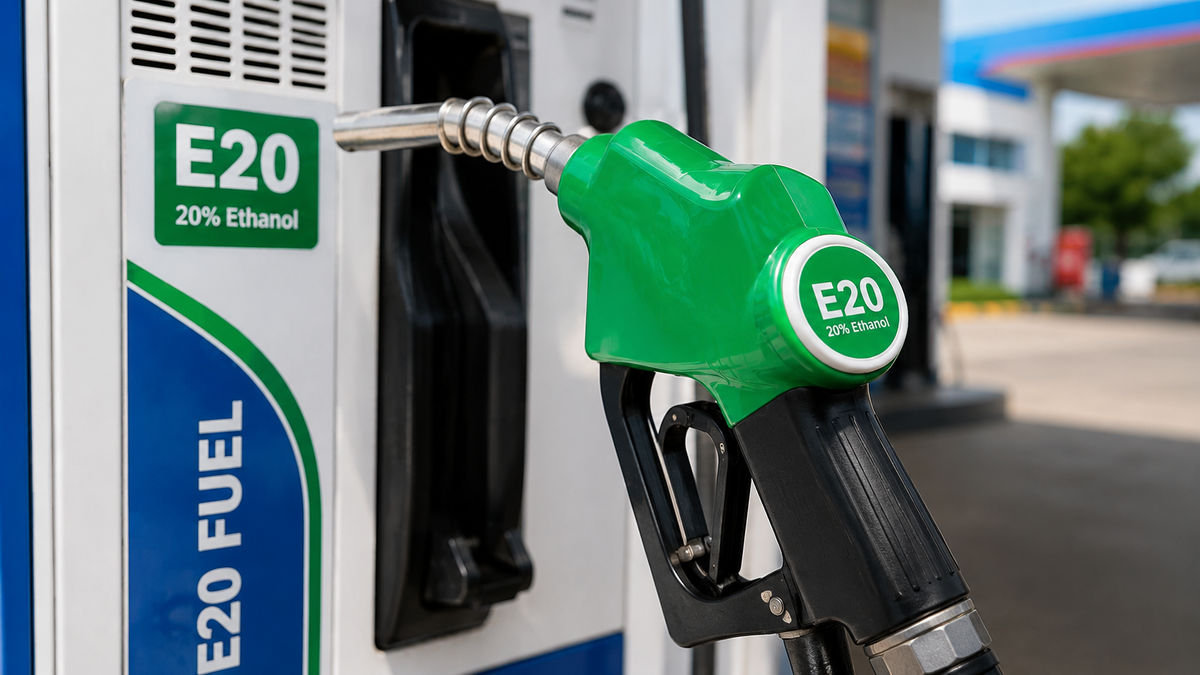
So here is what happened. A letter from the Society of Indian Automobile Manufacturers (SIAM) reached the government, word of it got out, and plenty of car owners started fretting about E20 fuel. SIAM has since spoken up, and so has India's petroleum and natural gas ministry. The thing everyone is trying to work out: was this just experts talking shop, or does ethanol-blended petrol actually have a problem? If your car takes E20, stick around. We will cut past the headlines and get to what genuinely matters.
What Were The Reports?
It began with a leak. Part of a SIAM letter, dated July 28, went public before anyone meant it to. In it, the body raised a couple of red flags about E20 petrol, the blend that is 20 percent ethanol and 80 percent ordinary petrol. Two issues in particular: chloride finding its way into the fuel, and too much moisture. Left alone, the letter said, either one could wear down parts your engine really cannot do without. Three got named outright: the fuel injectors, the fuel pump, and the Exhaust Gas Recirculation (EGR) valve.
A quick refresher on what those bits do. Injectors mist fuel into the engine so it will actually catch; clog them, and you are looking at misfires, sluggish pull, and a drop in mileage. The fuel pump is the delivery guy, tank to engine, and if rust or damage reaches it, that delivery can stop cold, sometimes leaving you stranded. EGR valves keep emissions in check by routing a little exhaust back through the engine, and when they go, you can flunk an emissions test and feel the engine run rough. One thing worth stressing though: the letter never pinned the blame on E20 itself. It looked instead at tired old storage tanks and the transport chain as the more likely culprits.
What Did SIAM Say?
Once the story blew up in the press, SIAM walked the July 28 letter back and issued a clarification. Its version of events: that note was only part of the usual technical back-and-forth among the people who handle this stuff, not a warning shot about a crisis. The coverage, SIAM felt, had lifted stray lines out of context and left readers with a lopsided, misleading impression. And those figures on failing parts and contamination? Still unproven, the body said, until there is proper data pulled from around the country. Rush to a verdict before then, and you are basically guessing.
Its follow-up leaned reassuring. SIAM reminded everyone that guardrails are already in place. The petroleum and natural gas ministry has clamped down on ethanol quality, holding chloride and sulphur to no more than 3 parts per million (ppm). Oil companies, for their part, have piled on extra quality checks at more points along the way to the pump, all so that whatever lands in your tank clears the bar. And on the E20 rollout itself, SIAM did not budge. It is behind the government's plan, and it framed the letter as a quiet nudge behind closed doors rather than a siren for the public.
Government's Response
The petroleum ministry (MoPNG) was not slow to answer the leak. Its case is pretty plain: no fuel goes on sale until samples clear more than 150 separate checks, a net wide enough to catch all sorts of contaminants. Pass those, the ministry says, and the fuel is fit for the cars people drive today, full stop.

On chloride, MoPNG got specific, and the number is tiny. Two. As in two cases across something like 87,000 pumps nationwide. The message tucked inside that figure was hard to miss: tainted E20 is not lurking at every corner. A one-off, the ministry called it, and it leaned on its countrywide testing to argue the problem has not taken root. Read between the lines and you can hear it saying SIAM's worries do not square with what is actually out there.
What This Means For E20 Drivers Right Now
Bottom line, SIAM has taken its letter back, the very one that lit this scare. Nothing industry-wide has been confirmed. As things stand, the panic does not really rest on much.
Even SIAM admits as much. The chloride, the moisture, the talk of swapping out fuel-system parts, all of it still needs verifying before anyone treats it as fact. What has been doing the rounds online are snippets, not settled findings.
The ministry's side of it: fuel gets run through 150-plus checks, and chloride turned up at just two of roughly 87,000 outlets. Two, out of tens of thousands. It stops short of promising zero risk, mind you.
The trickier question is what is actually on offer at the pump. Older cars that were never built for E20 still run on E10 or E0, and keeping those flowing counts every bit as much as policing E20's quality.
● Got an E20-ready car? Then today's fuel is fine, and there is no solid reason to change a thing about how you fill up.
● Not built for E20? You will still want E10 or E0, so both need to stay on sale while E20 spreads.
More to come as the real data lands.
CarDekho Says...
SIAM has withdrawn its July 28 letter, its reasoning being that the press ran with only fragments of it. The chloride and moisture numbers it flagged, it says, need checking before anyone stretches them into industry-wide claims.
The petroleum ministry hit back as well, noting that fuel clears 150-plus checks and that chloride surfaced at only two of some 87,000 outlets.
Drive an E20-ready car and, going by what is known today, you can relax. The industry is squarely behind the rollout, and the quality rules are already written: 3 ppm for chloride and sulphur in the ethanol.
A note for the older-car crowd: E10 and E0 should sit right alongside E20 at the pump, so nobody with a non-E20 vehicle gets left out.
We will refresh this page as verified data shows up. Got an older, non-E20 car? Drop your mileage numbers in the comments; we would love to see them.
0 out of 1 found this helpful