
- English
- Login / Register
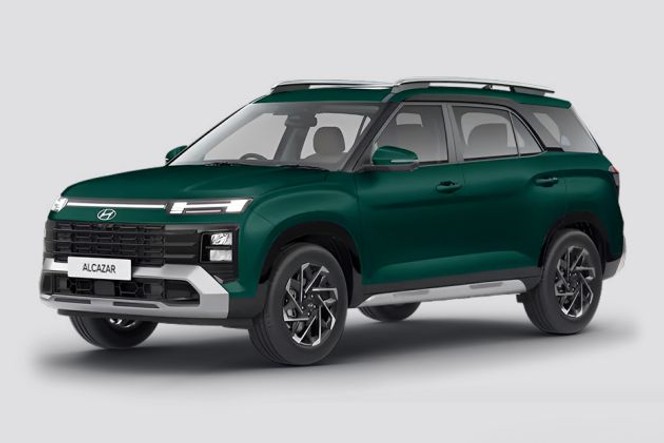
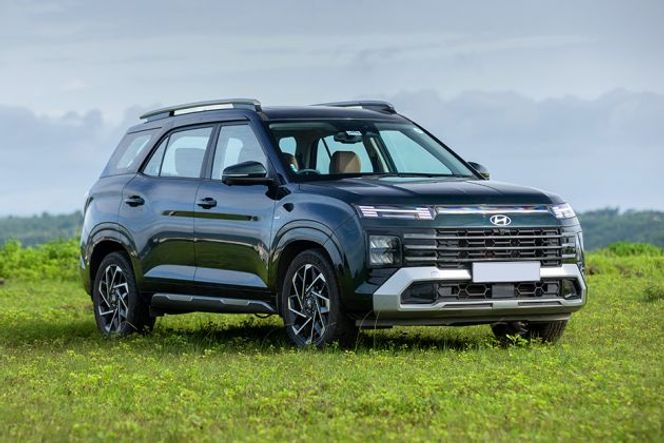

Hyundai Alcazar
Hyundai Alcazar Quick Insights
 Summary
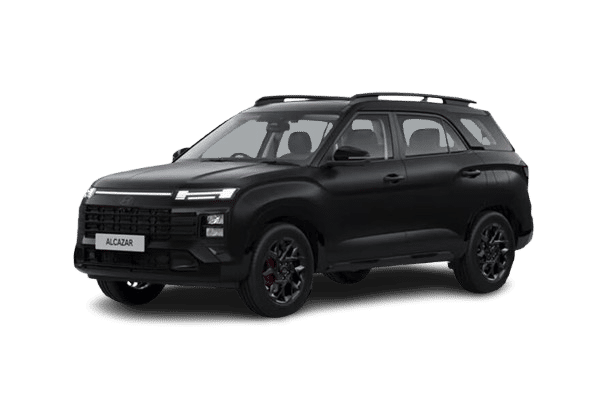
Built for the extended family: reclining captain seats, ventilation and a boss-mode second row impress. The third row stays strictly for kids.
- Starts from ₹17.03 L onroad
- Rear-seat luxury, sensibly priced
- 6 airbags standard
- 180-litres boot
- 6 or 7 seater
- 17.5kmpl
3 Top Picks31 variants on offer. Here's the smart pick at each price.
6 airbags, 17" alloys, dual-zone AC, 10.25" touchscreen
18" alloys, 10.25" driver display, 360° camera
Powered co-driver seat, front and rear seat ventilation
Our VerdictTech-first family SUV

- Captain seats recline, ventilate
- Level 2 ADAS, 360° camera, BOSE audio
- Petrol or diesel, manual or automatic
- DCT hesitates in stop-and-go traffic
- Top trims are expensive
- Ride gets bouncy on rough roads
Buying Insights Owner Reviews
Owners love the Alcazar for its comfort, mileage and space
- Bold, premium road presence
- Outstanding highway mileage, diesel
- Spacious cabin fits entire family
- Same interior as Creta
- Third-row seat comfort
- Poor city fuel economy, petrol
Hyundai Alcazar Price & Variants
Alcazar has 31 variants from ₹14.51L across 1.5L Turbo petrol and 1.5L diesel, in 6MT, 7DCT and 6AT, in 6 and 7 seater. Executive (₹14.51L) is the family base with 6 airbags, ESC, dual zone climate, 10.25-inch navigation, wireless CarPlay and 17-inch alloys. Prestige (from ₹16.62L) adds rear camera, Bose 8-speaker audio, wireless charger and DCT paddle shifters. Platinum (from ₹19.01L) steps up to Level 2 ADAS with 21 features, leatherette seats, 8-way electric driver seat, 18-inch alloys and 360 camera. Signature (from ₹20.96L) tops it off with ventilated front seats, electric passenger seat, driver memory and digital key. Most buyers land at Platinum Petrol MT (₹19.01L) — you get Level 2 ADAS, voice panoramic sunroof, 360 camera, 18-inch alloys, Bose audio and 6 airbags standard, without paying ~₹1.95L extra for Signature DCT's ventilated seats and driver memory.
Hyundai Alcazar Specifications and features
| Engine | 1482 cc - 1493 cc |
| Power | 114 - 158 bhp |
| Torque | 250 Nm - 253 Nm |
| Seating Capacity | 5, 6, 7 |
| Drive Type | FWD |
| Mileage | 17.5 - 20.4 kmpl |
Voice-enabled panoramic sunroof elevates the sense of space inside the cabin
Ventilated first and second row seats provides good cooling in summers
8-speaker Bose sound system has good sound clarity at higher volumes
360-degree surround view camera is useful in traffic and blind view monitor displays side camera feed while indicating. Super helpful while changing lanes
- Key Specifications
- Highlights
Alcazar 2026: Latest Updates
-
September 10, 2026: Hyundai launches new Lounge Edition for the Alcazar based on the Signature 5-seater variant at Rs 21.80 lakh onwards. It gets exterior and interior theme updates and rear-seat entertainment screens.
Alcazar Expert Review
Things We Like
- Feature rich experience: Panoramic sunroof, front and rear ventilated seats, 2 zones of climate control, and 8-speaker BOSE sound system
- Great chauffeur driven car: Captain seats with electric boss mode, headrests supports, extendable under thigh support and seat ventilation
- Cabin experience: Fit, finish and ergonomics are on point
Things We Don't Like
- Turbo-petrol fuel efficiency is not great in the city. Expect 7-9kmpl
- 3rd row is not suitable for full-sized adults
Hyundai Alcazar expert review
Overview
Hyundai has gained a lot of popularity in the country with its India-centric products, but no car in their lineup is as popular as the Creta. To capitalise on the existing fan base, the Hyundai Alcazar was launched in 2021, as a bigger and 7-seater version of the Creta, which competed with the likes of Tata Safari and Mahindra XUV700.
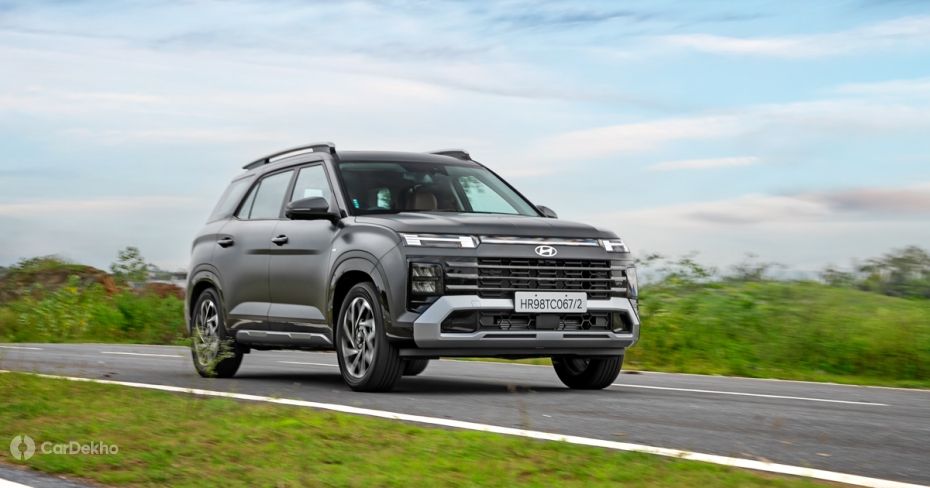
In 2024, the Alcazar received a facelift, which gave it a fresh look, more premium interiors, better features, with a sharper focus on the rear-seat experience. Here’s a detailed report on who should consider the Alcazar, and why.
Exterior
The Alcazar has followed Hyundai’s new design language, with a connected lighting setup and squarish design elements, but it no longer looks like a stretched-out Creta. It now has its own identity, and some of the inspiration comes from the Hyundai Palisade, which is available in international markets.
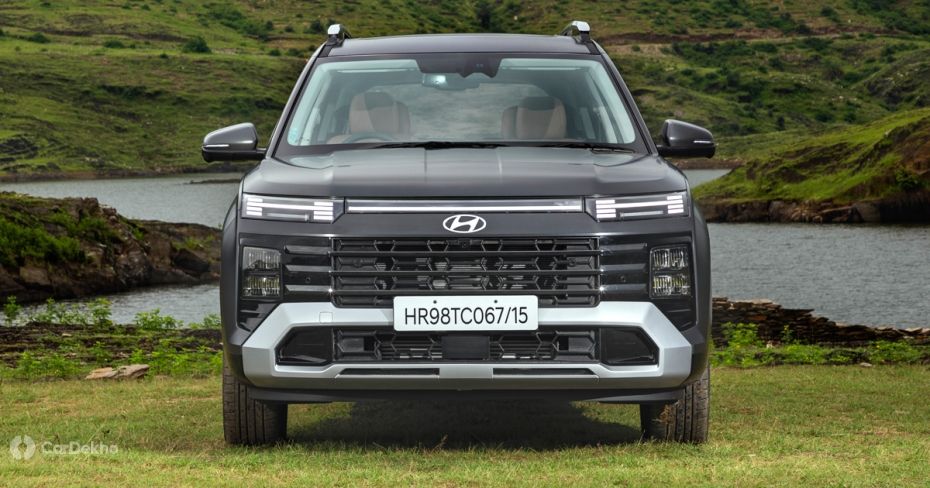
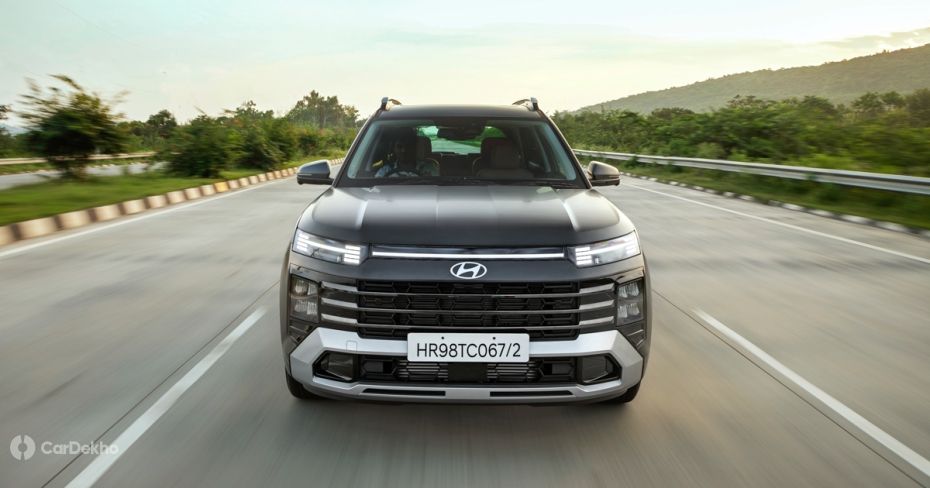
Its face features an end-to-end connected lighting setup, H-shaped DRLs with sequential turn indicators, and horizontally-stacked LED headlamps. Hyundai has used horizontal lines throughout, in a bid to make the Alcazar look wider. For that SUV flavour, a chunky bumper and dull silver skid plate is on offer.
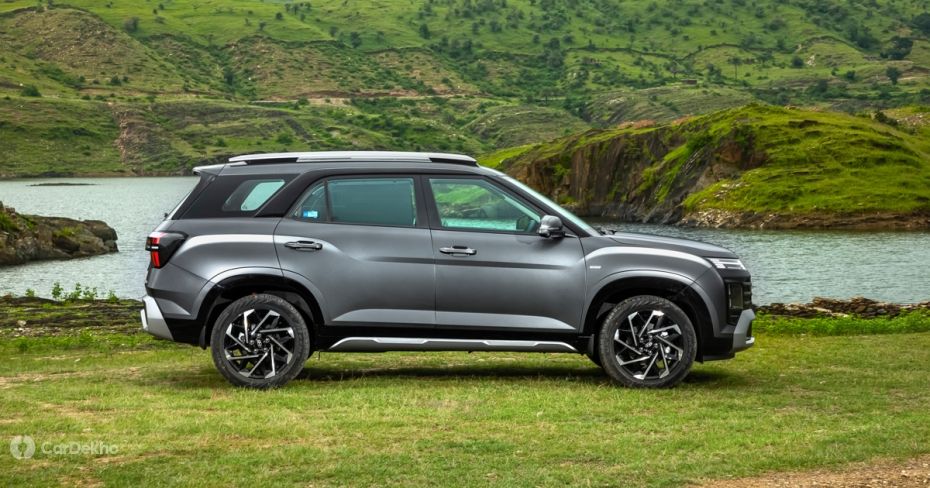
From the side, the length is obvious, and you also realise that its silhouette remains unchanged. Here, it becomes clear that the Alcazar is an extended Creta, but it gets its own styling elements like the dual-tone 18-inch alloy wheels, silver cladding under the doors, and a much larger rear quarter glass.
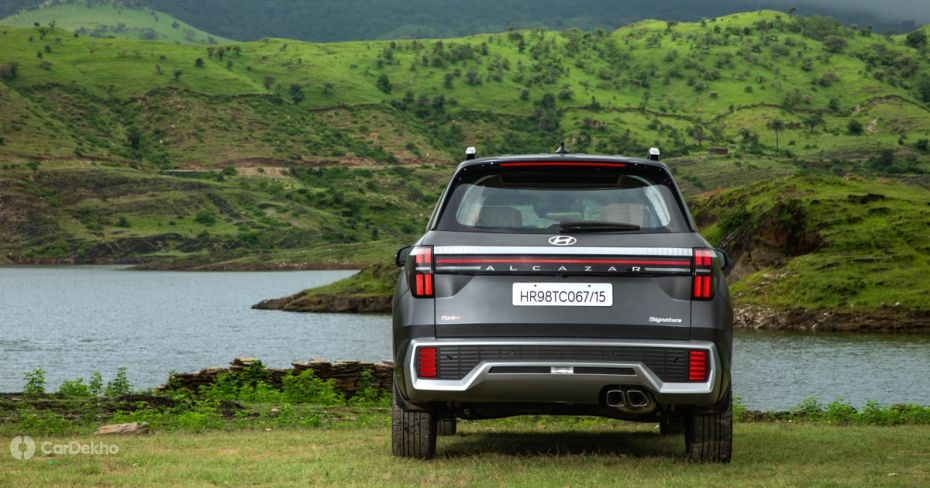
At the back, the connected tail lamps feature a similar H-shaped pattern, just placed vertically, and the entire connected element has been integrated neatly into a gloss black panel, which also houses the ‘Alcazar’ lettering. The boot is flat, completing the overall squarish look, and here you get dual-exhaust tips protruding out of a fairly large bumper.
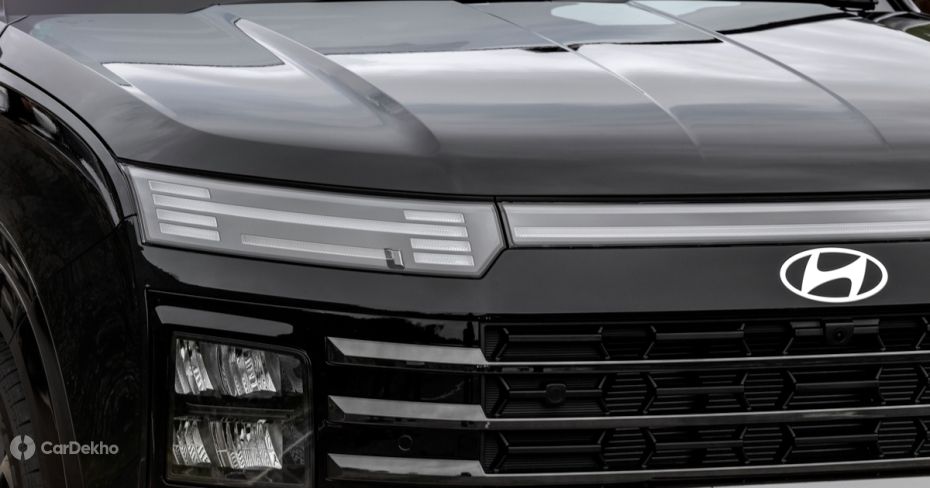
I specifically like the lighting elements as they go well with this premium design and keep the design looking modern. The size also plays a role in its overall road presence, because the Alcazar does not go unnoticed. There aren’t any major dislikes in this design, but if I had to change one thing, I’d increase the size of the alloy wheels for a taller stance and to suit the size of the car.
In terms of fit and finish, and paint quality — there are no complaints. Everything is solid, Hyundai has used the right mix of materials, nothing feels too much, and panel gaps are consistent throughout.
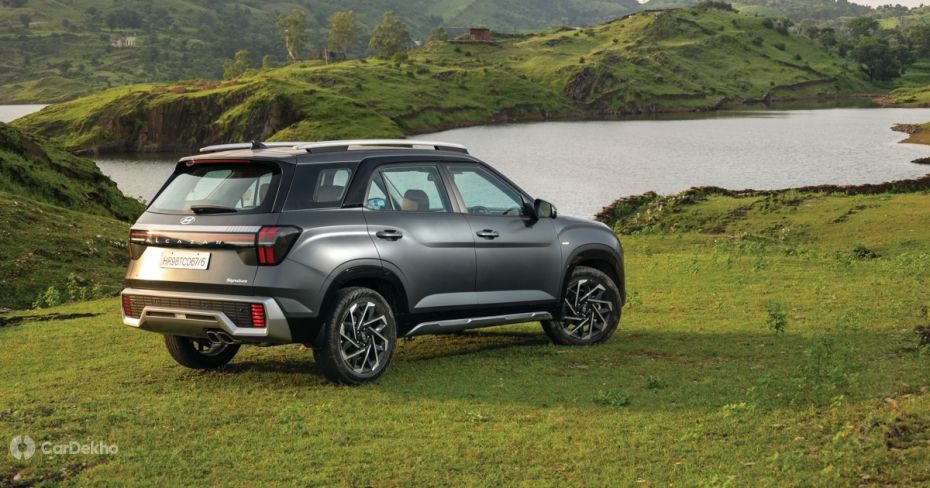
This design as a whole is very premium and very rich looking, giving the Alcazar a very noticeable road presence. The best thing about this design is that it no longer resembles the Creta too much, giving the Alcazar the identity it deserves.
Interior
Design & Quality
The Alcazar is taller than the Creta, and has a slightly higher ground clearance as well. This requires you to make additional efforts to sit in and step out. While young people will be able to do it easily, it will be a little tiresome for the elderly in your family. Consider getting sidesteps if elders will use the car frequently.
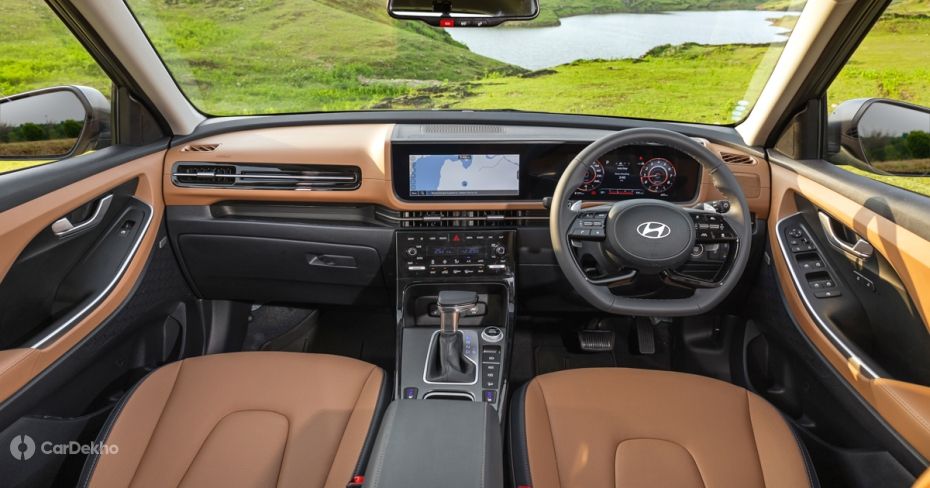
With the facelift, the Creta got a brand new cabin design, and the same design has been used here, just in a different shade. The Alcazar gets this cabin in a navy blue and brown shade, which matches its premium and plush appeal. There are subtle chrome inserts on the door pads and centre console, and Hyundai has also used some amount of gloss black elements on the dashboard and AC panel.
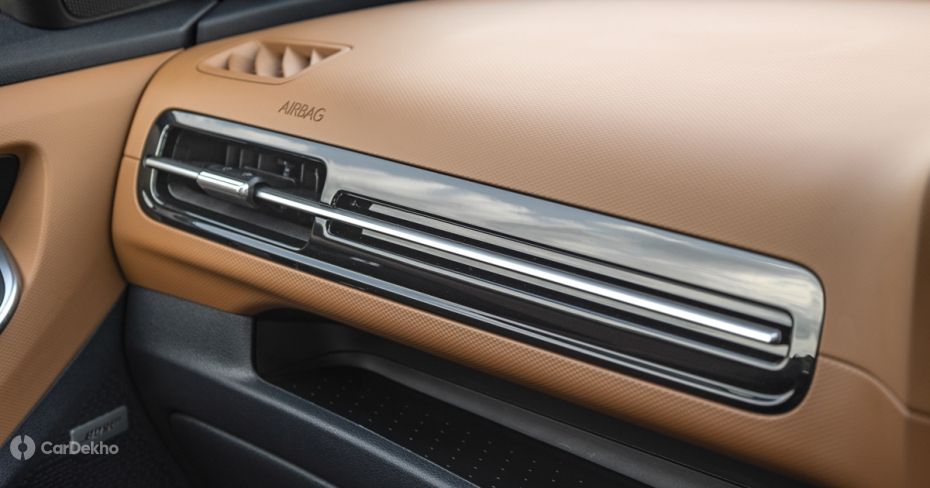
For more premiumness, you also get soft touch padding on the door pads and centre armrest, and leatherette seat upholstery. All the plastics used in the cabin are of a good quality, nothing feels loose, the buttons are solid, and the overall quality is up to the mark. However, the material quality and the fit and finish is the same as the Creta, and since the Alcazar sits above it in terms of pricing, it should’ve delivered a more premium experience.
Front Seats
Coming to the front seats, there is ample amount of space, even for taller passengers. You get a good amount of headroom, there is enough space in the footwell, and both front seats are 6-way power adjustable for convenience. The steering wheel has both tilt and telescopic adjustment, which makes it easy to find your ideal driving position.
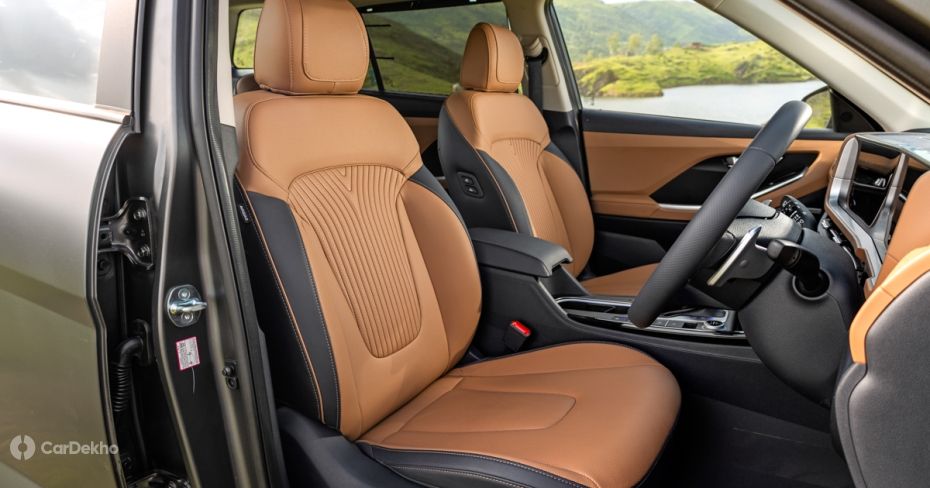
You do sit a little high while driving, even at the seat’s lowest position, but that in turn gives you a commanding driving position. The cushioning is balanced, which is good for both short and long journeys, the big bolsters provide good side support, and you get decent support from the headrests.
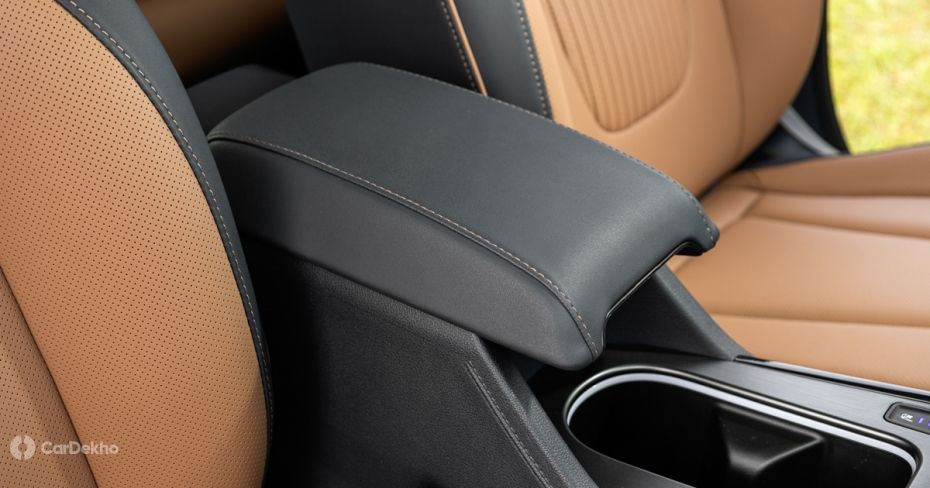
For more convenience while driving, the Alcazar comes with a large front armrest, which can be moved front or back based on your driving position.
2nd Row Experience
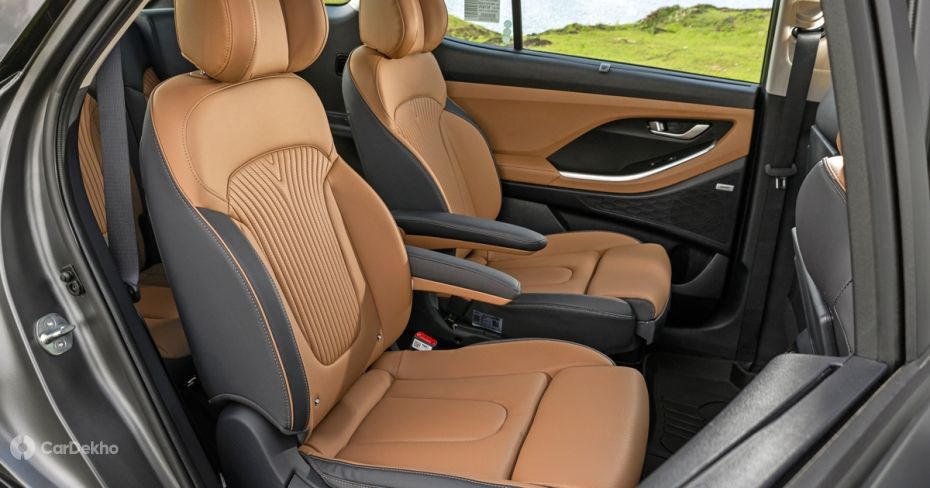
In the captain seats version, you get two individual seats which offer great space and a chauffeur-driver experience. There is ample headroom, legroom, kneeroom and footroom. But the highlight is the underthigh support, which can be adjusted as per your liking.
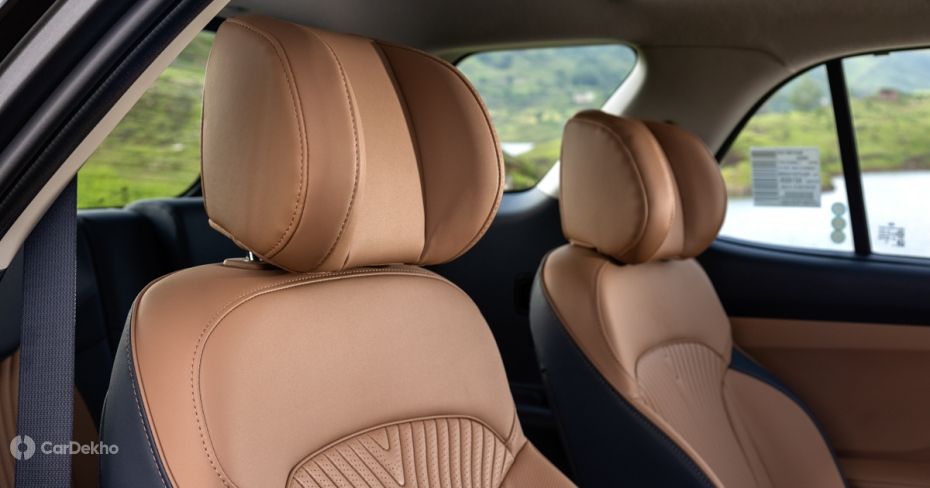
Both passengers get individual armrests and winged headrests, which offer great support on long journeys. The second row seats also slide and recline, which provides additional space and comfort.
In the 7-seater variants, passengers get a bench seat, which offers good space for three passengers. Underthigh support is not adjustable, but you’re unlikely to have any complaints in terms of headroom, shoulder room or leg room. Passengers get a centre armrest which comes with two cupholders.
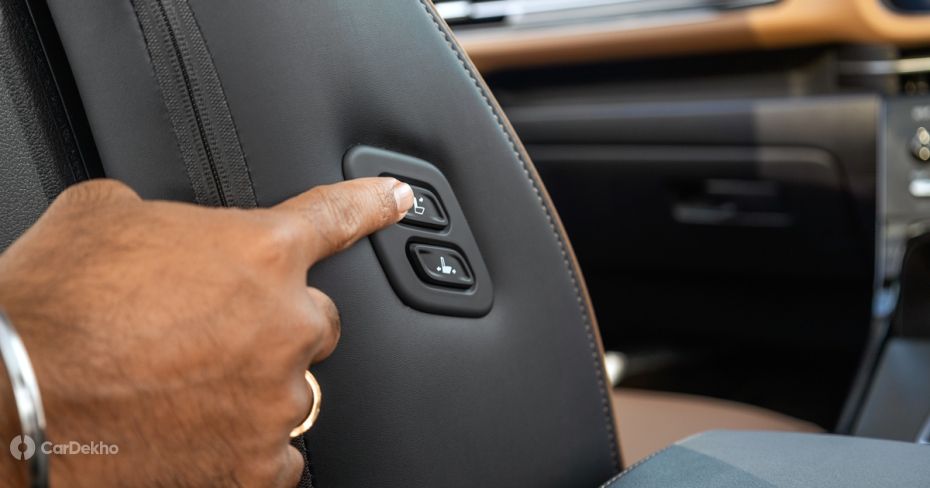
Also, since the Alcazar is being projected by Hyundai as a chauffeur-driver car, the second row occupants get trays mounted on the front seats (which feature a slot to keep a phone or tablet, and individual cupholders), sunblinds for the rear windows, and a ‘boss’ mode that allows the rear occupants to move the co-driver’s seat using buttons the seat’s shoulder.
As far as visibility is concerned, the second row passengers get big windows for outside visibility, and the small front headrests along with the cabin’s light theme provides good frontal visibility.
3rd Row Experience
To get to the third row, like in any other mass market three row car, you need to fold and tumble down the second row to make space. Thankfully, Alcazar gets one-touch-tumble to make the process easy, but only in the 7-seater variants. In the 6-seater variants, you’ll either have to slide the second row seat to make space, or you’ll have to get inside, and walk between the two captain seats to make your way to the third row. In both these cases, getting to the third row will require effort, and it won’t be easy on your back. This is much easier for children.
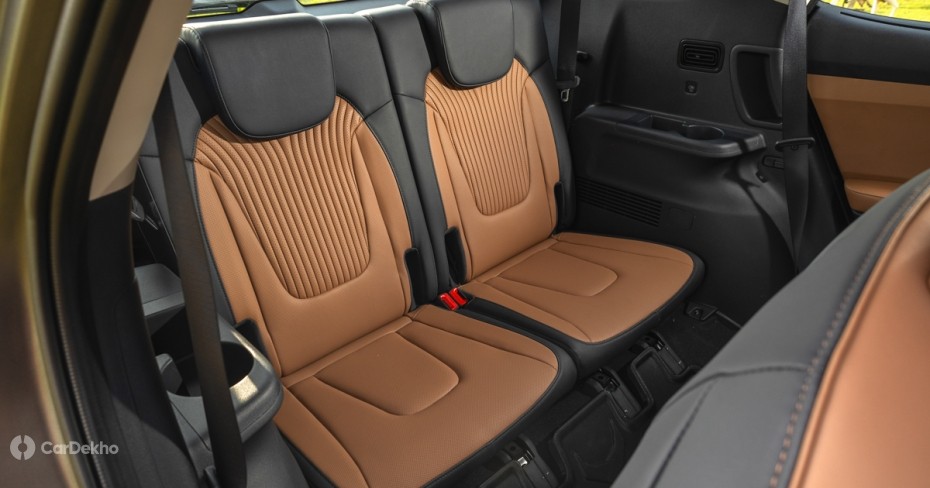
Space in the third row is quite limited and is best used by kids. Hyundai does offer adjustable headrests in the third row, but the lack of headroom, kneeroom, and legroom means adults will feel cramped on longer journeys. Due to the seat base being small, and the floor being high, you’ll have to sit with your knees up, which will compromise your underthigh support.
Visibility here is decent. You get big quarter glasses to look outside, but compared to the second row windows, they’re half the size. Also, the second row headrests are fairly bigger, which reduce frontal visibility.
Storage & Practicality
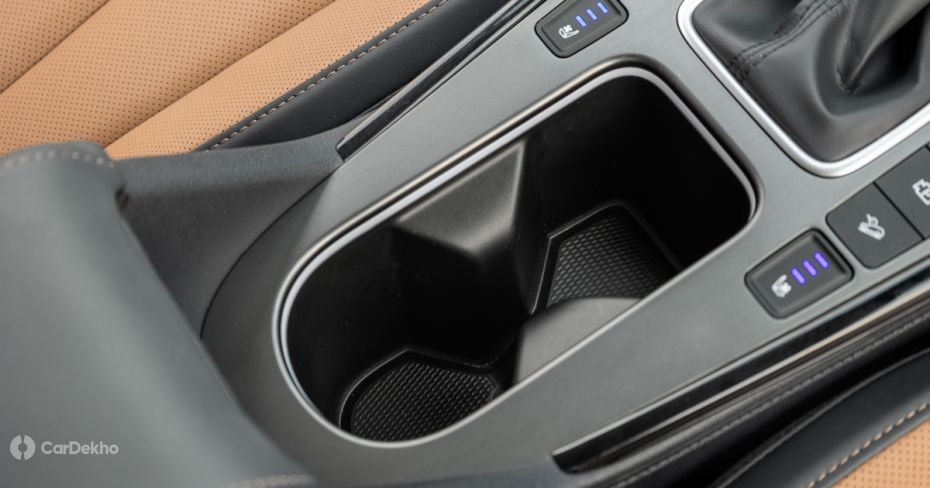
Storage options in the Alcazar are as good as the Creta, if not better. All four doors get 1-litre bottle holders and small pockets on the side for smaller items. Front passengers get a cooled glovebox, an open storage on the dashboard, two cupholders in the centre console, a wireless charging pad which can be used to keep your phone or wallet, and storage under the centre armrest.
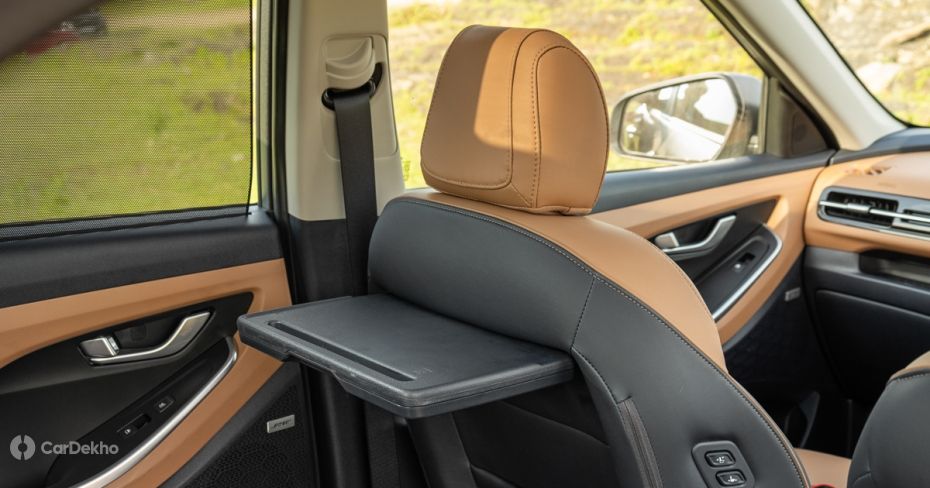
Second row passengers get two cupholders in the centre armrest (7-seater), two cupholders in the front seat mounted tray, seatback pockets, and a slot under the AC vents to keep their phone which doubles as a wireless phone charger.
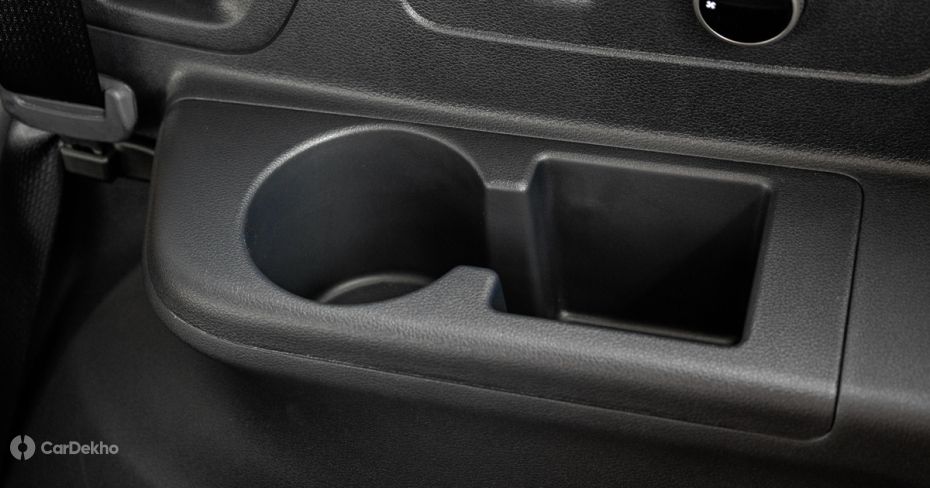
Third row passengers get cupholders in the armrests with a small cubby to keep other items.
Charging Options
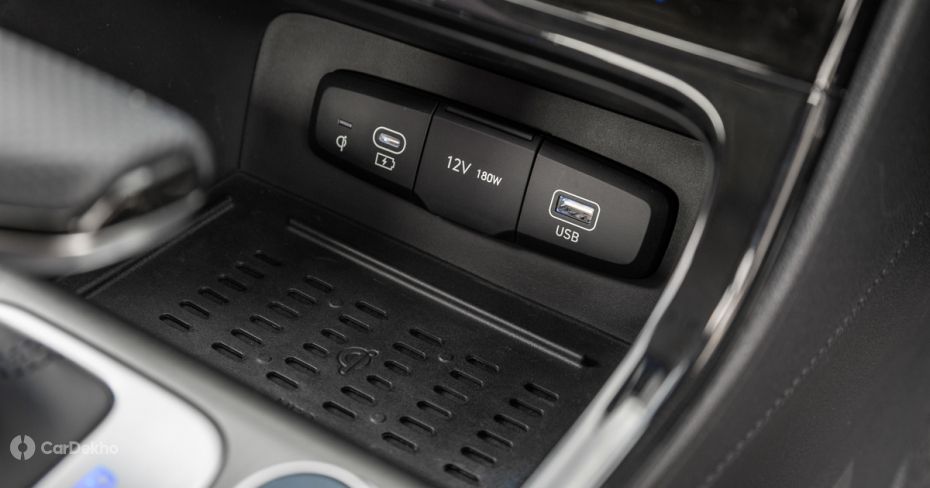
For charging options, Hyundai has offered a wireless phone charger, a type-C port, a USB port, and a 12V socket in the front. Second row passengers get two type-C ports and a wireless phone charger, and the third row occupants get one type-C port on each side.
Overall, the Alcazar offers a premium and spacious cabin experience, and it makes sure you get everything you need for your long journeys. Yes, the third row does have insufficient space for adults, but the overall package offered here will not leave you wanting for more.
Features
Features
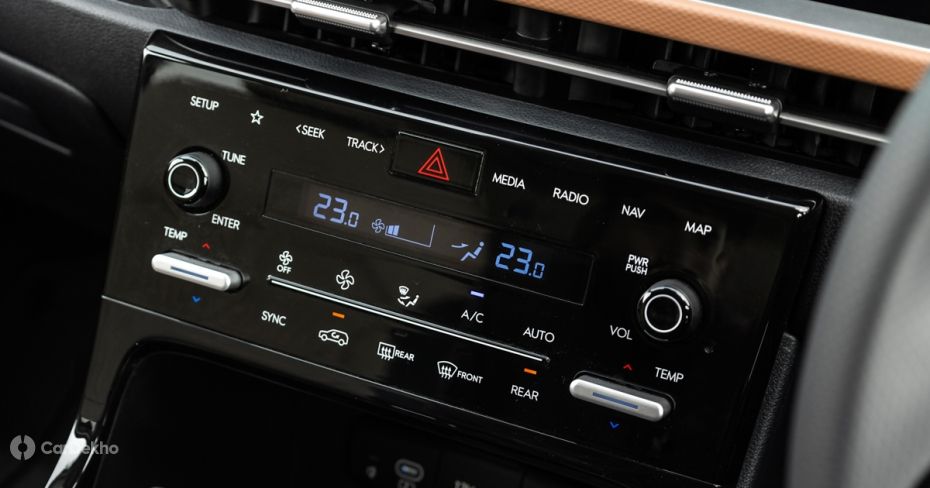
With the Alcazar, you get all the features of the Creta. The list of functional features is quite solid. Here’s what’s available:
| Features |
|
| 8-way powered driver seat with memory function |
8-way powered co-driver seat |
| Front ventilated seats |
Rear ventilated seats (6-seater) |
| Dual-zone AC with rear AC vents |
Push button start stop |
| Cruise control |
Electrically adjustable and foldable ORVMs |
| Panoramic sunroof |
Front and rear wireless phone chargers |
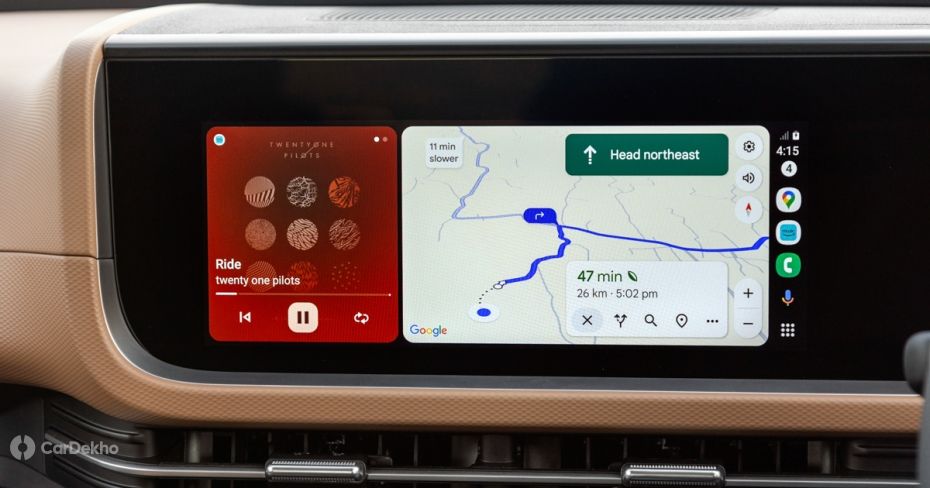
In addition to these features, it gets a 10.25-inch touchscreen infotainment system, which is the same size as the Creta, and gets the same user interface. It is easy to navigate, has a simple layout, and runs without lag. However, it has now started to feel a little outdated.
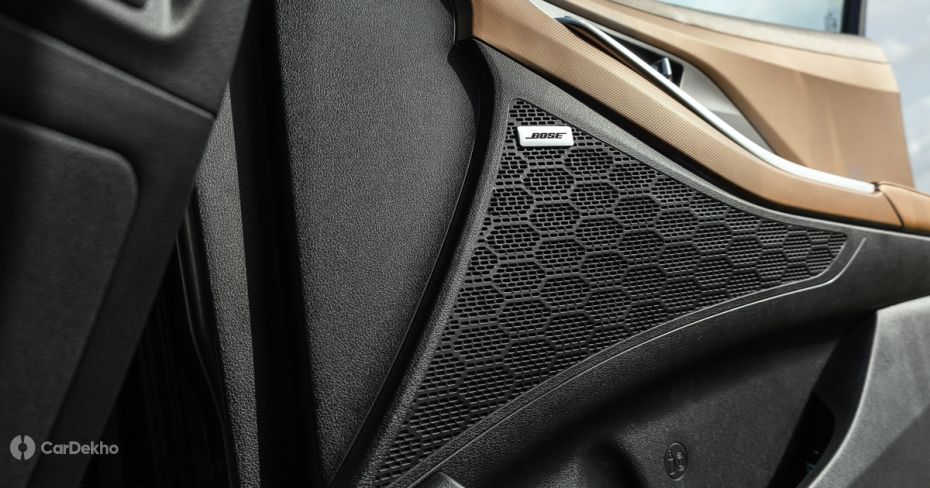
This screen is paired with an 8-speaker BOSE sound system for a surround sound experience, and wireless Android Auto and Apple CarPlay runs smoothly. But, this wireless connectivity is possible only with a wired-to-wireless dongle, the price of which has been added to the price of the car.
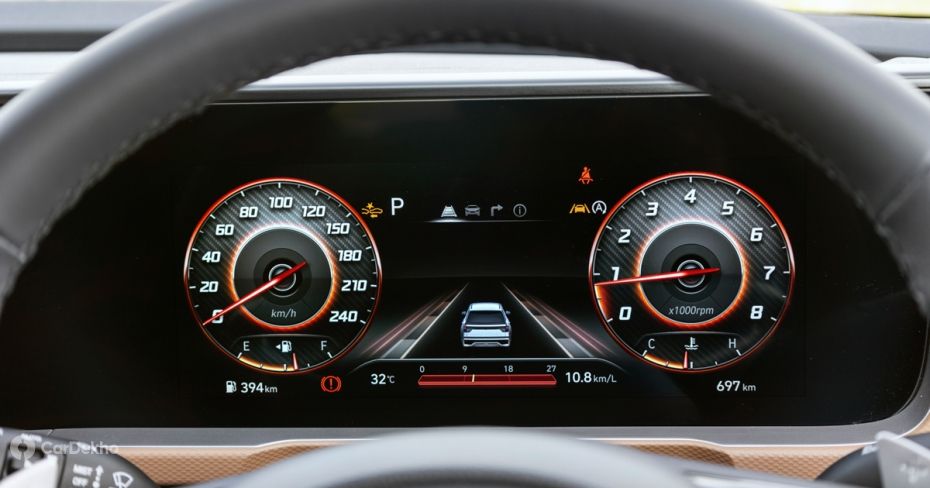
Next to the touchscreen is a 10.25-inch digital driver’s display which gets multiple themes based on the drive modes, it displays your drive information in a neat and clean manner, and navigating through its setting is also easy. However, unlike driver displays of other brands like Tata, you cannot use this screen to display maps from Android Auto or Apple CarPlay like you can in the Tata Safari or Mahindra XUV700.
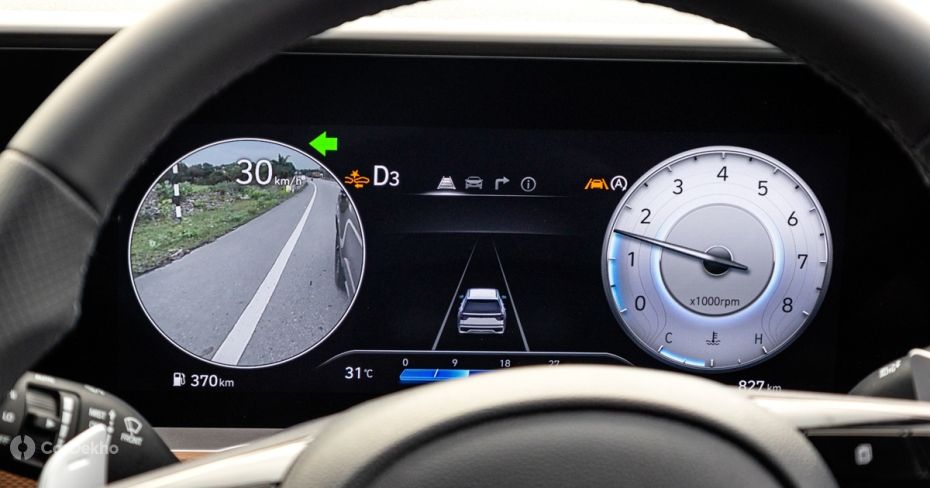
Hyundai has also offered a 360-degree camera which gets both 2D and 3D modes. The camera quality is good, the feed does not lag, and it even works well in low light conditions. On top of that, there is a blind view monitor, the feed of which is displayed on the driver’s display while indicating.
Safety
In terms of safety, the Alcazar comes with 6 airbags, ABS with EBD, electronic stability control (ESC), vehicle stability management (VSM), hill start assist, a tyre pressure monitoring system (TPMS), all-wheel disc brakes, rear parking sensors, ISOFIX child seat mounts, and a rear parking camera as standard.
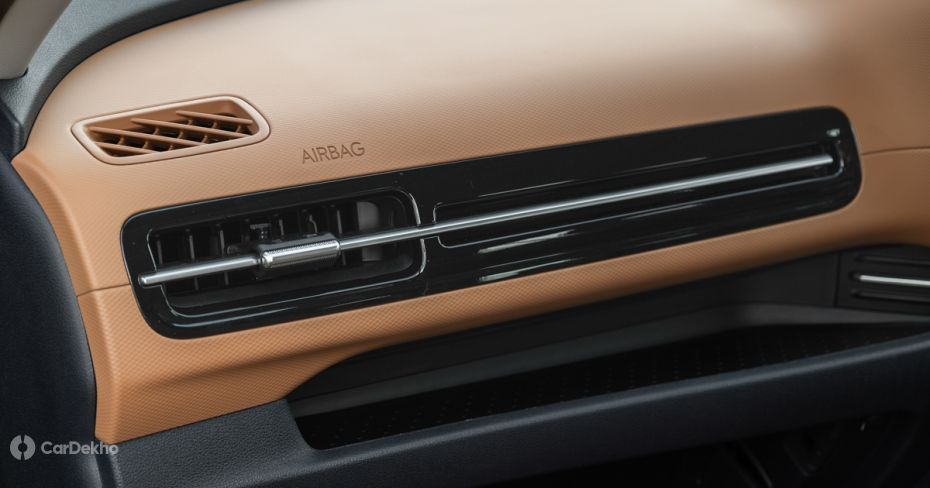
Higher variants get front parking sensors, rain sensing wipers, and an auto dimming IRVM. Top spec variants come with a Level 2 ADAS setup, which gets features like adaptive cruise control, lane keep assist, high beam assist, rear cross traffic alert, and auto emergency braking.
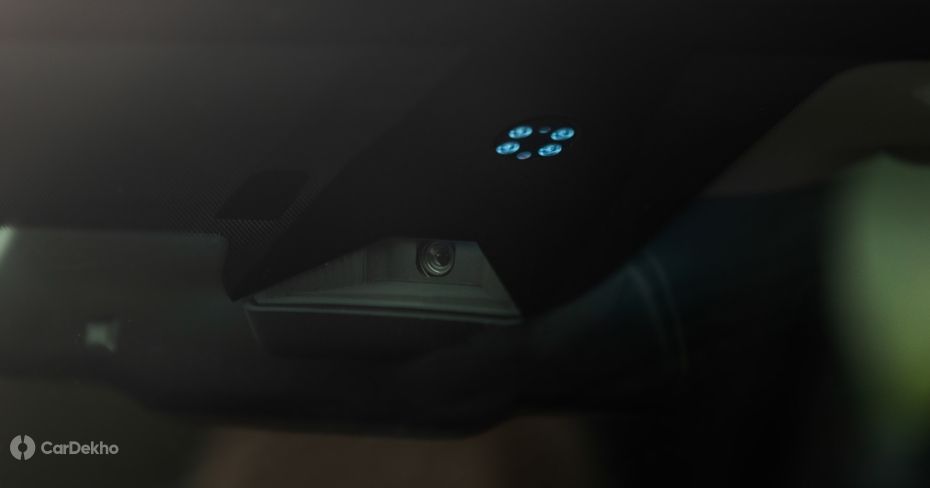
This ADAS setup used both radar and camera, which makes it accurate and usable in low light conditions, and it has been tuned well for Indian conditions. But, it still needs proper lane markings to function properly.
The Hyundai Alcazar has not been crash tested yet by any agency.
Boot Space
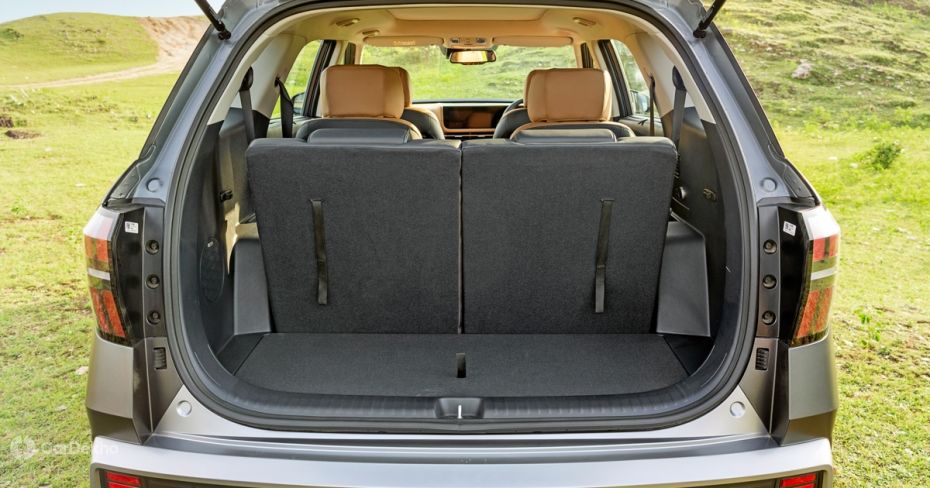
When all three rows are up, you get 180-litres of boot space, which is enough for two cabin sized suitcases.
With the third row down, the boot space increases to 579-litres which is more than enough to keep a full suitcase set along with a few more overnight bags.
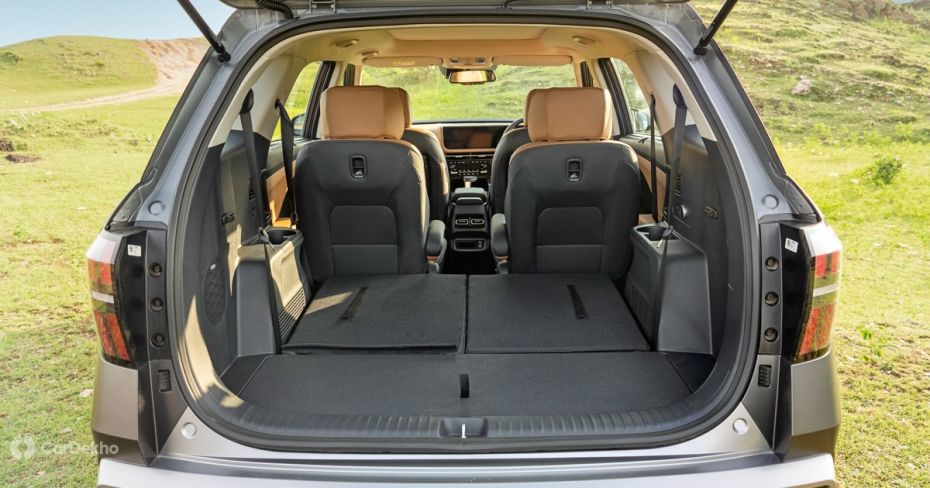
In the captain seats variants, the rear seats don;t fold flat, which means you don’t get a flat floor. This, along with a high loading lip, makes it a little difficult to load or unload luggage. One thing that feels missing here is a powered tailgate, which cars like the Hector and Safari offer.
Performance
The Alcazar gets a 1.5-litre turbo-petrol and a 1.5-litre diesel engine, both of which are the same as the Creta, and are offered in the same state of tune.
| Engine | 1.5-litre turbo-petrol | 1.5-litre diesel |
| Power | 160 PS | 116 PS |
| Torque | 253 Nm | 250 Nm |
| Transmission | 6MT, 7DCT | 6MT, 6AT |
1.5-litre Turbo-petrol
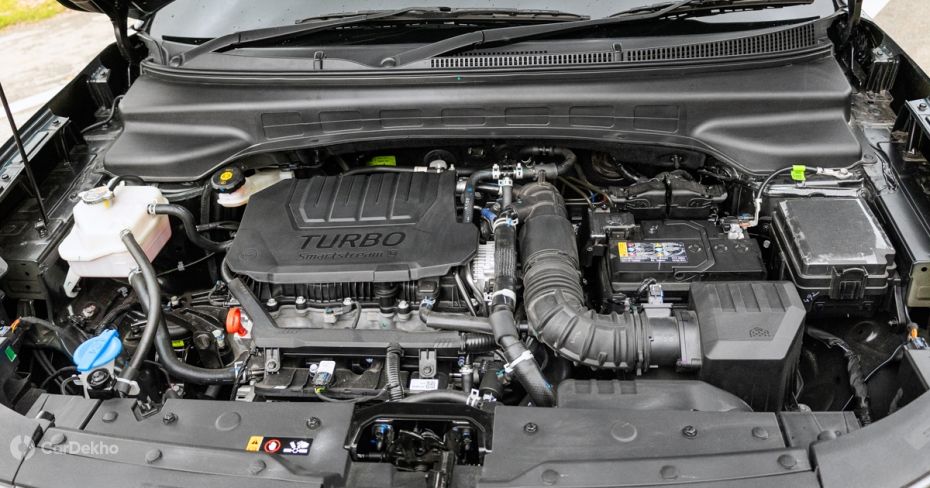
This is the more powerful engine in the lineup, and offers a relaxed drive experience. Being a 4-cylinder unit, there are minimum vibrations, and the power delivery here is also smooth.
City Performance
The turbo-petrol would be our top pick as it provides a more effortless driving experience. In the city, you can easily navigate through bumper-to-bumper traffic, overtakes are easy, and this engine handles all tasks effortlessly.
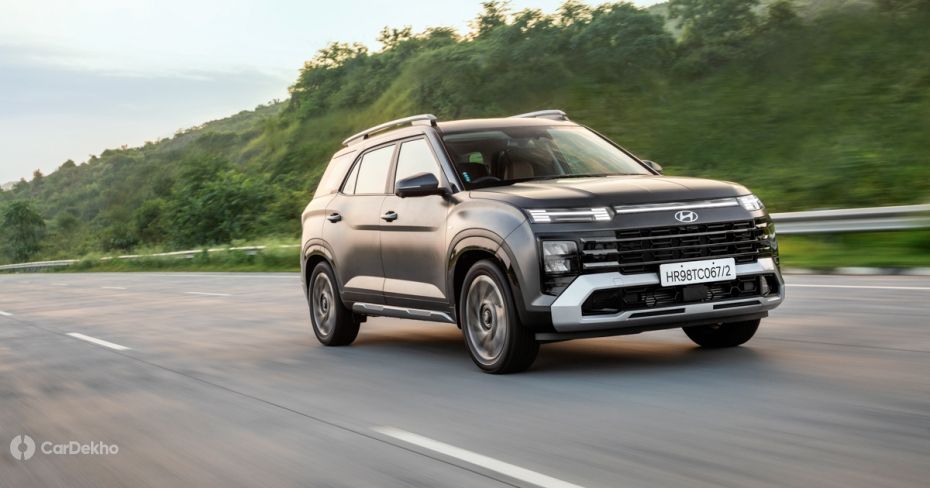
Unlike the Creta, you don’t get a fun-to-drive experience here, due to the Alcazar’s large size and added weight. A more powerful turbo-petrol engine would have done the job.
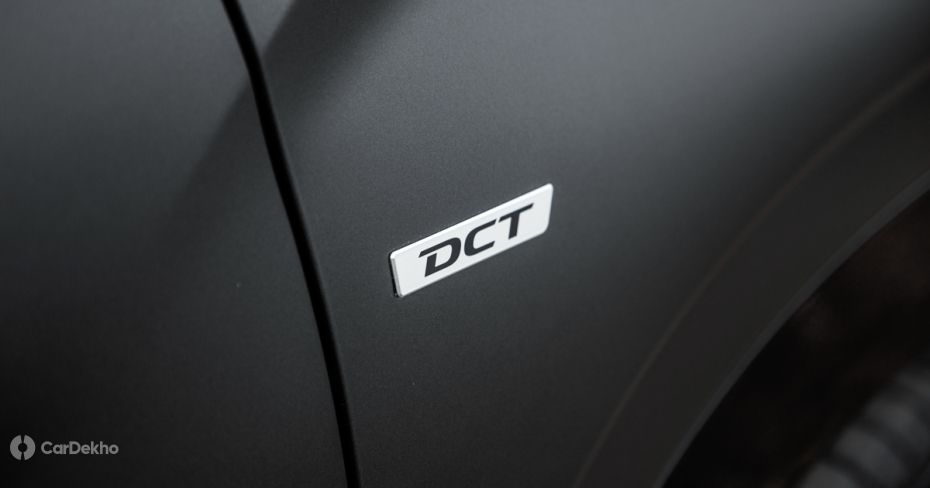
The manual gearbox offers slick gearshits, the clutch is light, which makes it easy to live with. However, the DCT (dual clutch automatic transmission) offers a more convenient drive. It shifts gears on time smoothly.
The only drawback here is a low city fuel efficiency of around 8-9 kmpl.
Highway Performance
Here as well, the performance will not leave you wanting for more, unless you’re looking for a sporty or exciting drive experience. On the highways, you can easily get to triple digit speeds, overtakes will not require any planning, and you can easily cruise at high speeds.
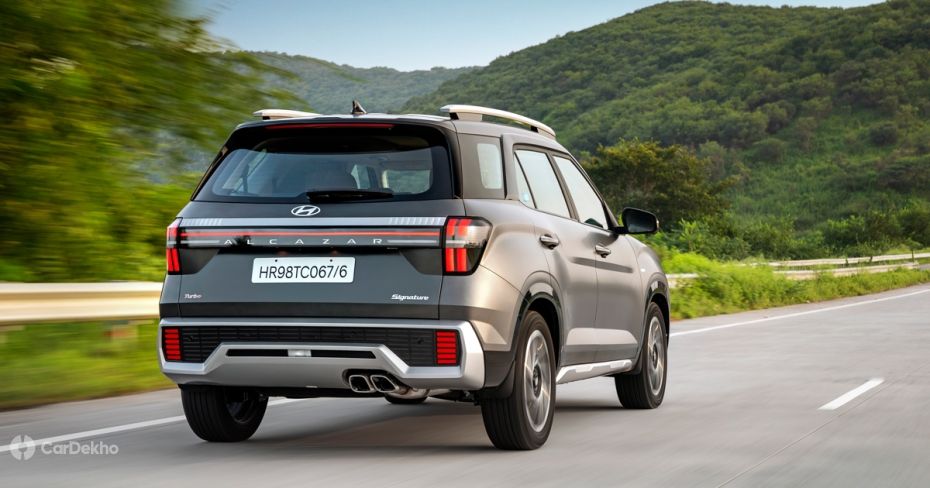
The DCT quickly goes through gears, there is no noticeable jerk, and if you need to quickly overtake someone, the gearbox will downshift on time to give you the required power. Compared to driving in the city, on the highways, this engine provides a respectable fuel efficiency of around 14-15kmpl.
1.5-litre Diesel
This should be your pick if you prioritize fuel efficiency, but that high mileage comes at a cost. Just like the petrol engine, the diesel also delivers power in a smooth manner, and it is very refined for a diesel engine.
City Performance
Due to its high torque, driving inside the city is easy and effortless. It picks up speed quickly, and you can easily overtake others around you. Even in bumper-to-bumper traffic, this engine does not feel very eager, and you don’t need to worry about any sudden surge of power.
The clutch isn’t particularly heavy, and the gear shifts are smooth here as well. You can drive around the city in second or third gear mostly without having to downshift very frequently.
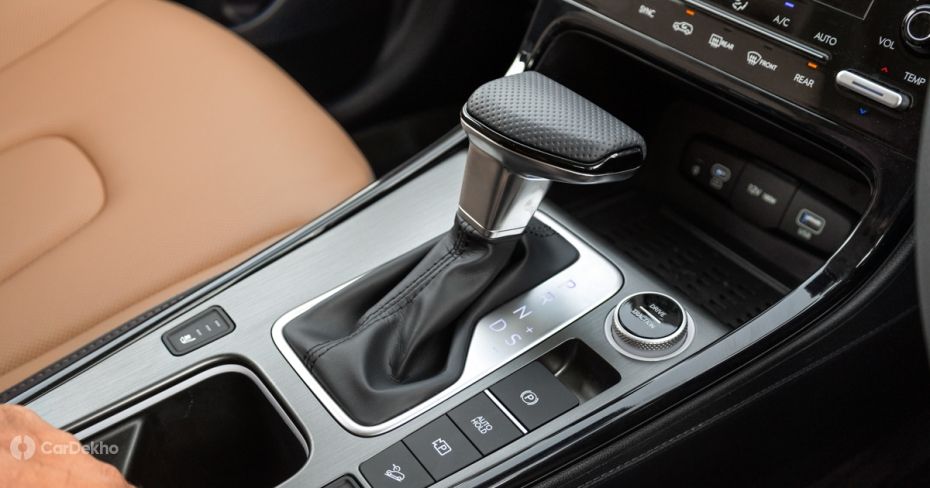
In case of the automatic, it gets a 6-speed torque converter, which is not as smooth as the DCT, and requires a split second extra to change gears. That said, it delivers on convenience.
The upside to picking the diesel is a better fuel economy, as you can get around 12-14kmpl in the city.
Highway Performance
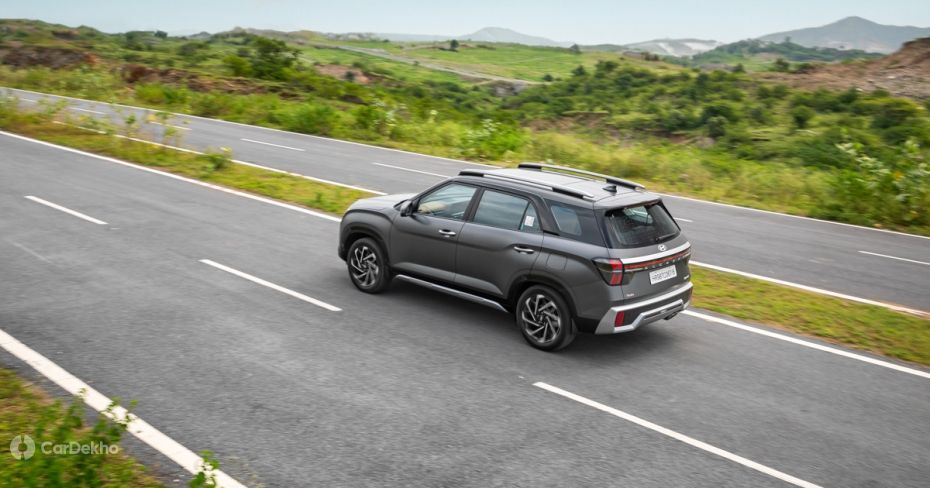
This is where things change. While the city performance is similar for both turbo-petrol and diesel, the latter feels a little dull on the highway. You can get to triple digits easily, and acceleration also feels smooth and linear, but the automatic here is not up to the mark.
With the automatic, the gears will need some time to change, the engine will occasionally get loud, and you’ll need to plan your overtakes. With the manual, this problem will go out of the way, but the overall performance will not be as good as the turbo-petrol.
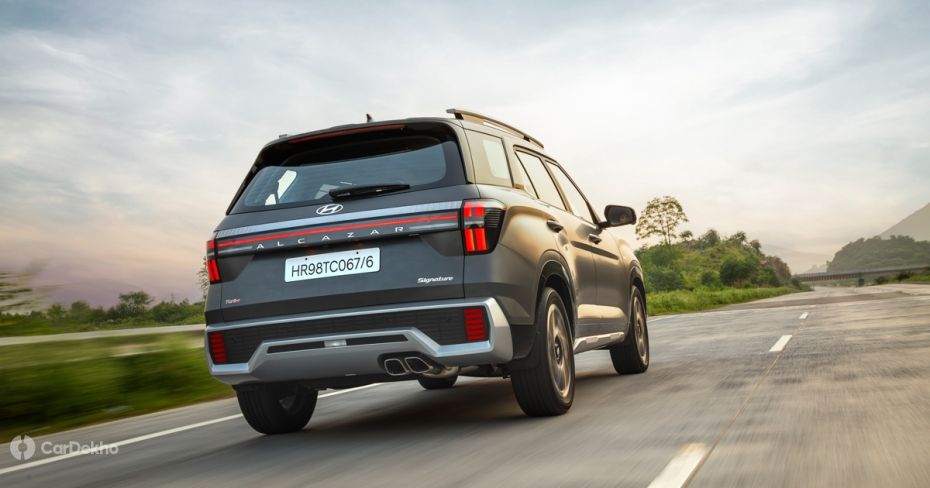
As for fuel efficiency, you can get close to 18kmpl on the highway, and even more if you’re cruising at 80-90 kmph.
Ride and Handling
Ride Comfort
With less people on board, you’ll get a cushioned ride quality on most surfaces, but you’ll occasionally feel some road imperfections inside the cabin. It can handle small potholes and speed breakers with ease, but it’s best to slow down on deeper pothoes to avoid any sudden and unwanted side-to-side movement.
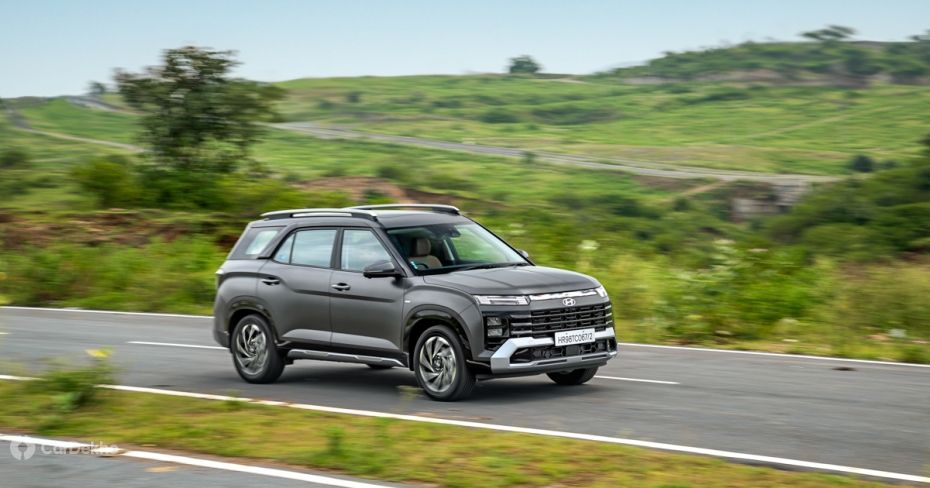
On the highways, it will handle undulations well, and you won’t feel much of the surface. Even during sudden lane changes, the cabin will remain stable, limiting any passenger movement.
Handling
The Alcazar is not a sporty car which you can just throw around a corner. It is a family car meant to be driven calmly. Nonetheless, it does handle itself well. Inside the city, the steering feels light and maneuvering is easy.
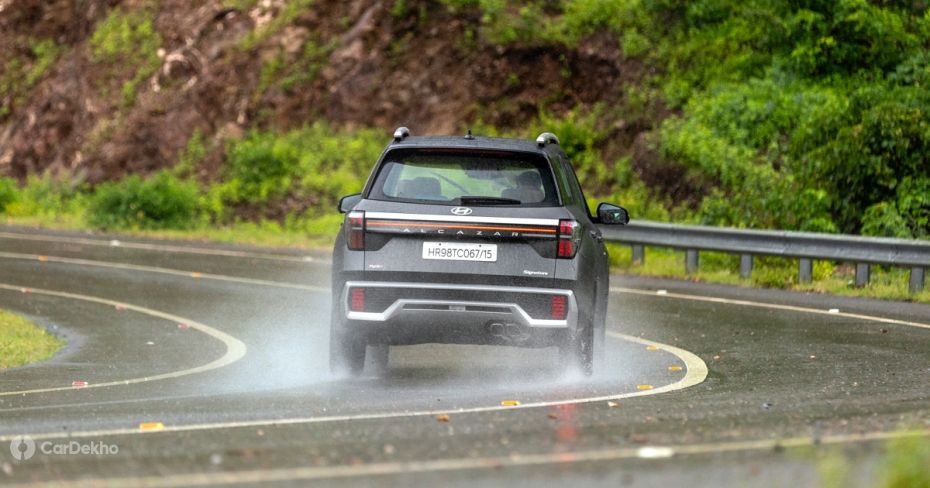
On the highway, the steering gains some weight at high speeds, which further inspires confidence. It handles sudden lane changes quite well too.
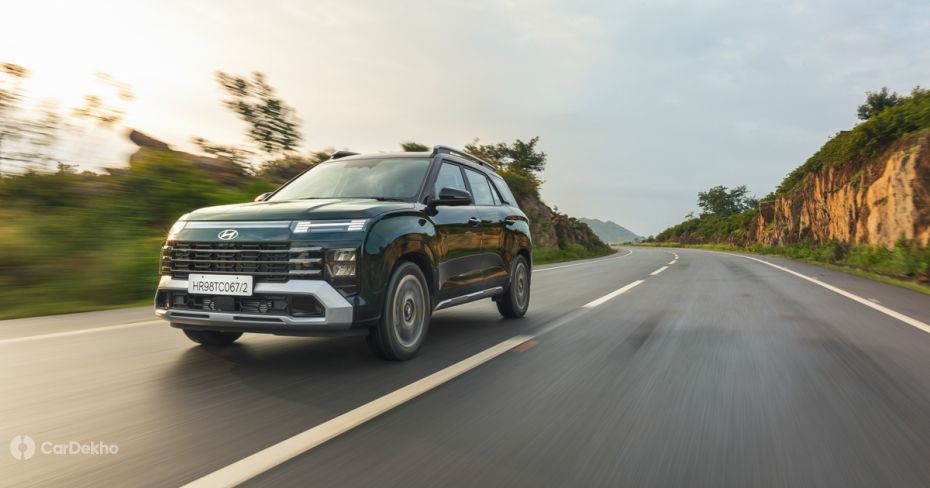
Overall, the Alcazar manages to keep the passengers comfortable on most surfaces, and you’ll hardly feel the need to complain, but its rivals like the Safari and the XUV700 offer a much more comfortable ride quality, along with better handling.
Variants
The Hyundai Alcazar is available in 6 variants: Executive, Prestige, Corporate, Platinum, Signature and Signature Knight. The 6-seater version is exclusive to the Signature variant.
Hyundai Alcazar Executive
-
Gets LED headlamps, LED tail lamps, H-shaped LED DRLs, and 17-inch alloy wheels.
-
Cabin has a dual-tone theme, fabric seats, height adjustable driver seat, ambient lighting, and leatherette padding on the steering wheel and gear knob.
-
Gets a 60:40 split seat in the second row that slides and reclines, and 50:50 third row seats with reclining adjustment.
-
Covers all basics with push button start stop, dual zone AC with rear AC vents, 2nd row trays, Type-C ports in all rows, electrically adjustable & foldable ORVMs, and a coloured MID.
-
No infotainment system or speakers. The driver gets a semi-digital coloured MID display.
-
Safety kit gets 6 airbags, electronic stability control, tyre pressure monitoring system, hill start assist, ISOFIX mounts, rear wiper and washer, rear parking sensors, and a rearview camera.
Hyundai Alcazar Prestige
-
No diesel option. But is available with a manual and DCT with the turbo-petrol engine.
-
Small exterior tweaks like chrome door handles and shark fin antenna improve styling on the outside.
-
Cabin gets ambient lighting in the centre console (automatic variants only).
-
New features include wireless phone charger, voice-assisted panoramic sunroof, LED reading lamps, and connected car technology.
-
Automatic gets exclusive features like drive mode select, traction control modes and paddle shifters.
-
First variant to get a 10.25-inch infotainment system with wireless Android Auto and Apple CarPlay (wireless through an adapter), 8-speaker BOSE sound system, and Alexa voice command.
-
Safety kit features an auto IRVM, while features like hill descent control and electronic parking brake with auto hold are limited to the DCT version.
Hyundai Alcazar Corporate
-
Diesel engine only variant which gets both manual and automatic transmission options.
-
There are no changes to the exterior and interior design.
-
Even the tech, feature and safety package is the same.
Hyundai Alcazar Platinum
-
A manual-only variant available with both petrol and diesel engines.
-
Improved exterior styling with bigger 18-inch alloy wheels and black painted roof rails, outside door mirrors and rear spoiler.
-
More premium interior with leatherette seat upholstery and door armrests.
-
Adds some feel-good features like 8-way powered driver seat, 2nd row head cushions, 2nd row wireless phone charger, and an LED centre lamp (diesel only).
-
Driver gets a fully digital 10.25-inch instrument cluster while the infotainment package remains the same.
-
Safety kit gets a 360-degree camera, blind view monitor, and all Level 2 ADAS features except for adaptive cruise control.
Hyundai Alcazar Signature
-
Only variant to get all the powertrain options and both 6- and 7-seater seating configurations.
-
Adds features like memory function for driver seat, 8-way powered passenger seat, ventilated front seats, and a digital key.
-
Features like captain seats with seat mounted armrests, and second row comforts like winged type headrests, underthigh extension and ventilated seats are exclusive to the 6-seater version.
-
Safety kit benefits from the full feature set of the ADAS kit with addition of adaptive cruise control. Also gets a dashcam.
Hyundai Alcazar Signature Knight
-
An automatic-only variant is available with both the engine options.
-
As part of the ‘Knight’ treatment, it gets black 18-inch alloy wheels, black radiator grille, black front and rear skid plate, black door handles, black roof rails and Knight emblem. Adding a sporty touch to the all-black treatment are the red brake callipers (front and rear).
-
The dual-tone cabin is replaced with an all-black theme with brass inserts. Features exclusive black leatherette upholstery with ambient lighting on the crashpad, front and rear doors and around the central console.
-
No improvements in the feature experience or safety kit as the Signature variant was already fully-loaded.
CarDekho Recommends
-
The entry-level Executive variant can be opted if you’re on a tight budget, but it will require some additional investment for an infotainment and sound system. If you want those things from the factory along with a few additional features, upgrade to the Prestige variant. Prestige is also the base variant for the petrol automatic.
-
If you want the best chauffeur-driven experience, the Signature variant is your only option. It is priced competitively, and offers the best second row experience amongst its rivals, thanks to fancy creature comforts.
-
The premium variant offers a balance of an upmarket cabin experience, better features, improved safety, and both petrol and diesel engines. Only if it also had the convenience of an automatic, it would’ve been our recommended pick of the lot.
Verdict
While it offers more space and some additional features over the Creta, the reasons for purchasing the Alcazar remain largely the same. It’s essentially a premium version of the Creta, with better rear-seat comfort and significantly more boot space. For buyers who prioritise rear-seat comfort or are chauffeur-driven, the Alcazar’s new features are a big advantage. And since there isn't a huge price difference compared to the Creta, paying a little extra for these enhancements feels justifiable.
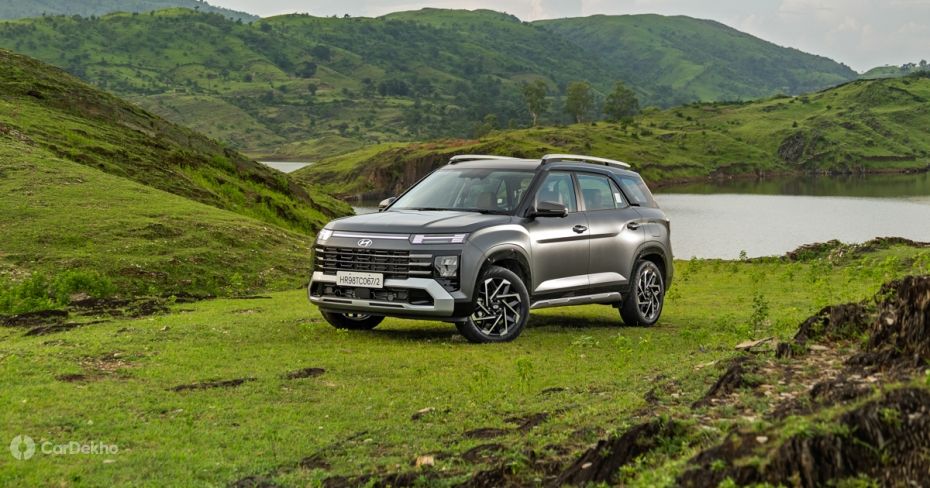
However, if you're looking for a true 6- or 7-seater, the Alcazar might fall short, and you should consider alternatives like the Kia Carens Clavis or Mahindra XUV700. But if you appreciate the practicality of the Creta and want the same in a larger, more premium package, the Alcazar is an excellent option.
Other Options To Consider
Kia Carens Clavis
Reasons To Consider
-
Better third row space
-
More comfortable ride quality
-
Gets a 1.5-litre naturally aspirated petrol engine
Reasons To Ignore
-
Limited diesel automatic options
-
Lacks the SUV look
Mahindra XUV700
Reasons To Consider
-
Gets an AWD setup along with more powerful engine options
-
Better third row space
Reasons To Ignore
-
More expensive
-
Feels outdated
Tata Safari
Reasons To Consider
-
Better infotainment package
-
More powerful diesel engine
-
Better space
Reasons To Ignore
-
No petrol or turbo-petrol engine on offer
-
More expensive top-spec variant
Hyundai Alcazar colours
Hyundai Alcazar is available in the following colours in India. View all car images with different colour options on CarDekho.
- Robust Emerald Pearl
- Robust Emerald Matte
- Titanium Black Matte
- Starry Night
- Atlas White
- Atlas White Dual Tone
- Titanium Black
Comparing Hyundai Alcazar Rivals
Rs.14.51 - 21.96 Lakh* | Rs.10.91 - 20.46 Lakh* | Rs.11.12 - 12.98 Lakh* | Rs.11.39 - 21.79 Lakh* | Rs.13.69 - 25.49 Lakh* | Rs.13.40 - 26.91 Lakh* | Rs.10.77 - 19.77 Lakh* | Rs.12.52 - 23.52 Lakh* |
| RatingUser Review (102) | RatingUser Review (484) | RatingUser Review (521) | RatingUser Review (54) | RatingUser Review (12) | RatingUser Review (226) | RatingUser Review (646) | RatingUser Review (585) |
| TransmissionAutomatic / Manual | TransmissionManual / Automatic | TransmissionManual | TransmissionAutomatic / Manual | TransmissionManual / Automatic | TransmissionManual / Automatic | TransmissionManual / Automatic | TransmissionManual / Automatic |
| Engine1482 cc - 1493 cc | Engine1482 cc - 1497 cc | Engine1493 cc - 1497 cc | Engine1482 cc - 1497 cc | Engine1997 cc - 2198 cc | Engine1498 cc - 1956 cc | Engine1462 cc - 1490 cc | Engine1997 cc - 2184 cc |
| Fuel TypeDiesel / Petrol | Fuel TypeDiesel / Petrol | Fuel TypeDiesel / Petrol / CNG | Fuel TypeDiesel / Petrol / CNG | Fuel TypeDiesel / Petrol | Fuel TypeDiesel / Petrol | Fuel TypePetrol / CNG | Fuel TypeDiesel / Petrol |
| Power114 - 158 bhp | Power113.18 - 157.57 bhp | Power94.76 - 114 bhp | Power94.67 - 157.57 bhp | Power130 - 200 bhp | Power167.62 bhp | Power87 - 114 bhp | Power150 - 174 bhp |
| Mileage17.5 - 20.4 kmpl | Mileage17.4 - 21.8 kmpl | Mileage- | Mileage19.54 kmpl | Mileage- | Mileage- | Mileage19.38 - 27.97 kmpl | Mileage12.4 - 15.2 kmpl |
| Airbags6 | Airbags6 | Airbags6 | Airbags6 | Airbags2-6 | Airbags6-7 | Airbags6 | Airbags6 |
| Currently Viewing | Alcazar vs Creta | Alcazar vs Carens | Alcazar vs Carens Clavis | Alcazar vs Scorpio N | Alcazar vs Safari | Alcazar vs Grand Vitara | Alcazar vs Thar ROXX |
Hyundai Alcazar videos
- Shorts
- Full Videos
Features - Hyundai Alcazar
Launch - Hyundai Alcazar
Boot Space - Hyundai Alcazar
- 20:132024 Hyundai Alcazar Review: Just 1 BIG Reason To Buy.2 years ago83.2K Views
- 18:46Kia Carens Clavis vs Hyundai Alcazar: Galat Gadi Padegi Bhaari11 months ago49.6K Views
- 9:39Hyundai Alcazar Long Term Review: Family SUV That Truly Delivers? 5000km Experience!10 months ago43.7K Views
Hyundai Alcazar 2026: Latest News Articles
- Latest News
- Must Read Articles
- Road Test
Explore Hyundai Alcazar Second Hand cars
Hyundai Alcazar user reviews
- All (102)
- Looks (32)
- Comfort (49)
- Mileage (27)
- Engine (18)
- Interior (23)
- Space (14)
- Price (12)
- More...
- Latest
- Helpful
- Critical
- My AlcazarVery good car, best for travelling, good space as well as very comfortable. Gives perfect example of car with everything. Very safe to drive, perfect for child, old aged people. You will have best expierence while using it. I won't change it until new alcazar arrives. Use it, love it and it will love you back.Read More2
- Such A Nice Review Its Thigh Support Of The CarIt was such a nice experience with a good suspension and interior comfort. The angry mode of the car is such a interesting feature. The car and the look of the car and the ventilated seats of the car is super fantastic. The thigh support of the car is very good for me. I would like to thank Hyundai for such a nice experience.Read More1
- A Car That Gives Premium Feel And ComfortI am 67 yrs old and purchased Alcazar DCT automatic 7 seater in 2023. I have been travelling Pan India ever since and now on way back from Ranikhet to Hyderabad. The performance of car has been superb, including steep climbs at approx 40 degrees at times, rough roads and sheer cliffs, through mud and road. It has comfort, ease of relaxed driving and great mileage.Read More1
- You Want A Smart Car?? .. Buy An Alcazar...Smooth, Comfortable, overall average 19.8, fully loaded features, 20 plus average on long drive route(Diesel). Urea Cost (7Ltr) 500INR in 10000 km. 900 KM run in one full tank( excluding reserved fuel) easy to drive in high traffic also. Cruise control available in base model, alloy wheel R17 in base model bumper and roof accessory installed in base model.Read More1
- Good Looking But In Performance Low PerformanceGood looking and interior size absolute but has low power and also front wheel drive, very low maintenance costs and budget is meaningful. It has sunroof in very low cost looks like foreign suv. Good looking led headlights, Usefull features, love alloy wheel size, high ground clearance, Seats are comfortable to sit.Read More
- View All Alcazar Reviews
Hyundai Alcazar mileage
The Hyundai Alcazar mileage is 17.5 to 20.4 kmpl. The Diesel models have mileage range between 18.1 kmpl to 20.4 kmpl with manual/automatic. The Petrol models have mileage range between 17.5 kmpl to 18.1 kmpl with manual/automatic.
| Fuel Type | Transmission | ARAI Mileage |
|---|---|---|
| Diesel | Manual | 20.4 kmpl |
| Diesel | Automatic | 18.1 kmpl |
| Petrol | Automatic | 18.1 kmpl |
| Petrol | Manual | 17.5 kmpl |
Are you confused?Ask anything & get answer in 48 hours
Hyundai Alcazar Questions & Answers
- FAQs
- Latest Questions
A ) The Hyundai Alcazar features a 26.03 cm (10.25-inch) infotainment display with ...Read More
A ) The Hyundai Alcazar has a ground clearance of 200 millimeters (mm).
A ) The Alcazar is clearly a 7-seater for the urban jungle. One that can seat four i...Read More
A ) As of now, there is no official update from the Hyundai's end. Stay tuned fo...Read More
Hyundai Alcazar On-road price in popular cities
Trending Hyundai cars
- Popular
- Upcoming
- Hyundai CretaRs.10.91 - 20.46 Lakh*
- Hyundai VenueRs.8 - 15.83 Lakh*
- Hyundai Venue N LineRs.10.66 - 15.67 Lakh*
- Hyundai Creta N LineRs.19.03 - 20.10 Lakh*
- Hyundai i20Rs.6 - 10.68 Lakh*
Popular SUV cars
- Trending
- Latest
- Upcoming
- Mahindra Thar OGRs.10.32 - 18.99 Lakh*
- Tata SierraRs.11.49 - 21.59 Lakh*
- Tata PunchRs.5.75 - 10.77 Lakh*
- Maruti Suzuki BrezzaRs.7.50 - 13.71 Lakh*
- Maruti Suzuki FRONXRs.6.90 - 12.03 Lakh*
- New VariantMahindra XUV 3XORs.7.79 - 15.04 Lakh*
- New VariantHyundai Creta ElectricRs.18.03 - 25.22 Lakh*
- New VariantCitroen Aircross XRs.8.89 - 14.72 Lakh*
- New VariantCitroen Basalt XRs.8.55 - 14.11 Lakh*
- Kia SorentoRs.27.99 - 40.39 Lakh*
Popular electric cars
- Maruti Suzuki e VitaraRs.16.19 - 20.21 Lakh*
- Mahindra XEV 9eRs.21.90 - 31.25 Lakh*
- Tata Punch EVRs.9.79 - 12.99 Lakh*
- Tata Tiago EVRs.6.99 - 10.09 Lakh*
- MG Windsor EVRs.14.70 - 19 Lakh*