

Kia Carens Clavis 6000 km Review: A Big Change In Lifestyle
Published On Mar 12, 2026 By Ansh for Kia Carens Clavis
- 2.8K Views
- Write a comment

After using the Kia Carens Clavis diesel for two months, with a very heavy heart, I had to exchange it for the turbo-petrol DCT. While having the diesel did give me peace of mind thanks to its high fuel efficiency, driving and spending time with the turbo-petrol was also important to understand the car better, and here is how that time was spent:
More Power = More Money
As soon as I exchanged the diesel for the turbo-petrol, I left from Mumbai to Pune. The one thing I realised instantly was the difference in power. It’s not like the diesel was underpowered, it’s just that the turbo-petrol packs a punch which the diesel lacked.
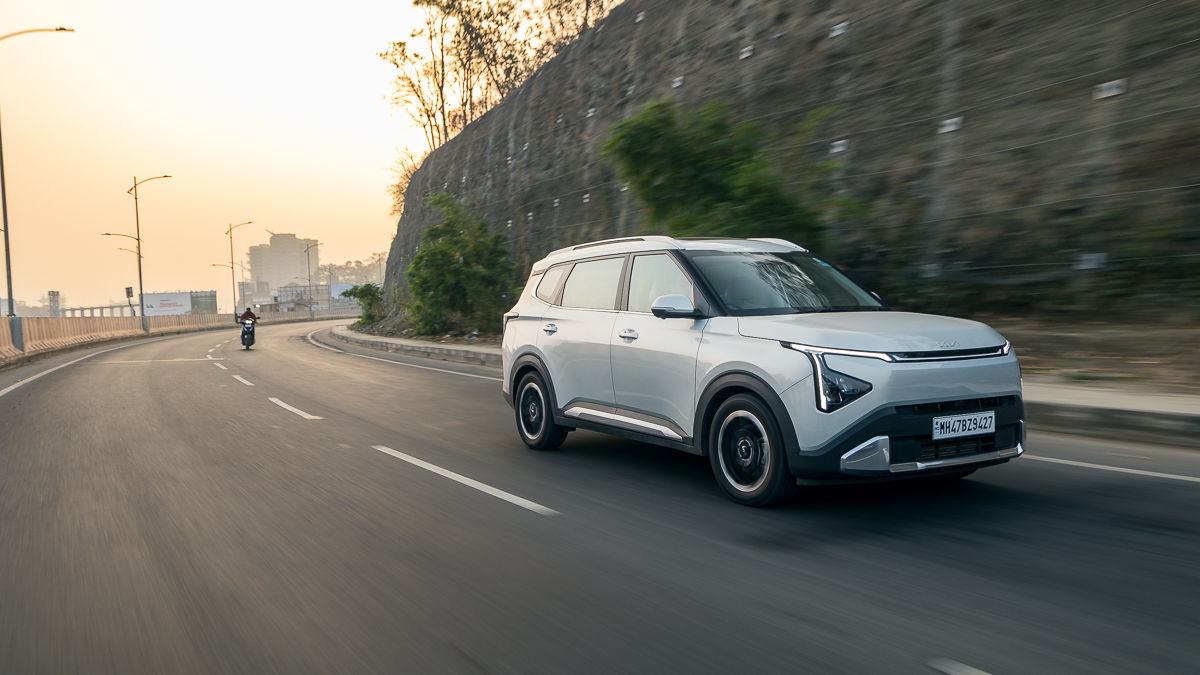
The throttle response felt much sharper, the acceleration felt quicker, and just a small push of the pedal allowed me to overtake others around me with ease. Where the diesel felt enough, the turbo-petrol felt effortless. I got the same feeling on the expressway, where reaching 100 kmph did not take much time, and even at those speeds, I knew I had more than enough power left to overtake everyone around me.
However, this power is not cheap. From the heart of Mumbai to the expressway, I got a fuel efficiency of around 7 kmpl and on the expressway it went up to around 13 kmpl. The diesel, on the same routes and in the same driving conditions, used to give me 12 and 18 kmpl, respectively.
So while there was a significant increase in power for my drives, there was also a very noticeable increase in expenses. In the first two weeks, my fuel expenses went from Rs 3,000 - 4,000, all the way to around Rs 7,000, which led to the Clavis turbo-petrol being used majorly for production purposes.
Family Car Turned Chauffeur Driven
The diesel version of the Clavis which I used for 2 months had a 7-seater configuration, and it spent a lot of time with my entire family. However, the Clavis turbo-petrol came with a 6-seater configuration, and it has been used as a chauffeur driven MPV by me and a few of my colleagues.

The second row experience changes completely with the captain seat layout. What was once a bench where three people sat with some shoulder overlap has now become individual seats with ample space. I have personally spent quite a bit of time in the captain seat and the space on offer is actually very good. That, combined with the manual boss mode and a tray to keep my laptop, this really made me feel like some important businessman.
A Better Feature Package
One thing I do not like about the Clavis is how the powertrains have been distributed. The diesel is only available till the one-below-top variant, and the top-spec only comes with the turbo-petrol. So when I got the turbo-petrol, I also got a chance to experience some more features that come with the top-spec Clavis.
The feature I appreciate the most is the front seat ventilation function. In our tropical environment, this is a very important feature to have, and in the Clavis it works silently. Other than this, the top-spec also gets a 4-way powered driver seat – which adds convenience for the driver, it offers a BOSE sound system – which offers a surround sound experience, it comes with a panoramic sunroof – which makes this cabin look even more premium, and it comes with ADAS – which I found very helpful during my long highway drives.

The problem I have is that if you want these features, if you want a more premium cabin experience, and if you want the safety that comes with ADAS, you only have the option of picking the turbo-petrol. I found this to be unfair towards the buyers who prefer diesel.
My time with the Kia Carens Clavis is coming to an end, and I have driven it for over 6,000 km (both diesel and turbo-petrol combined). In a few weeks, I’ll tell you all the pros and cons of the Clavis that I found in my experience, and hope they help you in making an informed decision.
Date Of Arrival: 15th October 2025
Kilometres On Arrival: 1940 (Diesel), 2604 (Turbo-petrol)
Kilometres Till Date: 6912 (Diesel), 4218 (Turbo-petrol)
Positives: Spacious, neat design, fuel efficient diesel powertrain
Negatives: Less features with top-spec diesel, low turbo-petrol fuel efficiency
