

Hyundai Creta Electric Long-term Report: Breaking Stereotypes
Published On Jun 12, 2026 By Ujjawall for Hyundai Creta Electric
- 4.9K Views
- Write a comment
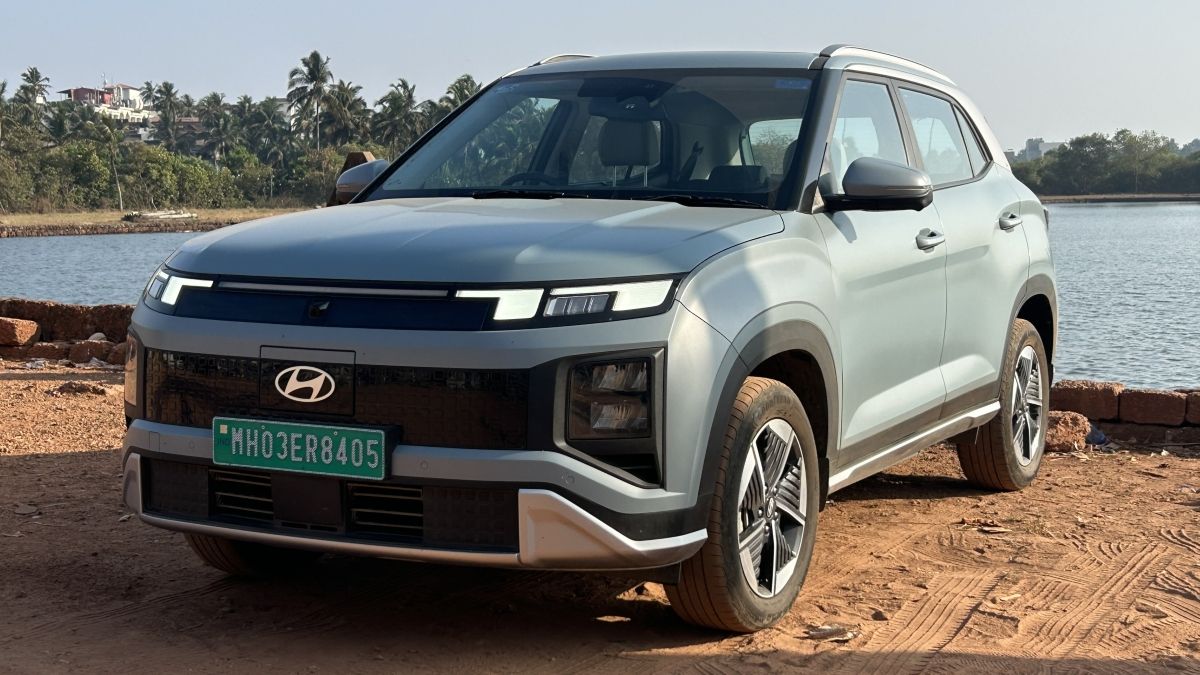
I’m one to always find random reasons to go to Goa, but May seems to be an actually good time to do so. It’s not off-season, but it isn’t overly crowded either and the weather is actually manageable.
So that’s exactly what I did as soon as I saw the opportunity of a long weekend — pack my bags, pick my partner up and drive for around 10 hours on a 500km journey in my newly arrived Creta Electric long-termer.
Now, I’ll be honest, I was tempted to take the Tata Harrier EV being used by my colleague Tirth. It’s got more real-world range and it probably would’ve gotten me there without needing to take a charging stop. But that would’ve snatched the opportunity for me to experience if one can actually do long-distance roadtrips in an EV without a humongous battery, in this case it being the Creta Electric. And now that I’ve done it, all it needs is a bit of planning. Here’s how it event:
The Planning
The first thing you need to do before any long drive in an EV is make sure it’s charged. So I plugged the car in for an overnight top up and we set off with 95% charge with an indicated range of 482km.

Our next top wouldn’t come until 5 hours later with a battery charge of 20%, where we stopped for a meal. And because I’d already marked my route and the rest stops the night before, charger anxiety was kept at bay. Although, we did have to wait for 10 minutes before we could plug the car in because both the booths were in use and we’re just glad that guy in the MG Windsor EV was about to be done. Otherwise we would’ve had to go to a charger 500m away, but that stop wouldn’t have any restaurants.
Soon enough, while we got some much needed body stretches and carbs for energy, the car juiced up simultaneously. It was just a 60kW charger, so with two cars plugged in, the Creta was charging at 30kW, but it was enough for us to get 80% charge within 50 minutes.
The second leg of the journey was a breeze and we reached our stay for the night with enough range for some cafe runabouts. Our hotel in South Goa didn’t have a charger but I’m glad that the adjacent hotel had a Statiq charger. So one full top up and it was enough for all our drives in and around Goa.
I followed the same approach for the return leg. A full charge before leaving, marked a food stop with a charger, and the journey was effortless. And that’s all you need for road trips in an EV — some planning. It doesn’t take much effort, especially with Gemini’s integration in google maps itself, but I’m confident that even if I didn’t plan ahead, there were enough food stops with charging stations.
The Cost
Except for the charge before the trip, all the charges were done at DC fast chargers with varying pricing per unit (average would be somewhere around Rs 20 per unit).
But I’ve done all the math, and I’ll spare you the complexity, but the cumulative cost of those three charging sessions came to around Rs 3000. Add the cost of the initial home top up and using the Creta Electric for a 1000 km round trip from Pune to Goa just cost me Rs 3620.
In an equivalent sized compact SUV with equivalent performance (only the 1.5 turbo-petrol can come close), this would’ve cost me more than Rs 9,000 (considering a 12kmpl overall average). That’s some difference.
Takeaway
So the next time someone tells you that an EV can’t be taken on a roadtrip, maybe just smile away and let them be. Because people can hate EVs all they want, but if you don’t mind some planning on your journey, not only are they a lot more carbon friendly to run, but also a whole lot more frugal on your pocket.
Kilometers received: 13,340 km
Kilometers driven: 15,200 km
Pros: Accurate Range indication, low running cost
Cons: NA