
- English
- Login / Register

Tata Harrier EV
-
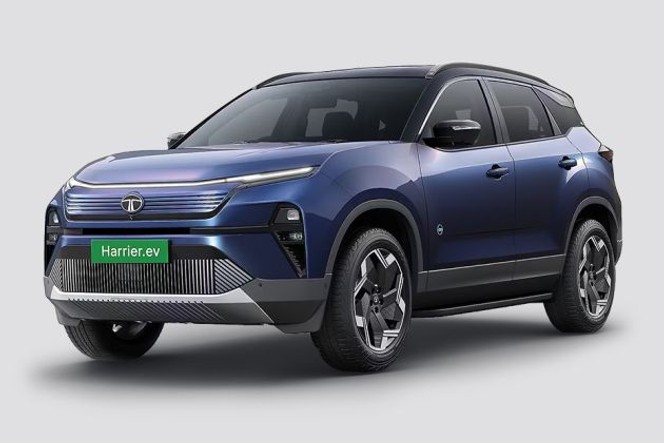
The Tata Harrier EV is the carmaker’s flagship electric vehicle that’s based on the standard Harrier. It’s also the first electric Tata to come with all-wheel drive.
-
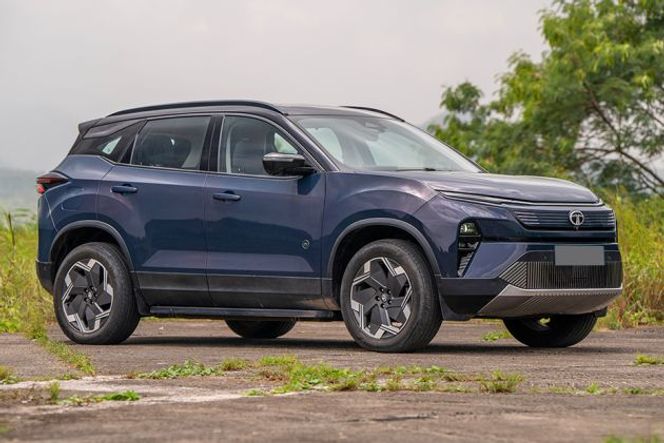
While the design is largely similar to the Harrier diesel, the EV gets some design differences such as a blanked off grille, aero covers on alloy wheels and tweaked bumpers.
-
The interior is well-laid and looks modern. While the design remains the same as the standard Harrier, the grey and white theme gives it an upmarket look.
-
Top features include a 14.5-inch touchscreen infotainment system, level-2 ADAS, self-parking mode, summon mode and a panoramic sunroof.
-
The Harrier EV gets two battery packs – 65 kWh and 75 kWh – with a claimed range of up to 627 km. All-wheel drive is limited to the larger battery pack.
Offers of Tata Harrier EV
 OEM OffersOctober Exclusive Benefits
Get cash benefits of up to ₹2,95,000 on your new Tata Harrier EV. T&Cs apply.
- OEM OffersOctober Exclusive Benefits
Get cash benefits of up to ₹3,20,000 on your new Tata Harrier EV. T&Cs apply.
- OEM OffersOctober Exclusive Benefits
Get cash benefits of up to ₹3,45,000 on your new Tata Harrier EV. T&Cs apply.

Tata Harrier EV Quick Insights
 Summary
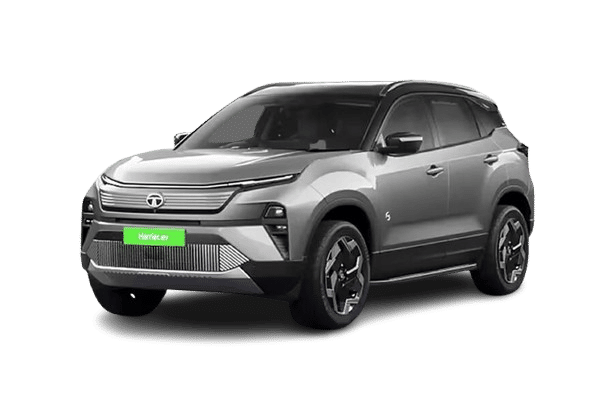
The best Tata there is brings a loaded tech pack, space for the family and impressive performance in one good looking package.
- Starts from ₹23.41 L onroad
- Fast and family-friendly
- 7 airbags standard
- 502-litres boot
- 5-seater
- Up to 627km MIDC range
3 Top PicksTata Harrier EV has 18 variants. Here's the pick at each price.
Sunroof, 12.3" touchscreen, 10.25" driver display, cruise control
ADAS, 14.5" touchscreen, powered tailgate, seat ventilation
All-wheel drive, boost mode, off-road assist
Our VerdictThe all-rounder EV

- Commanding road presence, bold design
- Instant acceleration, 400-500km usable range
- Plush, upmarket cabin fit and finish
- Raised floor reduces under-thigh support
- Misses the auto regen mode rivals get
- Prone to glitches and bugs
Buying Insights Owner Reviews
Owners love the Harrier EV for its ride, safety and premium tech
- Buttery suspension and ride quality
- Five-star safety and ADAS package
- Premium infotainment with JBL audio
- Real-world range below stated claim
- Limited exterior colour choices
- High price for the segment
Tata Harrier EV Price & Variants
Harrier EV has 18 variants starting at ₹21.79L across three battery tiers: 65 kWh RWD (538 km), 75 kWh RWD (627 km), and 75 kWh QWD dual-motor (622 km). Adventure 65 (₹21.79L) gets you into the EV with essentials. Leather seats, 8-way adjust, and a touchscreen that handles navigation. Adventure S 65 (₹22.29L) adds what makes daily driving easier: a bigger 31.24cm screen with voice control, panoramic sunroof, and doze-off alerts for long commutes. Most buyers land at Adventure S 65 (65 kWh, 538 km MIDC range) — where you get the 31.24cm touchscreen, Arcade.ev and panoramic sunroof without paying for the 360° camera, ADAS L2 and ventilated seats that Fearless+ adds. Step up to 75 kWh (627 km) only if you need the range.
Tata Harrier EV Specifications and features
| Range | 538 - 627 km |
| Power | 235 - 390 bhp |
| Battery Capacity | 65 - 75 kWh |
| Charging Time DC | 20-80 % : 25 mins |
| Charging Time AC | 10-100 % : 9.3 hrs |
| Boot Space | 502 Litres |
Digital IRVM can be switched off if required and doubles up as a front and rear dashcam
14.5-inch Touchscreen has excellent resolution, wireless Android Auto and Apple CarPlay and many on-board apps
10-speaker JBL Black Audio System (with Dolby Atmos) has superb audio experience and gives a theatre-like experience
Auto-park assist can self-park the Harrier EV in custom/unmarked spots and can be done using the key too.
- Key Specifications
- Highlights
Harrier EV 2026: Latest Updates
-
September 28, 2026: Harrier EV now available with Battery-As-A-Service (BaaS), at the price of Rs 14.49 lakh (ex-showroom) onwards.
-
March 21, 2026: Tata has introduced a new Fearless+ QWD variant priced at Rs 26.49 lakh (ex-showroom) with the 75 kWh battery pack. The carmaker has also added a new 'Seaweed Green' exterior colour option as well.
Harrier EV Expert Review
Things We Like
- Stellar ride quality. Remains comfortable over a variety of surfaces.
- 400-500km of real world range. More than ample for intercity trips too.
- Instant performance. 0-100kmph in 6.3 seconds.
Things We Don't Like
- Raised floor compromises under thigh support both at the front and rear
- Boot space: Spare wheel eats up into the boot space. Use smaller bags to pack more
Tata Harrier EV expert review
Overview
Tata Motors’ popular Harrier is now electric too. The Harrier EV brings with it a silent and powerful drivetrain, mechanical changes and even new features. On the surface, these additions justify the additional asking price quite comfortably.
In fact, let’s start this review with a rather bold claim. The Harrier EV is not just the best version of the Harrier on sale, it’s simply the best Tata car produced till date.
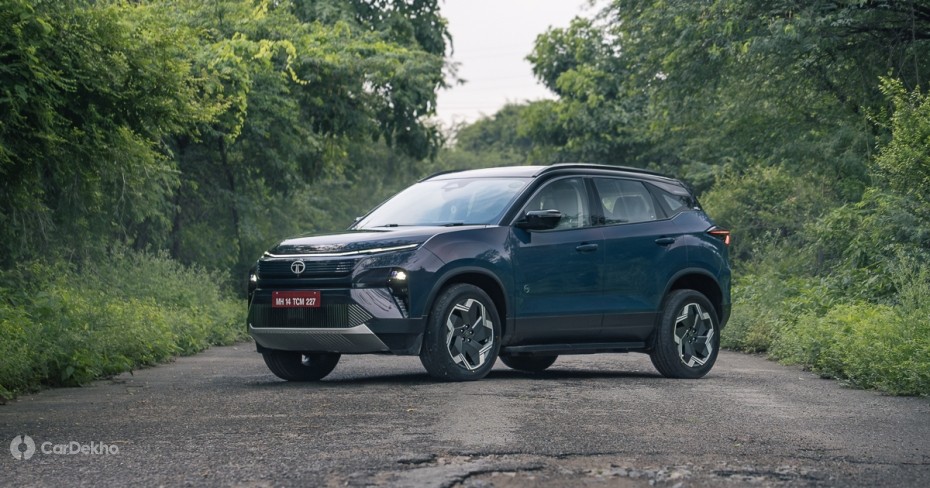
Having driven all the electric vehicles Tata Motors makes for thousands of kilometres, I was quite excited to see what the Harrier EV had to offer. I spent a few hours exploring and understanding Tata’s electric flagship. Here’s a detailed opinion of what’s right, and what’s not.
Exterior
For electric vehicles, there are two schools of thought when it comes to design. The first chooses to rewrite the rule book and opt for outlandish designs that immediately grab attention and scream ‘I’m electric’. Classic examples of this include the Mahindra BEVs, and even Hyundai’s Ioniq 5 and Kia’s EV6.
The second involves building on an existing product, and simply giving it tweaks to suit its electric nature. Tata chose this approach from day one, choosing to keep their EVs in-sync with their petrol/diesel-engined counterparts. In the Harrier EV’s case, this is a good thing. It’s a great place to start, as the design has plenty of presence, power and premium feel to begin with. However, we have listed a few design differences between the ICE and EV versions of the Harrier.
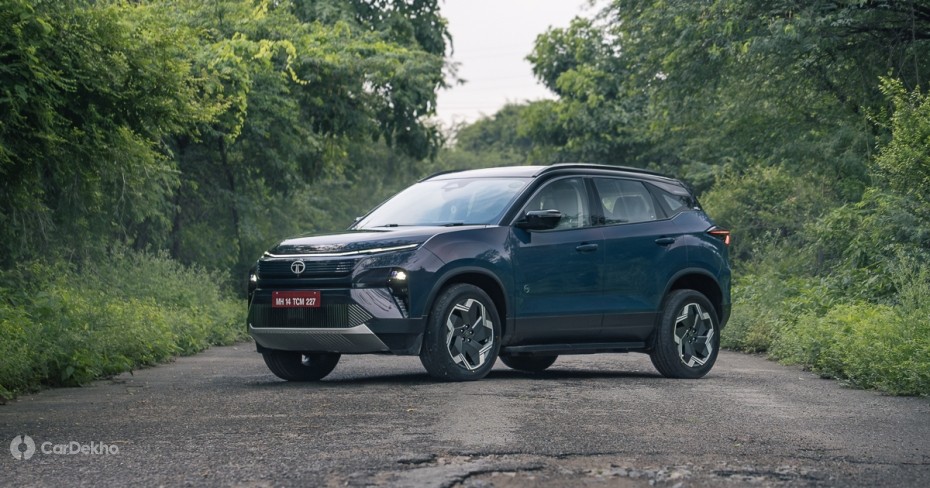
From the front, the Harrier EVs face is imposing. You’re likely to immediately give way if you spotted it in your rear view mirror. The full-width LED daytime running lights add a sense of width. You get welcome/goodbye animations here, and they double up as sequential turn indicators too.
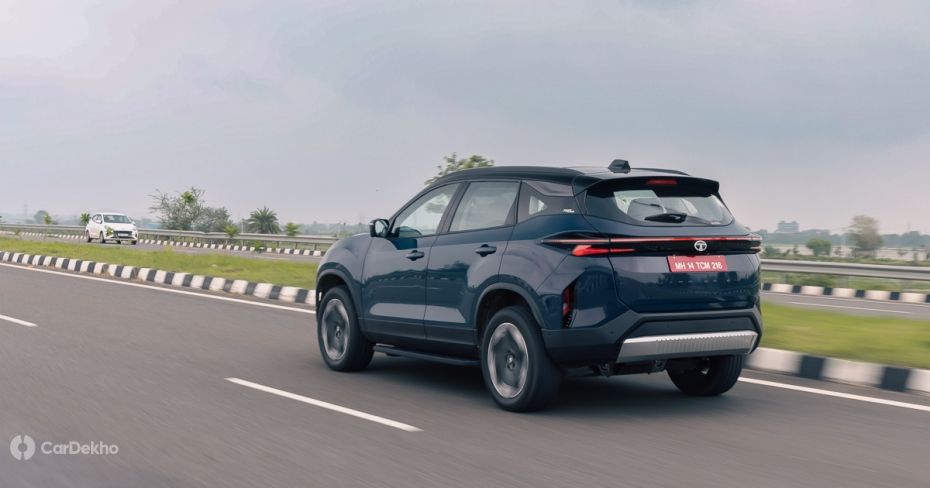
Tata has changed the design of the grille and front bumper. It has a ‘closed off’ look that most EVs have in interest of aerodynamics. The lower half of the bumper now features more upright elements in a metallic finish that looks classy. I particularly liked how the ADAS radar has been neatly integrated into the air dam.
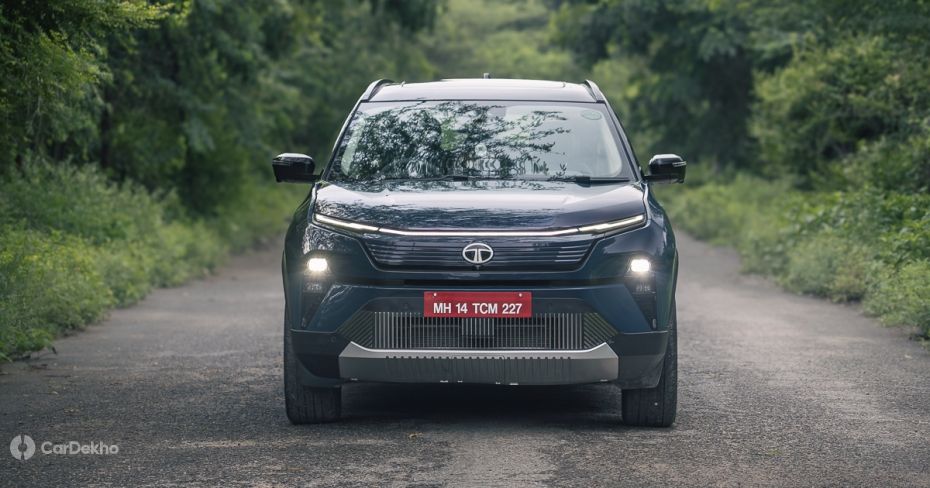
The rest of the bumper remains identical, with a vertical pod housing powerful white LED projector headlamps. It also features cornering fog lamps. Here you will notice a functional vent that’s intended to clean up the air travelling into the wheel well as well help cool the brakes down.
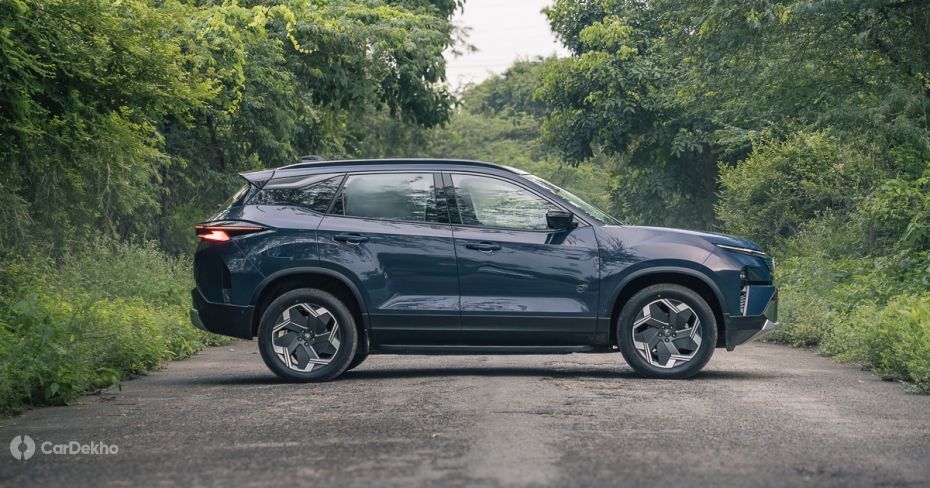
From the side, there’s not much that’s different. Keen eyed readers will be quick to spot the ‘.ev’ badging on the front door and the added side step. Interestingly, the Harrier’s signature chrome strip above the window line is blacked out in the EV.
The Harrier EV’s purposeful stance is amplified by the 19-inch alloy wheels. These alloy wheels are available in the Fearless and Empowered versions, whereas the base-spec Adventure variants get 18-inch alloy wheels. These wheels too feature plastic aero flaps to help reduce drag, all in interest of efficiency.
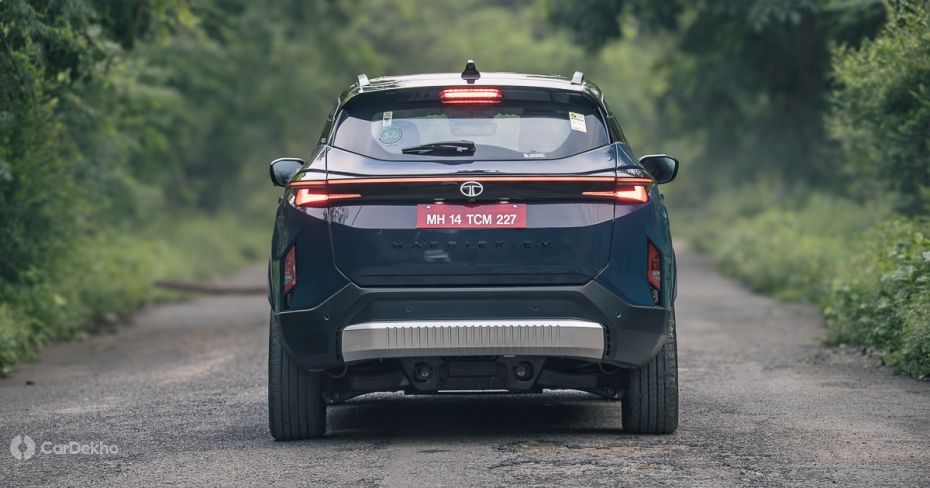
Changes at the rear are minimal, consisting of just a reworked design for the bumper. The faux skid plate, finished in grey, is more prominent. I like the squat stance of the Harrier EV when viewed from the rear. The full-width LED tail lamps amplify the width of the SUV. Here too, you get sequential turn indicators and welcome/goodbye animations.
While there’s no variant/persona badging anywhere on the vehicle, the tailgate has ‘Harrier.EV’ spelled out prominently. This badge is finished in black, which is a welcome relief from the blingy chrome.
Tata Motors offers limited colour options with the Harrier EV. The Adventure and Fearless variants are available in the Pristine White, Seaweed Green and Pure Grey colours. In the top-end Empowered variant, you additionally get a beautiful Nainital Nocturne shade, alongside Tata’s trademark Empowered Oxide. If you want a sinister looking SUV, Tata is also offering a matte black ’Stealth’ edition on the Empowered variant. If you’re interested to see how the Harrier EV looks in every shade, check out this report.
I prefer the Nainital Nocturne shade, which suits the car really well. Under different lighting conditions, it reflects back different shades of purple, red and dark grey, making it look very unique. Of course, with a design like the Harrier, it’s very hard to not like the ‘mafia’ look of the Stealth Edition.
Interior
On the inside, design changes are just as minimal. The cabin’s vibe feels most different in the Empowered variant that has a bespoke white-grey colour theme. However, in the Adventure and Fearless/Stealth variants that feature a tan-black and all-black colour palette respectively, it’s unlikely to feel any different. In fact, I much rather prefer the colour combinations available in the lower variant. They look just as premium, but will be far easier to keep clean in India’s dusty conditions.
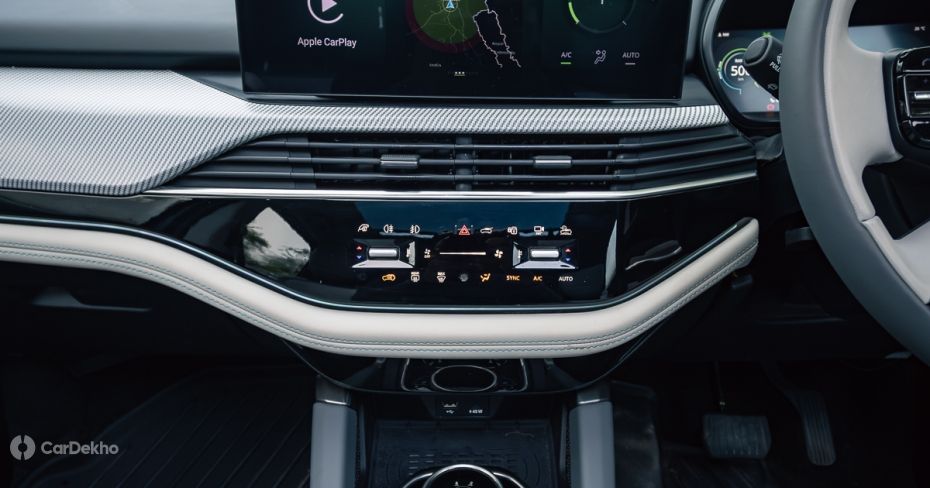
The dashboard is wide, and split into four layers. The Empowered variant features a white/grey coloured contrast panel on the dashboard, whereas other variants have a black-coloured panel. The slender central AC vents, trapezoidal side vents and the gloss black touch-sensitive panel for the climate control remain identical to the standard Harrier. The four-spoke Tata steering wheel with the backlit logo, and the floor console too are carried over unchanged.
Visually, only two things appear immediately different: the larger touchscreen on the dashboard and the digital IRVM. We’ll discuss these in detail in the features section.
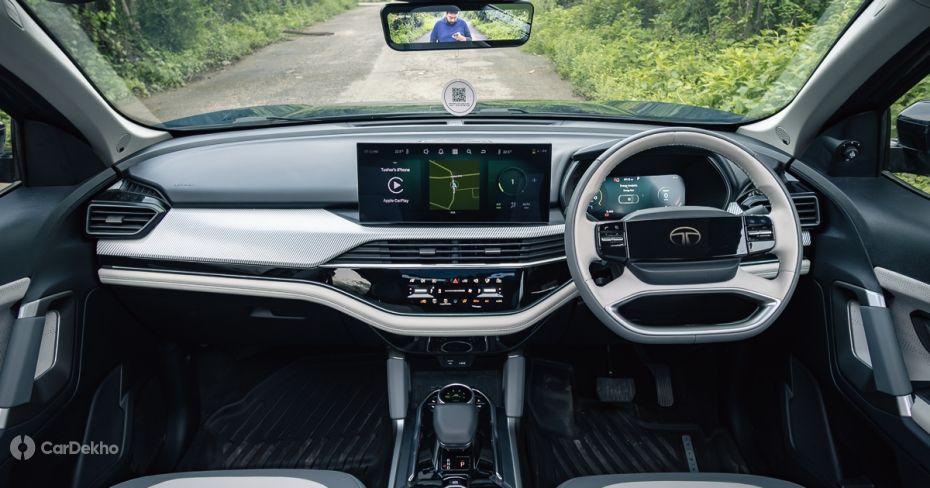
In terms of quality, it’s a bit of a mixed bag. The top half of the dashboard has a smooth leatherette-like feel, and the leather wrap used under the climate control panel is tasteful too. The graining and quality of plastic used for the lower half of the dashboard, door pads and floor console seem acceptable too. However, the power window switches, the headlamp/wiper stalks feel budget-grade.
Fit and finish was consistent in the multiple test/display cars I experienced.
Front Seats
The floor of the Harrier EV is raised compared to the standard Harrier. Tata is providing side steps, but elders are more likely to need them. Do note that the side steps might brush against your shin when you’re getting down from the car. It’s easier to use the side steps when alighting.
Because of the higher floor, the seating position is high by default. In terms of space, there’s no real issue with headroom or cabin width for average sized adults. The space in the footwell seems more than adequate too. However, if you’re taller than 6ft or wear a turban, you might feel you’re a little too close to the roof. Also, for my colleague who’s 6’5”, the raised floor meant that a portion of the centre console was pushing into his left knee; an issue not faced in much smaller cars or even the Harrier diesel.
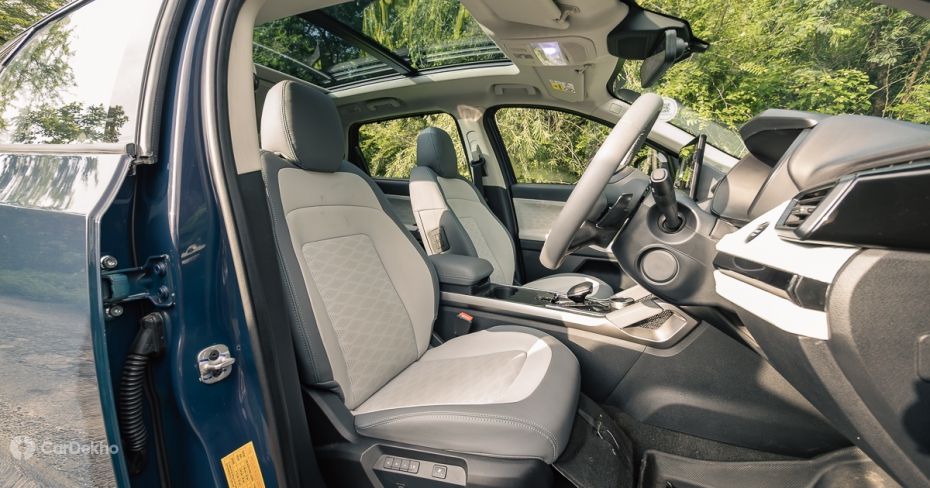
The seats are wide and accommodating of all types of frames. There’s ample support for the back, shoulders and lower back. However, underthigh support here could’ve been better.
You can adjust the driver’s seat electrically using the 8-way powered function. There are three memory settings as well, which is helpful in case multiple drivers use the car. Paired with tilt-telescopic adjustment for the steering wheel, it’s easy to find a comfortable driving position.
The co-driver’s seat is 4-way power adjustable. At this price point, I’d have liked to see a 6-way adjustment here. There are additional buttons on the shoulder of this seat called ‘boss buttons’. This allows rear occupants or the driver to move the co-driver’s seat as required.
Finally, there’s a central armrest on offer that’s placed at just the right height. This armrest also has a slide function, making it more convenient to use. However, at its furthermost position, it can knock over the cups placed in the cupholder.
Rear Seats
For my 6ft tall frame, I have a fist-worth of kneeroom behind my driving position. I usually set the driver’s seat all the way down, and that compromises foot room at the rear. This isn’t an issue in the standard Harrier.
There are no real issues in terms of headroom and cabin width. There’s plenty of shoulder room and the flat floor ensures three occupants will be quite comfortable here. That said, a central headrest is sorely missed.
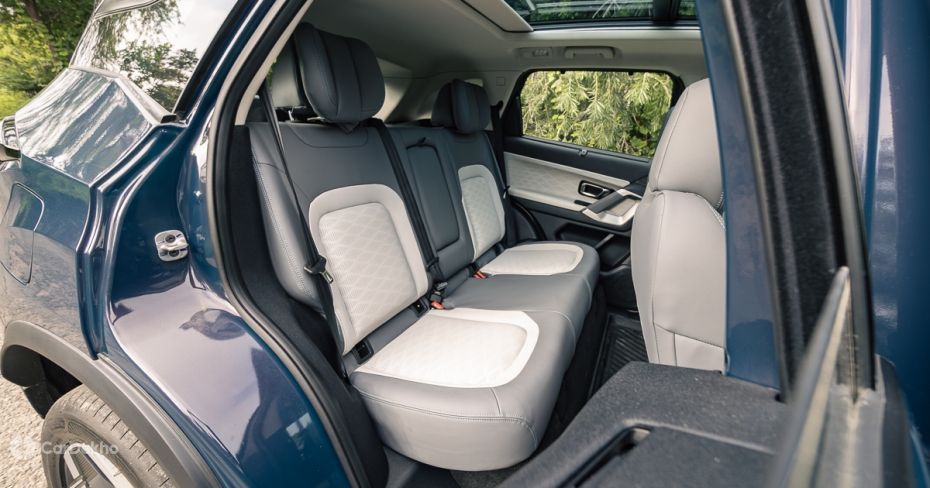
I really like the placement of the AC vents on the B-pillar. It actually helps in cooling the rear half of the car quickly. Other amenities for rear seat occupants include a central armrest and sun shades. You also get winged headrests in the top-spec Empowered variant, which offers additional support for the head and neck. To make it easier for you to understand, we sat down people of different heights on the rear bench to know how spacious the Harrier EV is.
Storage and Practicality
The Harrier EV scores high on practicality. There are large bottle holders in all four doors. The floor console houses a small space for your phone (on the wireless charging pad), cupholders and more space inside the front armrest. The armrest storage also gets a cooling function. There’s a large glovebox too.
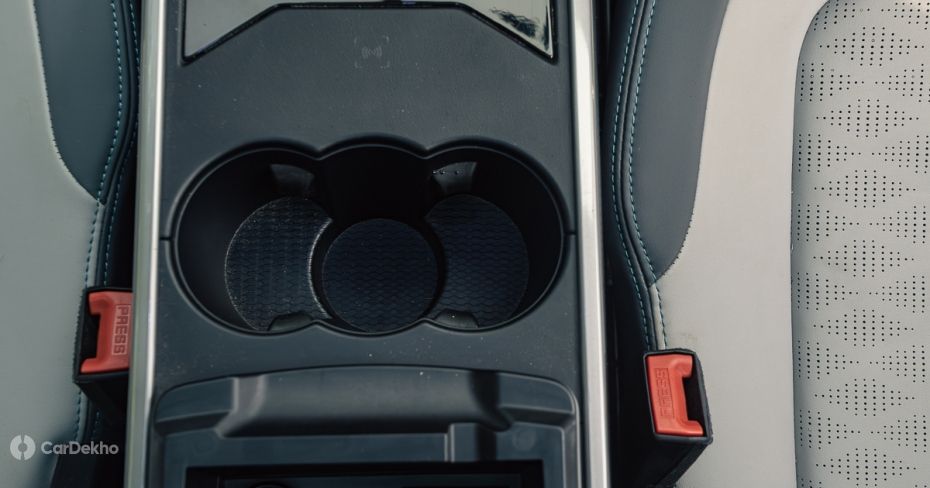
Rear seat occupants can use the trays in the door pads to park their phones, there are seat back pockets and some more space behind the front armrest console that can be used to store small items. The rear armrest also has a couple of cupholders.
Charging Options
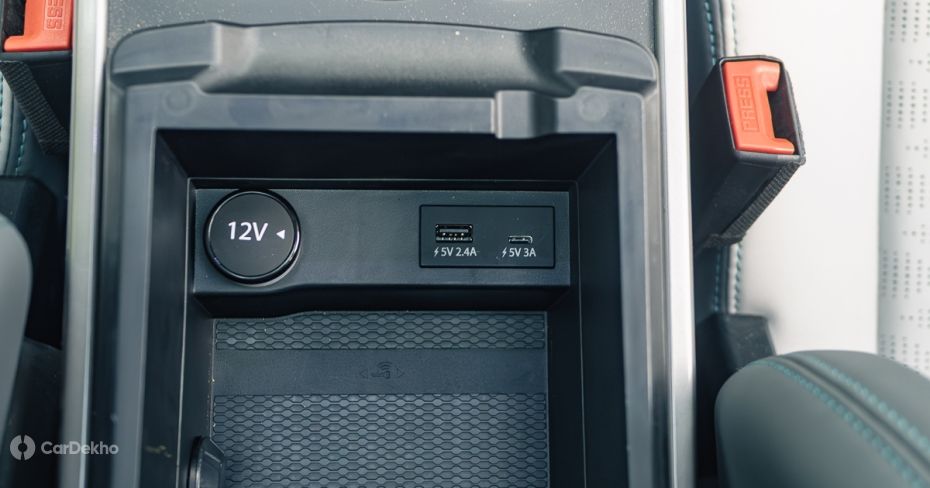
Front occupants get a wireless charger, a USB type-A and a 45W USB type-C port. There’s a USB type-A, type-C and 12V socket tucked away inside the front armrest.
Rear occupants get two USB type-C ports that can charge at 65W. This is enough to charge even laptops.
Features
Features
There’s practically every imaginable feature you’d want on the Harrier EV. There are also some amenities that the Harrier EV debuts for Tata Motors. However, these are the basic features:
-
Passive keyless entry
-
Start/Stop button
-
Automatic Headlamps
-
Automatic Wipers
-
Steering-mounted Audio Controls
-
Dual-zone Climate Control
-
8-way Powered Driver’s Seat
-
4-way Powered Co-Driver’s Seat (with Boss Mode)
-
Front Seat Ventilation
-
Configurable Ambient Lighting
-
Panoramic Sunroof (Voice Assisted)
-
Voice Commands
Now, let’s focus on the highlights, beginning with the infotainment package. Tata has consistently delivered stellar packages, and the Harrier EV simply pushes the goalpost ahead.
14.5-inch Touchscreen: This screen is the largest fitted to any Tata car ever. I like that the display is super thin, and the bezels are virtually non-existent. The entirety of the slab of screen you see is the display. This screen features a Samsung Neo QLED panel and you’ve got to experience it to feel the difference. The depth of colours, the fluidity in usage and the fast refresh rate make this screen as good as any handheld tablet. There’s wireless Android Auto and Apple CarPlay that function as intended.
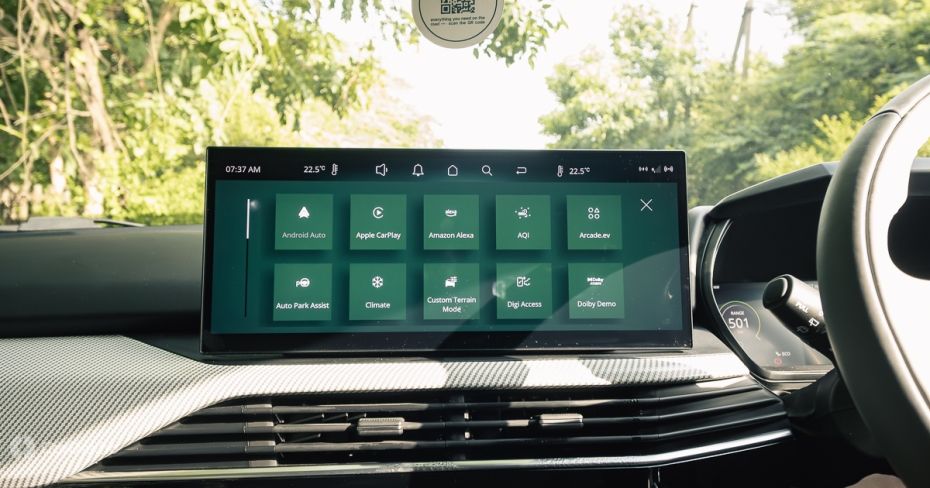
The screen is also the command centre for practically anything you want to control. You get a host of on-board apps, including Amazon Prime and Jio HotStar that lets you view OTT content while charging. There’s Tata’s ‘Arcade.EV’ suite too that has more games and apps that will help you kill time if needed.
In my time with the car, I did not face any lag, glitches, freezes or crashes with this screen. Everything functioned smoothly as intended. I hope owners continue to have a similarly fuss free experience.
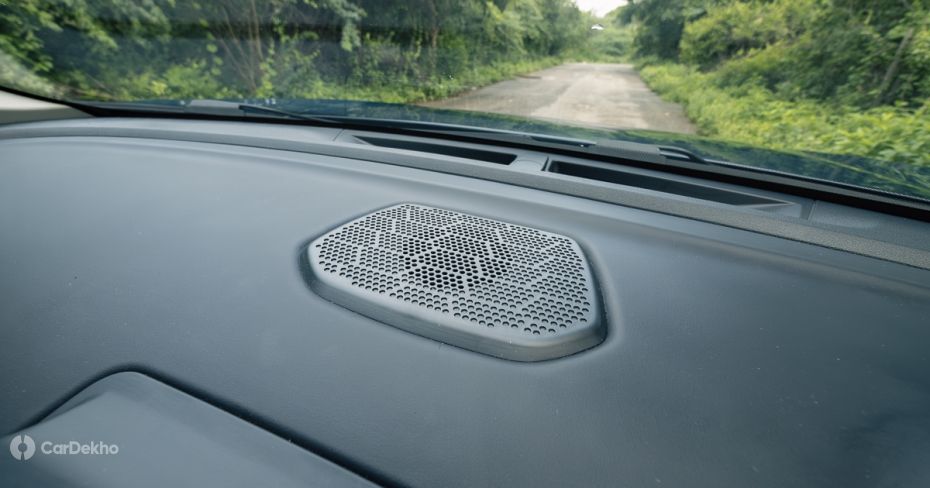
10-speaker JBL Black Audio System (with Dolby Atmos): While the total number of speakers is similar to the standard Harrier, the experience is anything but. The components are different and tuned better to deliver an even better sound output. With Dolby Atmos, surround sound gets unlocked giving you an immersive audio experience. You’d need music produced specifically in Dolby Atmos to fully explore this, which is available on streaming sites. In case you’re watching videos or movies, you’re sure to get a proper theatre-like experience.
At its most neutral setting, the system delivers deep lows and crisp highs. You can obviously tailor this to your liking by either using the pre-set JBL modes, or use the custom equaliser setting. That said, we don’t think you’ll feel the need to.
10.25-inch Digital Driver’s Display: Compared to the giant screen on the dashboard, this one looks tiny! It’s the same screen we’ve seen in the Punch EV, Nexon EV and Curvv EV with the same colour theme and graphics. In terms of functionality, there’s nothing to complain about. There are selectable views, you can view the feed of the side camera when you indicate here. There’s a whole host of data from your usual distance to empty and trip details, to ADAS to even navigation either via the on-board Mappls navigation app or Google Maps (via Android Auto) or Apple Maps (via Apple CarPlay). Tata could consider offering a larger 12.3-inch display to give the Harrier EV some novelty in this regard.
e-IRVM: This feature is straight out of a Range Rover. It employs a camera mounted on the shark-fin antenna that relays a video feed to a screen that’s displayed on the mirror itself. If you want to use the mirror without the camera feed, you can simply switch off the video feed. While the idea is great, the execution could’ve been slightly better. Since the video feed does not cover the whole mirror, you still see reflections on the actual mirror surface causing a ghosting-like effect.
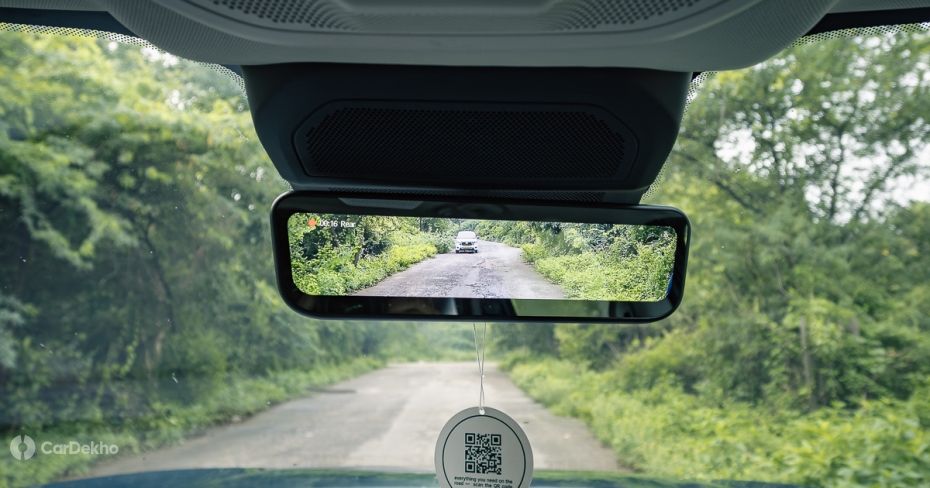
Another issue is that you’re likely to think that the mirror itself is a touchscreen of sorts and the on-screen text can be tapped to access. However, there are 7 small capacitive buttons under the text that are to be used to navigate through the functions.
This mirror also houses a front facing dash cam, and the camera in the mirror is constantly recording too. You can zoom the rear view, switch between front and rear views and even download clips recorded by the cameras.
360° Camera: This setup offers great video quality. However, I felt the screen colour-corrected the video feed too much. The cameras are a boon for a car as large as the Harrier EV, making it easy to park and maneuver through tight spots. It features a ‘Transparent View’ mode too, that lets you see what’s underneath the vehicle as you drive. Pretty handy while going off-road.
There are quite a few party tricks that the Harrier EV has too. This includes
-
Auto-Park Assist: enables the Harrier EV to park itself in parallel, perpendicular or diagonal spots. You can also choose a custom spot on the touchscreen and the car manages acceleration, braking and turning all by itself. If you’re parking in a tight spot, you can also use the key to move the car forward or reverse.
-
Reverse Assist: remembers your steering inputs in the forward direction for upto 50 metres. Replicates them in reverse to help you back out of a tricky parking spot. This feature was popularised by BMWs — it’s good to see it in a Tata!
-
Transparent View: offers a view of whatever is underneath the car. Helpful while off-roading.
-
NFC Key: You can choose to lock/unlock/start the vehicle using a NFC keycard. This can also be synced to your iPhone, effectively turning the phone into the car key. You can also share this virtual key with other users.
-
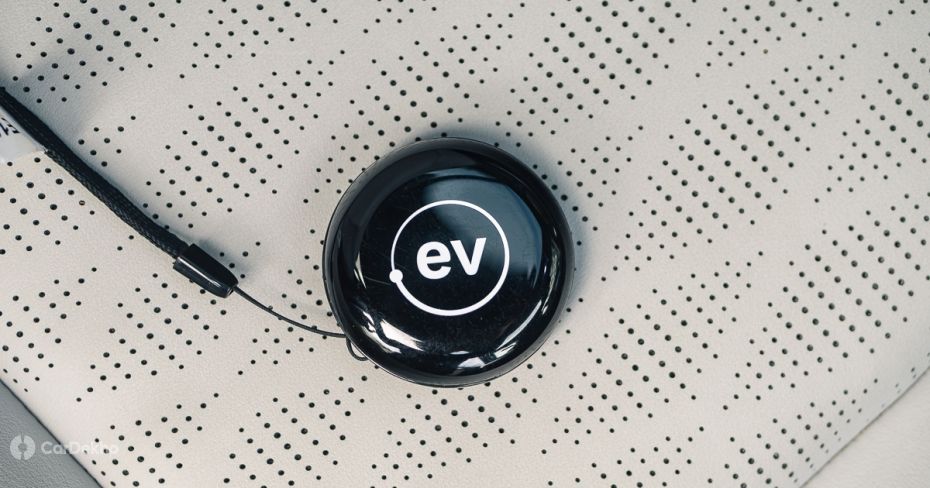
UWB Key: This circular key is available in the Empowered model. It functions on ultra-wideband (UWB) wireless technology. The car recognises the key in proximity and simply unlocks/locks the vehicle as you move closer/away from the car. This ensures you don’t need to press buttons or even take the key out of your pocket.
Safety
Here’s the list of standard safety features of the Harrier EV:
-
6 Airbags
-
Tire Pressure Monitoring System
-
Hill Descent Control
-
Hill Hold Control
-
Traction Control
-
Roll Over Mitigation
-
Corner Stability Control
-
Antilock Braking System (with Brake Assist)
-
Vehicle Dynamic Control
-
Electronic Brake Force Distribution
A knee airbag gets added from the Fearless variant onwards.
There’s L2 ADAS on offer in the Empowered variants, with a host of functions. There’s auto emergency braking, adaptive cruise control, lane keep assist, blind spot monitoring, rear cross traffic alert and a whole lot more. I’ve got to hand it to Tata for their effort in fine tuning the ADAS to react almost naturally to our chaotic driving conditions. The smoothness with which the ADAS intervenes is to be experienced. Whether it is gradually dropping speed when adaptive cruise control is engaged, or gently nudging you back to the centre of the lane — the ADAS is calibrated really well.
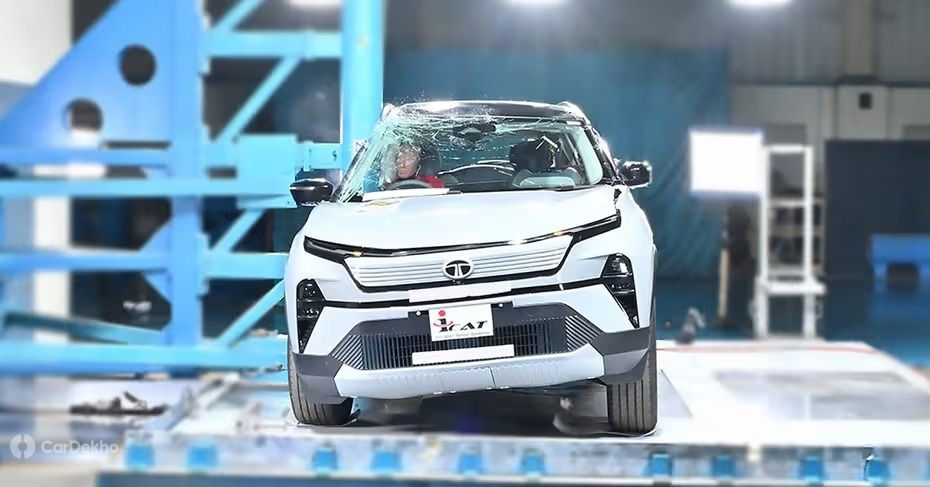
The Harrier EV has been crash tested by Bharat NCAP (In-depth crash test report here). It received a full 5-star rating for adult occupant safety and child occupant safety.
Boot Space
Tata Motors claims the Harrier EV has a boot space of 502-litres. Do note that this number is the capacity measured all the way up to the roof.
The boot floor is raised since Tata has chosen to offer a space saver spare wheel. This limits the space available between the floor at the parcel tray. If you use cabin-sized trolley bags, you could possibly fit in 3-4 of those and have some space left over for a backpack or two. Using medium or large-sized suitcases will take up most of the boot.
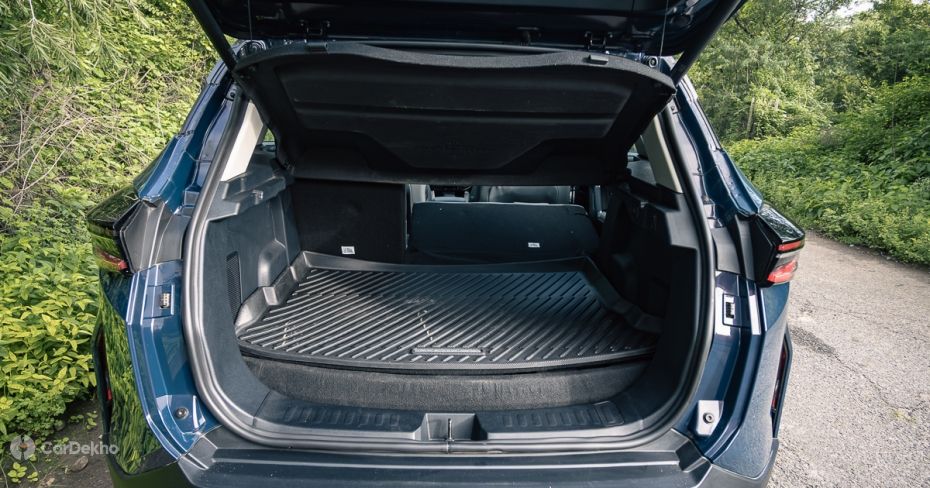
There’s 60:40 split functionality for added versatility. Folding the rear seat flat opens up 999-litres of boot space.
You have more storage space in the frunk. The rear-wheel drive models have a 67-litre/35kg capacity, whereas the all-wheel drive models get a 35-litre/17kg space.
Performance
Tata Motors offers the Harrier EV with two battery pack options: 65kWh and 75kWh. The smaller battery pack is available with only rear-wheel drive, whereas the larger battery pack has the option of all-wheel drive (QWD in Tata talk) only on the top-spec Empowered+ variant.
Here’s a quick look at the specs of the batteries and their charging times:
| Specifications | 65kWh | 75kWh |
| Claimed Range | 538km | 627km (RWD) | 622km (QWD) |
| DC Fast Charging (20-80%) | ~25 minutes @ 100kW | ~ 25 minutes @ 120kW |
| 7.2kW AC Fast Charging (10-100%) | 9.3 hours | 10.7 hours |
….and here’s a quick spec check of the motors:
| Specifications | RWD | QWD |
| Power | 238PS | 158PS (Front) | 238PS (Rear) |
| Torque | 315Nm | 504Nm |
City Performance:
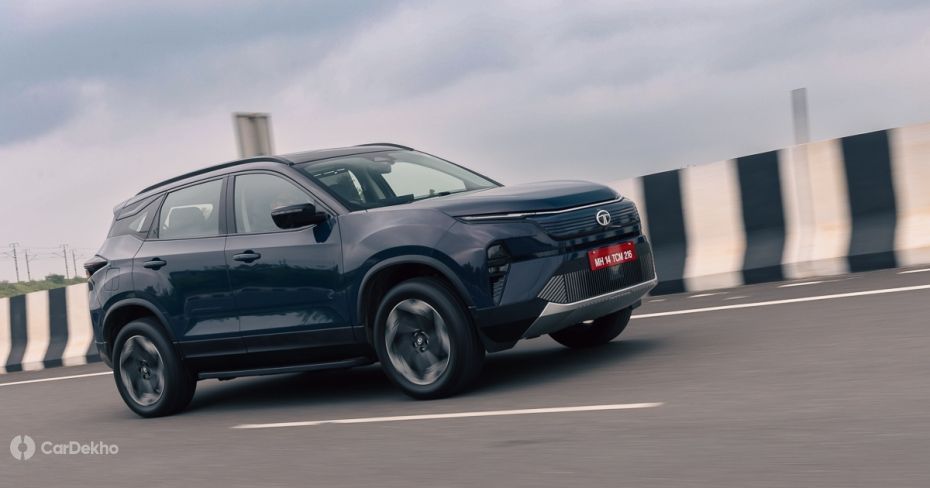
Despite the big performance numbers, the Harrier EV is supremely easy to drive. Tata has tuned the throttle to respond to minor inputs very well. There’s no sudden surge of power and you can very calmly drive about in the city. In fact, I’d say there’s no need to switch to City or Sport mode at all. I prefer the relaxed driving experience of the Eco mode. Even if you want to overtake some slow moving traffic, it’s done without any real effort. Even new drivers will have no issues adapting to the response of the Harrier EV. City mode sharpens up throttle response a little if you want a peppier drive feel.
Highway Performance:
It’s astonishing that a large near 3-ton SUV accelerates to 100kmph in 6.3 seconds. You’d need to select Sport or Boost mode to pull this off, though. What is even more astonishing is that the Harrier EV masks its acceleration very well. While the acceleration is very strong, it’s delivered in a manner that never overwhelms you. It’s never scary and you always feel like you’re in absolute control. It will keep accelerating till it hits an indicated top speed of 180kmph+.
Maintaining 100-120kmph is practically cakewalk for the Harrier EV. Overtakes, even at these speeds, are instantaneous. If you intend on using the Harrier EV as an inter-city commuter, you will have to practically make no changes to your current driving style.
As far as real world range is concerned, you can safely expect the 65kWh battery pack to deliver around 400-420km of range. With the larger battery pack, the range is likely to be between 450-500km.
Note: Brake Energy Regeneration
There are four brake energy regeneration levels: Off, L1, L2 and L3. I found it best to stick to L2 or L3 inside the city based on the traffic. Even at its strongest setting, the regeneration kicks in smoothly. There’s none of that abrupt drop in speed that a few electric vehicles tend to do at max regen.
One trick missed is that of an ‘Auto’ mode for regeneration. This is available in EVs such as the Hyundai Creta Electric, Kia Carens Clavis EV and even the Mahindra BE6 and XEV9e. This system links regeneration to the front-facing ADAS, automatically fine tuning the level of braking you get when you lift off the throttle.
Ride and Handling
The absolute highlight of driving the Harrier EV is its ride quality. Over smooth roads, it’s expectedly super silent as it glides over the surface. What’s surprising is that it retains this composure even when roads disappear altogether. I drove the Harrier EV over some seriously damaged roads and was impressed by how well it kept shocks and sounds at bay. Inside the cabin, passenger movement is minimal. In fact, the faster you go over broken surfaces, the better the ride gets.
On the highway, the Harrier EV remains rock steady. You can switch lanes at triple digit speeds confidently if needed. Even when going over successive expansion joints or surface levels changes, the cabin remains composed.
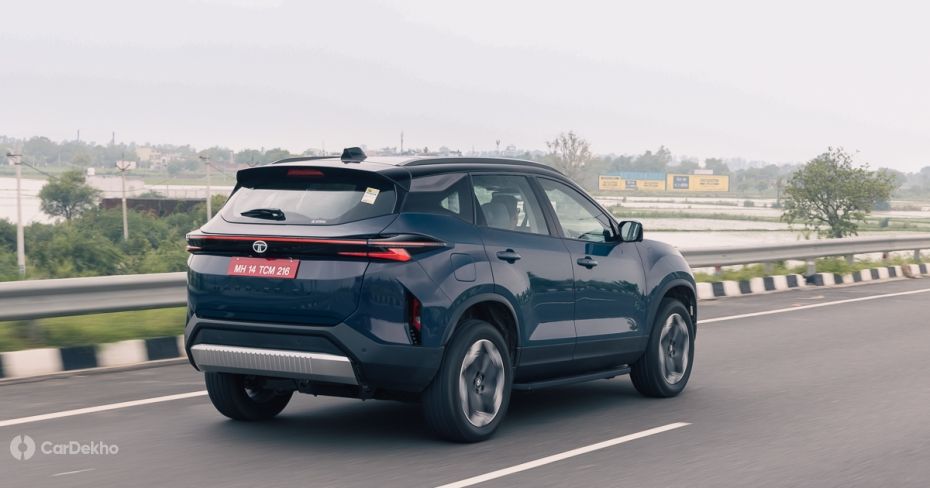
We also expect severe side-to-side movement in EVs over really bad surfaces. The Harrier EV manages to keep that at bay too, ensuring passenger comfort. For Indian conditions, the Harrier EV’s suspension setup is a masterclass on how it’s supposed to be done. Tata has managed to extract the most out of independent front and rear suspension and the frequency dependent damping (FDD) to offer a ride quality that’s tailor-made for our conditions.
The steering is light enough to let you navigate busy city streets easily. Parking doesn’t take much effort either. Even on the highway, the steering weighs up adequately.
Variants
You can choose between three broad variants of the Harrier EV: Adventure, Fearless+ and Empowered.
Harrier EV Adventure Variant
-
This variant is available only with the smaller 65kWh battery pack.
-
Exterior highlights include connected LED DRLs, projector headlamps, connected tail lamps and 18-inch alloy wheels.
-
The cabin features a black-tan colour scheme and gets features such as leatherette upholstery, automatic climate control, rear AC vents, and cruise control.
-
The infotainment package includes two 10.25-inch displays and a 6-speaker audio system.
-
The safety package is comprehensive with 6 airbags, ABS with EBD, traction control, hill hold and hill descent control and tyre pressure monitoring system.
Harrier EV Adventure S Variant
-
Adds a panoramic sunroof, automatic headlamps, automatic wipers and 60:40 split seats.
-
Touchscreen size is larger at 12.3-inches.
Harrier EV Fearless+ Variant
-
Visual upgrades include 19-inch alloy wheels, cornering fog lamps, sequential turn indicators and welcome/goodbye animations for the front and rear.
-
Interior gets an all-black colour theme. Comfort is improved with front seat ventilation, rear comfort headrests and sunshades.
-
Feature additions include a 6-way powered driver’s seat, 4-way powered co-driver’s seat, and dual-zone climate control
-
Other notable upgrades include a 10-speaker JBL Black audio system, air purifier, wireless charger, and auto-dimming IRVM.
-
A knee airbag and 360° camera improve the safety package.
Harrier EV Fearless Plus QWD Variant
- Adds the more powerful QWD (All-wheel drive setup)
Harrier EV Empowered Variant
-
The main highlight is the large 14.5-inch touchscreen and Dolby Atmos sound system.
-
Level 2 ADAS is on offer with features such as auto emergency braking, adaptive cruise control, blind spot monitoring and lane keep assist.
-
Other feature additions include: ‘boss mode’ buttons, powered tailgate, and ambient lighting.
Harrier EV Empowered QWD Variant
-
Boost Mode, Off-road Assist are added.
CarDekho Recommends:
-
There’s not much you’d need from a large EV beyond the Adventure S variant. It offers practically everything you need and want.
-
The Fearless+ variant has acceptable feature additions for the added price.
-
Consider the Empowered variant only if you want ADAS and the better infotainment experience.
-
For daily use, QWD is unlikely to be of any value. Consider only if you foresee driving in tricky conditions often, or if you want maximum performance.
Verdict
There’s no real dealbreaker with the Harrier EV. It looks good, has ample space, and a strong feature package too. The highlights remain the stellar ride quality, and that real world range is likely to be between 400-500km depending on the battery pack. Given the price difference between the diesel and electric versions, I’d recommend the Harrier EV. The features in isolation justify the added price, but the smoothness and performance of the drivetrain simply seals the deal. If you can charge at home and reap cost benefits, the Harrier EV simply strengthens its value proposition further.
Tata Harrier EV colours
Tata Harrier EV is available in the following colours in India. View all car images with different colour options on CarDekho.
- Pure Grey Black Roof
- Pristine White Dual Tone
- Empowered Oxide Dual Tone
- Nainital Nocturne Dual Tone
- Matte Stealth Black Edition
- Seaweed Green With Dual Tone
Comparing Tata Harrier EV Rivals
Rs.21.79 - 30.54 Lakh* | Rs.18.79 - 26.48 Lakh* | Rs.21.90 - 31.25 Lakh* | Rs.19.45 - 26.95 Lakh* | Rs.18.03 - 25.22 Lakh* | Rs.22.99 - 28.09 Lakh* | Rs.19.50 - 23.50 Lakh* | Rs.16.19 - 20.21 Lakh* |
| RatingUser Review (75) | User Review (48) | User Review (124) | User Review (531) | User Review (30) | User Review (11) | User Review (4) | User Review (22) |
| Fuel TypeElectric | Electric | Electric | Electric | Electric | Electric | Electric | Electric |
| Battery Capacity65 - 75 kWh | 63 - 75 kWh | 59 - 79 kWh | 59 - 79 kWh | 42 - 51.4 kWh | 59.6 - 70 kWh | 69.2 kWh | 49 - 61 kWh |
| Range538 - 627 km | 566 - 665 km | 542 - 656 km | 548 - 683 km | 390 - 510 km | 438 - 532 km | 517 km | 440 - 543 km |
| Charging Time20-80 % : 25 mins | 25Min-110kW-(20-80%) | 20Min with 140 kW DC | 6 / 8.7 h (11.2 kW / 7.2 kW Charger) | 39Min-100kW(10-80%) | 24 Min ( 10-70%) | 12.5H-7.4 kW (10-100%) | 45 Min (10-80%) |
| Power235 - 390 bhp | - | 228 - 282 bhp | 228 - 282 bhp | 133 - 169 bhp | 174.33 - 348.66 bhp | 201 bhp | 142 - 172 bhp |
| Airbags6-7 | 6 | 6-7 | 6-7 | 6 | 7 | 6 | 7 |
| Currently Viewing | Harrier EV vs Sierra EV | Harrier EV vs XEV 9e | Harrier EV vs BE 6 SPORTEQ | Harrier EV vs Creta Electric | Harrier EV vs VF7 | Harrier EV vs MG Hector Tomahawk EV | Harrier EV vs e Vitara |
Tata Harrier EV videos
- Shorts
- Full Videos
Magic - Tata Harrier EV
Harrier EV main 500Nm Torque hai!
Short Review - Tata Harrier EV
Safety - Tata Harrier EV
Highlights - Tata Harrier EV
Boot Space -Tata Harrier EV
Launched - Tata Harrier EV
Key - Tata Harrier EV
Features - Tata Harrier EV
Rear Seats - Tata Harrier EV
- 28:09Tata Harrier EV 2025 Full Review: Complete Package!1 year ago25.8K Views
- 12:03Tata Harrier EV Variants Explained: Galat Variant Lene Se Bachiye!1 year ago13.3K Views
- Tata Harrier EV: 8,000 KM Later, Still Impressed?1 month ago5K Views
Tata Harrier EV 2026: Latest News Articles
- Latest News
- Road Test
Explore Tata Harrier EV Second Hand cars
Tata Harrier EV user reviews
- All (75)
- Looks (17)
- Comfort (22)
- Mileage (3)
- Engine (2)
- Interior (8)
- Space (7)
- Price (11)
- More...
- Latest
- Helpful
- Tata HerrierI love this car, and it was my dream to buy it. Now that I have it, it feels so great that I can't explain it. The car's comfort and luxurious presence are truly amazing, and I really love it. I surprised my mom because she didn't know that I had booked this car. When I got the car, my mom was proud of me because a few months ago, I told her that I would buy it.Read More
- Harrier EVVehicle moves forward though being an automatic, in reverse gear. This happens during the interval of shifting the foot from brake pedal to accelerator. Secondly, accelerator is stiff, have to press hard to get the required push. Turning radius is more than 9S having bigger battery, should have provided with the compatability for three phase onboard charger resale value, Thank You.Read More1
- Value For Money For Long RideThe cars performance is great, with great safety feature, but the horn position of the car is slighly mismangaed by manufacturer I feel. Overall look, design and comfort is great. The range of this car offer is close to 540-555 kmpl in real world, with acceleartion maintaing close to 80-110 km/hr. Comapre to mahindra, it might feel bit expensive, but overall ride comfort is great then Mahindra for sure.Read More3
- Good Car And Nice SmoothnessHandling is smooth, interior is nice, height is good, Infotainment system is good, Ac wents are nice. There is a nice and a big boot space, automatic transmission is nice power is enough. There is a good torque. There is a good space in bonnet. There is a good ground clearance. There is a so big sunroof and a nice performance.Read More
- BEAST HARRIERNice car, comfortable and dual motor more power, battery range need to be increased, ventilated seats provide comfort for long drives, sound system and the design and push back seats and laying seats and sunroof also good but price should be optimized. Nexon getting almost all benifts at the low price.Read More
- View More
Tata Harrier EV Range
Tata Harrier EV range is between 538 - 627 km, depending on the variant.
| Motor and Transmission | ARAI Range |
|---|---|
| Electric - Automatic | between 538 - 627 km |
Are you confused?Ask anything & get answer in 48 hours
Tata Harrier EV Questions & Answers
- FAQs
- Latest Questions
A ) The Tata Harrier EV can be charged using a 15-ampere plug, and with a 7.2 kW cha...Read More
A ) The Auto Park Assist in the Tata Harrier EV enables automatic parallel, perpendi...Read More
A ) Yes, the Tata Harrier EV offers Summon Mode, allowing remote forward and reverse...Read More
A ) Yes, the Tata Harrier EV is equipped with Vehicle-to-Load (V2L) technology, enab...Read More
A ) The Tata Harrier EV offers commendable performance with an acceleration from 0 t...Read More
Tata Harrier EV On-road price in popular cities
Trending Tata cars
- Popular
- Upcoming
- Tata SierraRs.11.49 - 21.59 Lakh*
- Tata NexonRs.7.40 - 14.52 Lakh*
- Tata HarrierRs.13 - 26.11 Lakh*
- Tata SafariRs.13.40 - 26.91 Lakh*
- Tata CurvvRs.10 - 19 Lakh*
Popular SUV cars
- Trending
- Latest
- Upcoming
- Mahindra Thar OGRs.10.32 - 18.99 Lakh*
- Toyota FortunerRs.35.11 - 50.97 Lakh*
- Mahindra Scorpio NRs.13.69 - 25.49 Lakh*
- Mahindra ScorpioRs.13.43 - 17.48 Lakh*
- Hyundai CretaRs.10.91 - 20.46 Lakh*
- New VariantRenault DusterRs.10.49 - 19.49 Lakh*
- New VariantMG HectorRs.12.14 - 20 Lakh*
- Honda ElevateRs.11.80 - 18.40 Lakh*
- New VariantHyundai AlcazarRs.14.51 - 21.96 Lakh*
- New VariantHyundai Creta ElectricRs.18.03 - 25.22 Lakh*