
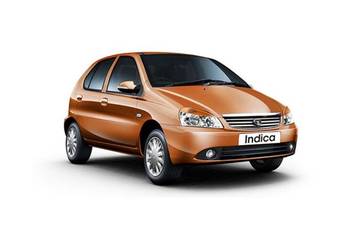
Indica LGI overview
| Engine | 1405 cc |
| Transmission | Manual |
| Mileage | 13.5 kmpl |
| Fuel | Petrol |
| Length | 3685 mm |
Tata Indica Detailed On Road Price in New Delhi
| Ex-Showroom Price | Rs.3,32,997 |
| Registration ChargesRegistration charges include MCD Fee, RTO, Smart Card Charges | Rs.16,119 |
| InsuranceThe Insurance amount is calculated based the engine size/battery size of the car and also different for metro cities and other cities. It can also differ from dealer to dealer depending on the insurance provider & commissions. | Rs.25,010 |
| On-Road Pricein New Delhi | Rs.3,74,126* |
Indica LGI specifications & features
Engine & Transmission
| Engine Type Engine type in car refers to the type of engine that powers the vehicle. There are many different types of car engines, but the most common are petrol (gasoline) and diesel engines | In-Line Engine |
| Displacement The displacement of an engine is the total volume of all of the cylinders in the engine. Measured in cubic centimetres (cc) | 1405 cc |
| Max Power Power dictates the performance of an engine. It's measured in horsepower (bhp) or metric horsepower (PS). More is better. | 60 PS @ 4500 rpm |
| Max Torque The load-carrying ability of an engine, measured in Newton-metres (Nm) or pound-foot (lb-ft). More is better. | 105 Nm @ 2500 rpm |
| No. of Cylinders ICE engines have one or more cylinders. More cylinders typically mean more smoothness and more power, but it also means more moving parts and less fuel efficiency. | 4 |
| Valves Per Cylinder The number of intake and exhaust valves in each engine cylinder. More valves per cylinder means better engine breathing and better performance but it also adds to cost. | 2 |
| Valve Configuration Valve configuration refers to the number and arrangement of intake and exhaust valves in each engine cylinder. | SOHC |
| Fuel Supply System Responsible for delivering fuel from the fuel tank into your internal combustion engine (ICE). More sophisticated systems give you better mileage. | Carburettor mechanical fuel pump |
| Turbo Charger A device that forces more air into an internal combustion engine. More air can burn more fuel and make more power. Turbochargers utilise exhaust gas energy to make more power. | |
| Super Charge A device that forces more air into an internal combustion engine. More air can burn more fuel and make more power. Superchargers utilise engine power to make more power. | |
| Transmission Type | Manual |
| Gearbox The component containing a set of gears that supply power from the engine to the wheels. It affects speed and fuel efficiency. | 5 Speed |
Fuel & Performance
| Fuel Type | Petrol |
| Petrol Mileage ARAI | 13.5 kmpl |
| Petrol Fuel Tank Capacity The total amount of fuel the car's tank can hold. It tells you how far the car can travel before needing a refill. | 37 Litres |
| Top Speed The maximum speed a car can be driven at. It indicates its performance capability. | 148 kmph |
| Acceleration The rate at which the car can increase its speed from a standstill. It is a key performance indicator. | 16 seconds |
| 0-100kmph The rate at which the car can increase its speed from a standstill. It is a key performance indicator. | 16 seconds |
Suspension, Steering & Brakes
| Front Suspension The system of springs, shock absorbers, and linkages that connects the front wheels to the car body. Reduces jerks over bad surfaces and affects handling. | MacPherson Strut, coil springs, anti-roll bar, wishbone type link |
| Rear Suspension The system of springs, shock absorbers, and linkages that connects the rear wheels to the car body. It impacts ride quality and stability. | Independent, semi-trailing arms, coil springs, hydraulic shock-absorbers |
| Steering Type The mechanism by which the car's steering operates, such as manual, power-assisted, or electric. It affecting driving ease. | Power |
| Steering Gear Type Specifies the type of mechanism used to turn the car's wheels, such as rack and pinion or recirculating ball. Affects the feel of the steering. | Rack & Pinion |
| Turning Radius The smallest circular space that needs to make a 180-degree turn. It indicates its manoeuvrability, especially in tight spaces. | 4.9 meters |
| Front Brake Type Specifies the type of braking system used on the front wheels of the car, like disc or drum brakes. The type of brakes determines the stopping power. | Disc |
| Rear Brake Type Specifies the type of braking system used on the rear wheels, like disc or drum brakes, affecting the car's stopping power. | Drum |
Dimensions & Capacity
| Length The distance from a car's front tip to the farthest point in the back. | 3685 mm |
| Width The width of a car is the horizontal distance between the two outermost points of the car, typically measured at the widest point of the car, such as the wheel wells or the rearview mirrors | 1625 mm |
| Height The height of a car is the vertical distance between the ground and the highest point of the car. It can decide how much space a car has along with it's body type and is also critical in determining it's ability to fit in smaller garages or parking spaces | 1485 mm |
| Seating Capacity The maximum number of people that can legally and comfortably sit in a car. | 5 |
| Ground Clearance Unladen The unladen ground clearance is the vertical distance between the ground and the lowest point of the car when the car is empty. More ground clearnace means when fully loaded your car won't scrape on tall speedbreakers, or broken roads. | 170 mm |
| Wheel Base Distance between the centre of the front and rear wheels. Affects the car’s stability & handling . | 2400 mm |
| Front Tread The distance from the centre of the left tyre to the centre of the right tyre of a four-wheeler's front wheels. Also known as front track. The relation between the front and rear tread/track numbers decides a cars stability. | 1400 mm |
| Rear Tread The distance from the centre of the left tyre to the centre of the right tyre of a fourwheeler's rear wheels. Also known as Rear Track. The relation between the front and rear Tread/Track numbers dictates a cars stability | 1380 mm |
| Kerb Weight Weight of the car without passengers or cargo. Affects performance, fuel efficiency, and suspension behaviour. | 980 kg |
Exterior
| Alloy Wheel Size The diameter of the car's alloy wheels. Alloy wheels are lighter and better looking than standard wheels, not including tyres. | 13 Inch |
| Tyre Size The dimensions of the car's tyres indicating their width, height, and diameter. Important for grip and performance. | 155/70 R13 |
| Tyre Type Tells you the kind of tyres fitted to the car, such as all-season, summer, or winter. It affects grip and performance in different conditions. | Tubeless,Radial |
| Wheel Size The diameter of the car's wheels, not including the tyres. It affects the car's ride, handling, and appearance. | 4.5J x 13 Inch |
Compare variants of Tata Indica
- Petrol
- Diesel
Recommended used car alternatives for Tata Indica in New Delhi
Tata Indica news
The Tigor EV and the Curvv are most readily available across all 20 cities listed!
Tata Motors, the India's largest automobile manufacturer is going through a tough time as the passenger car segment of the company is not showing the expected performance in market. The sales of its m
Tata Motors today released a statement in which it negated all the speculations going around regarding the de-emphasizing of Tata Indica. According to the statement released, along with the second-gen
Few days back we got the news that the Indian auto biggie Tata Motors is planning to launch the refreshed version of its popular hatchback Tata Indica, Tata Indica eV2 next month. Here we are with som
Tata Motors India's largest automobile company seems to be geared up this year, the company today announced the launch of the refreshed version of its hatchback Tata Indica. The company is working tow